
CourtOrder – Allahabad High Court Rebukes UP Officials Over Sambhal Prayer Restriction
CourtOrder – The Allahabad High Court has strongly criticized an order issued by authorities in Uttar Pradesh’s Sambhal district that restricted the number of worshippers allowed to offer prayers at a mosque. The court remarked that if district officials believe they cannot maintain law and order while allowing citizens to practice their faith, they should either step down from their positions or request a transfer. The observation came while the court was hearing a petition related to prayer arrangements during the ongoing month of Ramzan.
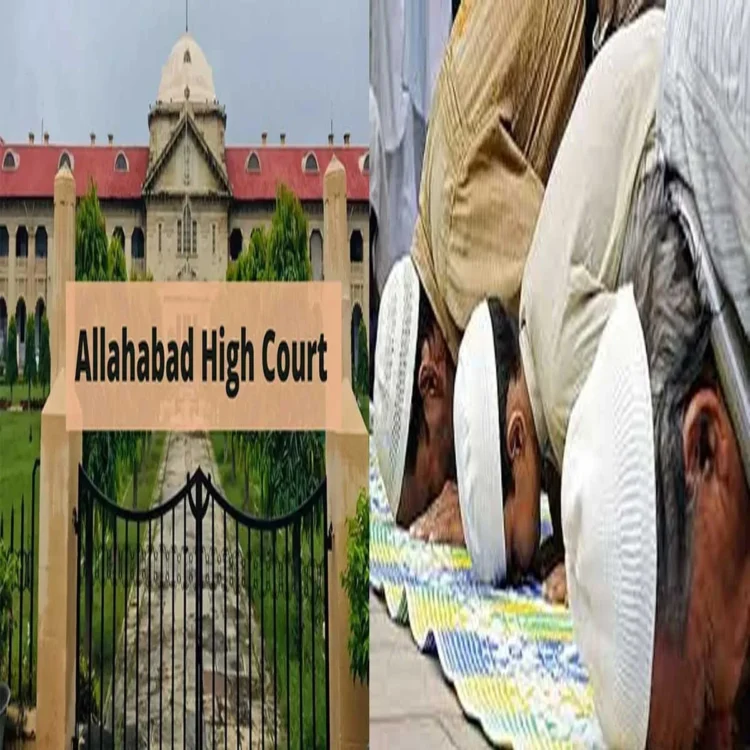
Court Questions Authority to Limit Worshippers
A bench comprising Justice Atul Sreedharan and Justice Siddharth Nandan examined the legality of the district administration’s decision that permitted only 20 people to offer namaz at the disputed site. The judges emphasized that ensuring peaceful religious practice is the responsibility of the state, and authorities cannot curtail such rights without a lawful basis.
During the proceedings, the bench observed that every community has the right to worship at its designated place of prayer without interference, especially when the site is private property. The court noted that the state’s role becomes relevant only when religious gatherings take place on public land or extend into public spaces, situations where regulation may be necessary to maintain order.
Petition Filed Over Ramzan Prayer Restrictions
The matter reached the court after a petition was filed by Munazir Khan, a resident of Sambhal. In his plea, Khan alleged that he and other devotees were prevented from conducting Ramzan prayers at a location identified as Gata No. 291. According to the petitioner, a mosque exists on this land and has historically been used for religious purposes.
Khan argued that the administration’s order allowing only a limited number of worshippers effectively prevented many people from participating in congregational prayers during Ramzan, a time when attendance typically increases. He urged the court to intervene and ensure that worshippers are allowed to pray peacefully without arbitrary restrictions.
Dispute Over Ownership of Land
During the hearing, the state government contested the petitioner’s claim regarding the ownership of the land. Government representatives informed the court that official revenue records list Mohan Singh and Bhooraj Singh, both sons of Sukhi Singh, as the registered owners of Gata No. 291.
Despite this dispute, the administration had permitted prayers to continue at the location but imposed the cap of 20 worshippers. Officials defended the decision by stating that it was taken due to concerns about a possible law and order situation in the area.
State counsel told the court that the restriction was introduced as a precautionary measure based on perceived tensions and the need to prevent any disturbance during the religious period.
Strong Remarks from the Bench
After considering arguments from both sides, the court delivered pointed remarks regarding the responsibilities of district authorities. The bench stated that maintaining law and order is a fundamental duty of the administration and cannot be used as a reason to limit lawful religious activity.
The judges further observed that if the Superintendent of Police and the district Collector believe that they are unable to manage the situation while allowing people to worship within the premises, they should reconsider their roles. According to the court, such officials must either resign from their posts or request a transfer from the district rather than restrict fundamental rights.
The bench reiterated that the rule of law must prevail in all circumstances and that administrative inconvenience cannot justify curbing citizens’ constitutional freedoms.
Next Hearing Scheduled
The court concluded the hearing by scheduling the next session of the case for March 16. During the upcoming hearing, the bench is expected to examine further details related to the land ownership dispute and the circumstances under which the restrictions were imposed.
The case has drawn attention to the balance between administrative authority and the protection of religious freedoms, particularly during significant religious observances such as Ramzan. The court’s remarks underline the judiciary’s expectation that local authorities uphold both public order and constitutional rights simultaneously.