
UNResolution – Global Support Backs Resolution Condemning Iran Attacks on Gulf Nations
UNResolution – The United Nations Security Council has adopted a resolution condemning what it described as severe attacks carried out by Iran against several Gulf Cooperation Council countries and Jordan. The resolution also called on Tehran to halt all military actions immediately and criticized threats related to disrupting navigation through the Strait of Hormuz.
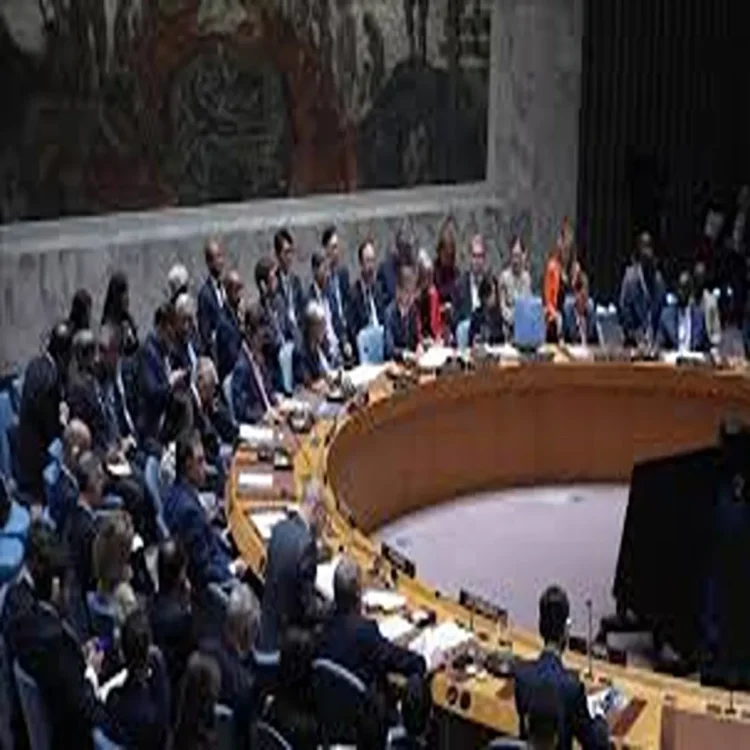
Adopted on Wednesday, the resolution received broad backing within the 15-member Security Council. Thirteen countries voted in favor, while two permanent members, China and Russia, chose to abstain. None voted against the measure. The council is currently chaired by the United States.
Broad International Support for the Resolution
The proposal was introduced by Bahrain and received co-sponsorship from India along with more than 130 other nations across multiple regions. Among the countries supporting the initiative were Australia, Canada, France, Germany, Japan, Saudi Arabia, the United Arab Emirates, the United Kingdom, the United States, and several Asian, European, and Middle Eastern states.
In total, the resolution gathered support from 135 nations. Diplomats described this level of backing as a clear signal of international concern over rising regional tensions.
Reaffirming Sovereignty of Gulf Countries
The document reiterates the Security Council’s support for the sovereignty, territorial integrity, and political independence of Bahrain, Kuwait, Oman, Qatar, Saudi Arabia, the United Arab Emirates, and Jordan.
It strongly criticizes attacks attributed to Iran on the territories of these countries, stating that such actions represent a violation of international law and pose a serious risk to global peace and security.
The resolution further emphasizes that civilian areas and infrastructure were reportedly targeted during the attacks. It expresses solidarity with the affected nations and their citizens while acknowledging reports of casualties and damage to residential buildings.
Call for Immediate Halt to Attacks
A key provision of the resolution demands that Iran stop all attacks against Gulf states and Jordan without delay. It also urges Tehran to refrain from any threats or provocative actions directed at neighboring countries.
The Security Council noted concerns about the potential use of proxy groups and stressed that any such activities should end immediately. Member states emphasized the importance of respecting international law in regional conflicts.
Concerns Over Maritime Security
The resolution highlights the importance of safeguarding navigation rights in major international waterways. Particular attention was given to the Strait of Hormuz and the Bab Al Mandab, both considered critical shipping routes for global energy supplies and international trade.
Council members condemned any threats or actions that could block or interfere with maritime traffic in these strategic waterways. The resolution also acknowledges that countries have the right, under international law, to defend their commercial vessels if they face attacks or obstruction.
United States Welcomes Council Decision
Speaking after the vote, United States Ambassador to the United Nations Mike Waltz described the resolution as a clear message from the international community. He said the move reflected widespread concern over attacks on civilians and civilian infrastructure.
According to Waltz, diplomatic efforts had been pursued extensively before the issue reached the Security Council. He said the United States had attempted negotiations aimed at reducing tensions but alleged that Iran continued to expand its military capabilities, including missile and drone development.
He also thanked the countries that supported the resolution, saying the level of backing demonstrated a shared commitment to addressing regional instability.
Iran Rejects the Resolution
Iran’s Permanent Representative to the United Nations, Ambassador Amir Saeid Iravani, criticized the council’s decision and described the resolution as unjust and inconsistent with international law.
He argued that the move disregarded established principles related to determining acts of aggression. Iravani warned that similar actions could be taken against other countries in the future.
The Iranian envoy also accused the United States and Israel of carrying out extensive military strikes since late February, claiming these attacks caused significant civilian casualties and widespread damage to infrastructure.
Tehran Emphasizes Regional Relations
Iravani stated that Iran remains committed to maintaining cooperative relations with neighboring countries in the Persian Gulf region. He said these relationships are based on long-standing historical ties, cultural connections, and mutual respect for sovereignty.
He also rejected claims that Iran had attempted to close the Strait of Hormuz, saying such allegations were inaccurate. According to the Iranian representative, Iran continues to respect international law and the principle of freedom of navigation in the region.