
Traffic – Delhi Roads Snarl as AI Summit Triggers Gridlock
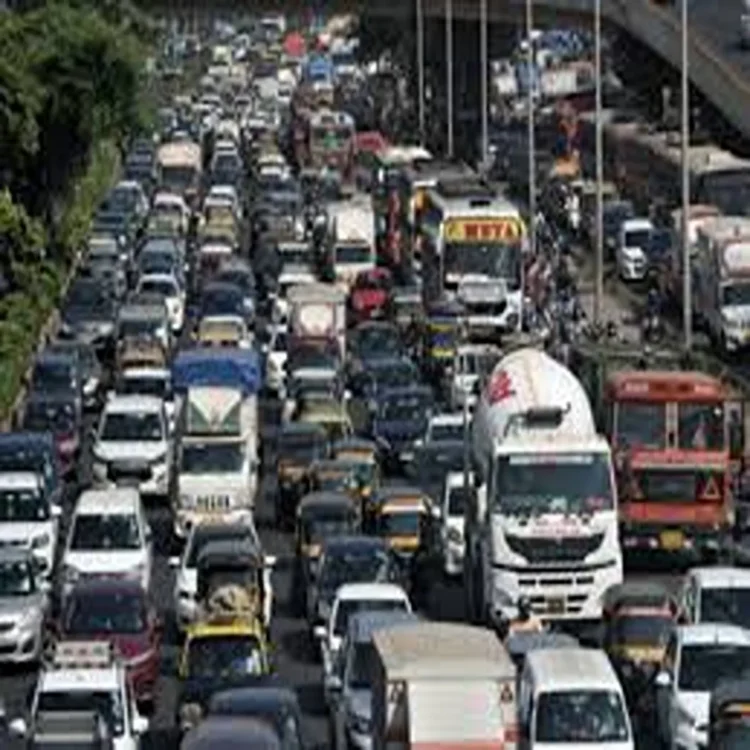
Traffic – Vehicular movement across several parts of the national capital slowed dramatically on Thursday as heightened security for the ongoing AI Summit led to widespread traffic congestion. Commuters encountered long delays on arterial roads, with diversions and restrictions disrupting the usual flow of traffic in central and key zones of the city.
Security Measures Lead to Major Disruptions
The AI Summit, which commenced earlier this week, has prompted extensive security deployment in and around central Delhi. As a result, traffic police introduced temporary curbs and route diversions to facilitate the movement of delegates and ensure safety protocols were maintained.
Areas around Sunehri Bagh, Sansad Marg and Prithviraj Road were among the worst affected. Motorists navigating these stretches reported unusually slow movement throughout the day. Similar conditions were observed near the Indraprastha Park flyover, where traffic built up steadily during peak hours.
Routes connecting to the airport also witnessed considerable delays, leaving travelers anxious about reaching terminals on time. Traffic officials had issued advisories in advance, but the scale of congestion caught many commuters off guard.
Barapullah Corridor Witnesses Long Queues
The Barapullah corridor, typically used as a relatively smooth passage between parts of south and central Delhi, turned into a bottleneck as vehicles crawled forward. Drivers reported taking significantly longer than usual to cross the elevated stretch, with some stating that the journey time nearly doubled.
By late afternoon, long lines of cars, buses and commercial vehicles could be seen inching ahead, particularly near connecting intersections. Traffic personnel were deployed at critical junctions to manage the surge, but progress remained slow for much of the day.
Commuters Express Frustration Over Delays
Daily office-goers bore the brunt of the disruptions. Akshay Verma, who works with a multinational company in central Delhi, described his commute as exhausting. He said vehicles were locked in bumper-to-bumper traffic for extended periods, with little clarity on when movement would resume at a normal pace.
Several other commuters shared similar experiences, noting that what would ordinarily be a 30-minute drive stretched well beyond an hour. Public transport users were also affected, as buses struggled to maintain schedules amid the diversions.
Navigation Apps Struggle With Sudden Closures
Many drivers relied on GPS-based navigation systems to find alternate routes, only to discover that sudden road closures forced repeated rerouting. Commuters said frequent updates on their devices added to confusion, particularly for those unfamiliar with interior roads.
Traffic experts note that large-scale international events often necessitate layered security arrangements, which can temporarily impact urban mobility. However, they also emphasize the importance of clear, timely communication to help residents plan their journeys more effectively.
Authorities Maintain High Alert
Police officials remain on high alert as the summit continues, with additional personnel stationed at sensitive points. Authorities have advised residents to use public transport where possible and to check official traffic updates before heading out.
While such disruptions are expected during high-profile events, Thursday’s congestion underscored the strain placed on Delhi’s already busy road network. For many residents, the hope is that traffic conditions will gradually stabilize once the summit concludes and restrictions are lifted.