
TradePolitics – Expulsion Motion Deepens BJP-Congress Confrontation in Parliament
TradePolitics – A fresh confrontation has unfolded in Parliament after Bharatiya Janata Party (BJP) MP Nishikant Dubey submitted a substantive motion seeking the removal of Congress leader Rahul Gandhi from the Lok Sabha. The move has intensified tensions between the ruling party and the opposition at a time when political rhetoric is already running high.
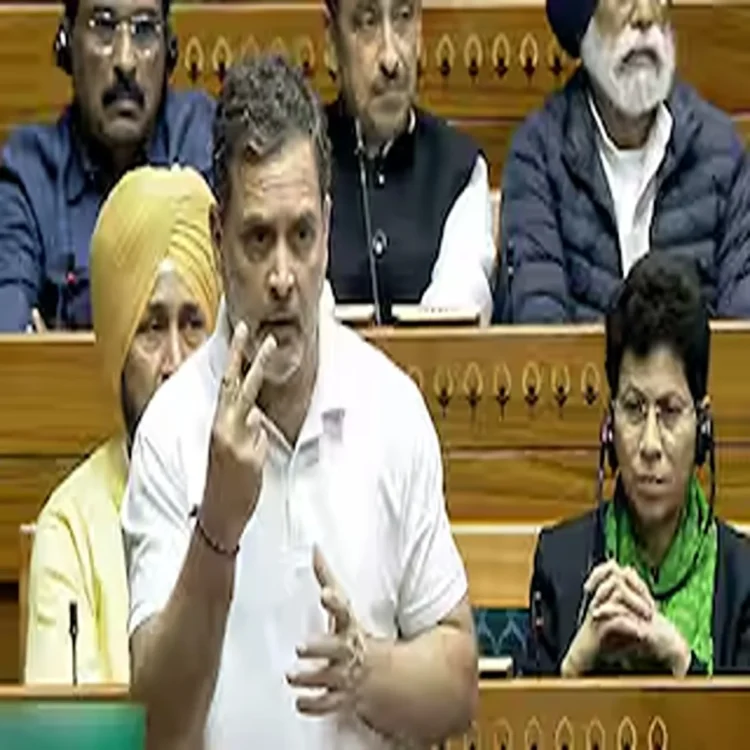
Motion Seeks Parliamentary Action
Dubey’s proposal calls for Gandhi’s expulsion, arguing that Parliament has the authority to take such action when deemed necessary. In a public statement shared on social media platform X, Dubey said that similar motions have been used in the past and that such proceedings have stood legal scrutiny.
He cited examples of past expulsions involving leaders such as Subramanian Swamy, Chhattrapal Singh Lodha, and Swami Sakshi Ji Maharaj, asserting that Parliament has exercised its powers in comparable situations. According to Dubey, the Supreme Court has upheld Parliament’s authority in matters concerning disciplinary action against its members.
The BJP MP stated that the decision now rests with the House and maintained that his motion is intended to bring clarity to what he described as divisive political tendencies. The proposal is expected to trigger debate among members if it is taken up for consideration.
Social Media Statement Sparks Debate
In his message on X, Dubey emphasized that Parliament has, from time to time, acted through substantive motions to remove members. He noted that even the Indian National Congress had supported such actions in earlier instances. He further said that his initiative regarding Rahul Gandhi would allow Parliament to deliberate on the matter in accordance with established procedures.
The remarks quickly drew attention across political circles, with leaders from both sides weighing in. While the BJP defended the motion as procedurally valid, Congress leaders described it as politically motivated.
Trade Agreement Row Intensifies Tensions
The motion comes against the backdrop of a sharp exchange between Dubey and Rahul Gandhi over the interim trade agreement between India and the United States. The disagreement centres on the potential impact of tariff provisions on India’s textile industry and cotton farmers.
Gandhi, who serves as Leader of Opposition in the Lok Sabha, accused Prime Minister Narendra Modi’s government of not being transparent about the implications of the trade arrangement. He argued that certain provisions could negatively affect cotton growers and textile exporters, sectors that employ millions across the country.
The Congress leader alleged that reduced tariff protections might place domestic producers at a disadvantage, particularly in global markets where competition is intense.
BJP Rebuts Allegations
Responding to these claims, Dubey rejected the allegations and described them as inaccurate. He challenged Gandhi to participate in a public debate on the issue, stating that data on cotton production and textile manufacturing does not support the concerns raised by the opposition.
In comments to news agency ANI, Dubey defended the government’s trade strategy, asserting that the Centre remains committed to protecting farmers’ interests while expanding export opportunities. He maintained that the agreement aims to strengthen economic ties without undermining domestic industries.
The BJP leader also criticised Gandhi’s remarks in strong terms, arguing that they misrepresent the facts surrounding the trade discussions.
Parliamentary and Political Implications
The latest development underscores the widening rift between the ruling party and the opposition ahead of crucial parliamentary sessions. While the substantive motion is a formal parliamentary mechanism, its political significance is likely to dominate discussions in the coming days.
Whether the motion proceeds to a full debate will depend on procedural steps within the House. For now, the episode has added another layer to an already heated political environment, with trade policy and parliamentary conduct emerging as focal points.
As both sides stand firm in their positions, attention will remain on how Parliament addresses the motion and whether the broader dispute over the India-US trade agreement leads to further political escalation.