
TradeAgreement – Manish Tewari Seeks Lok Sabha Debate on US Deal
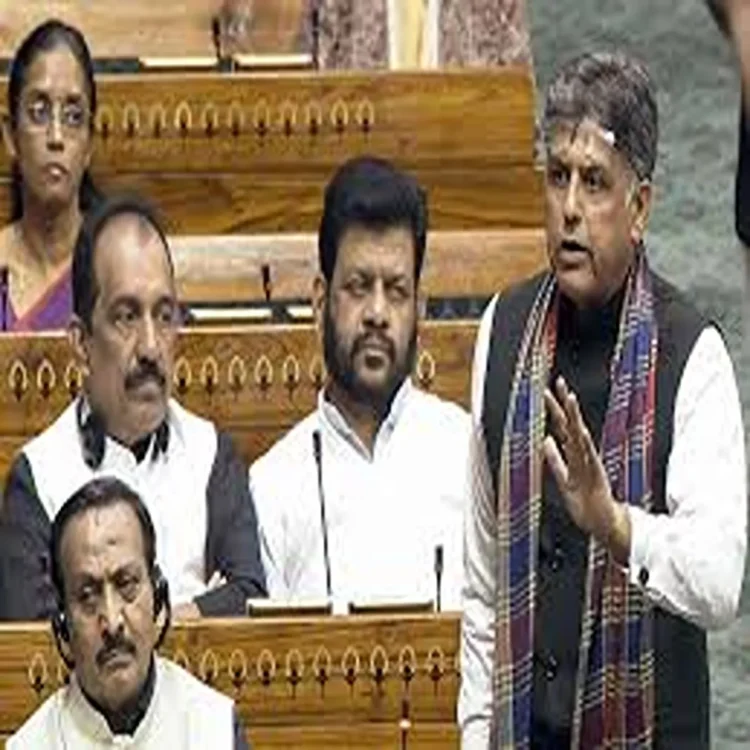
TradeAgreement – Congress Member of Parliament Manish Tewari on Tuesday submitted an adjournment motion notice in the Lok Sabha, calling for an immediate discussion on the framework of the interim trade agreement between India and the United States. The Chandigarh MP urged the government to clarify aspects of the joint statement issued by the two countries and address concerns related to energy imports and agricultural trade.
Call to Suspend Regular Business
In his notice to the Speaker, Tewari requested that Question Hour, Zero Hour and other listed proceedings be set aside to allow a focused debate on the matter. He cited what he described as “serious concerns” emerging from the recent joint statement and a related executive order issued by the White House.
The Congress leader argued that certain commitments mentioned in public communications raise important policy questions. According to his submission, reported assurances on reducing Russian oil imports and granting tariff concessions on American agricultural products could have far-reaching implications. He maintained that Parliament must examine whether these developments affect India’s energy security, the interests of domestic farmers, and the country’s strategic autonomy.
Tewari called on the government to make a comprehensive statement in the House and allow members to deliberate on the broader impact of the proposed trade framework.
Key Provisions of the Interim Agreement
The joint statement released after discussions between New Delhi and Washington outlined plans for closer economic engagement. It indicated that India would eliminate or lower tariffs on a range of US industrial goods. The statement also referred to expanded access for several American food and agricultural products.
Among the products listed were dried distillers’ grains used in animal feed, red sorghum, various tree nuts, fresh and processed fruits, soybean oil, and alcoholic beverages such as wine and spirits. The document suggested that both countries aim to deepen trade ties across multiple sectors as part of a broader effort to strengthen economic cooperation.
While the agreement is described as interim, it is widely seen as a step toward a more comprehensive trade arrangement between the two nations.
White House Statement on Energy Imports
The issue of energy sourcing became a focal point after a separate communication from the White House referenced India’s oil imports from Russia. The statement asserted that India had committed to stopping direct or indirect purchases of oil from the Russian Federation and would instead expand procurement of energy products from the United States.
It also mentioned plans to broaden defense cooperation over the next decade under a proposed framework. The remarks prompted political reactions in India, with opposition leaders questioning whether any binding commitments had been made regarding energy imports.
India has significantly increased purchases of discounted Russian crude since 2022, citing market conditions and domestic requirements. Any shift in sourcing patterns could have economic and geopolitical implications.
Government Response Emphasizes National Interest
Responding to the reports, Foreign Secretary Vikram Misri addressed the matter during a special media briefing by the Ministry of External Affairs. He underlined that India’s energy decisions are guided primarily by national interest.
Misri stated that factors such as adequate availability, fair pricing and reliability of supply remain central to the country’s energy policy. He clarified that decisions in the energy sector, whether taken by the government or private companies, are based on these considerations.
His remarks were seen as an attempt to reassure stakeholders amid speculation that India might be reducing its intake of Russian crude following discussions with Washington.
The debate over the interim trade agreement is expected to continue as Parliament examines its potential economic and strategic consequences. With trade, energy security and agricultural interests intertwined, the issue is likely to draw sustained attention in the coming days.