
Tourism – Kashmir Tourism Faces Uncertainty As Spring Season Begins
Tourism – The tourism sector in Kashmir has entered the new spring season under a cloud of uncertainty as regional tensions and economic concerns raise questions about visitor turnout in the coming months.
The scenic Valley, which had just begun recovering from the shock of last year’s Pahalgam terror attack, is once again witnessing concern among tourism stakeholders. The annual tourist season traditionally begins with the opening of Srinagar’s iconic gardens, drawing thousands of visitors eager to witness the arrival of spring. This year, however, the festive mood has been tempered by worries linked to global developments, including the ongoing conflict in West Asia and a developing commercial gas supply issue that is affecting businesses connected to the tourism industry.
Early Bloom Brings Visitors to Almond Garden
Despite the concerns, nature has begun its seasonal transformation earlier than usual. The historic Badamwari almond garden in Srinagar welcomed visitors ahead of schedule this year after the almond trees blossomed earlier than expected.
Spanning nearly 300 kanals of land, the garden has turned into a vibrant display of pink and white blossoms, offering one of the earliest visual signs of spring in Kashmir. Local residents have been visiting the site in significant numbers, while a limited number of tourists have also arrived to witness the early bloom. The garden, known for its centuries-old almond trees, typically marks the unofficial beginning of the Valley’s tourism season.
Authorities and tourism officials believe the early flowering has added charm to the location, even though the visitor numbers remain modest compared with previous years.
Tulip Garden Opening Marks Official Start of Tourist Season
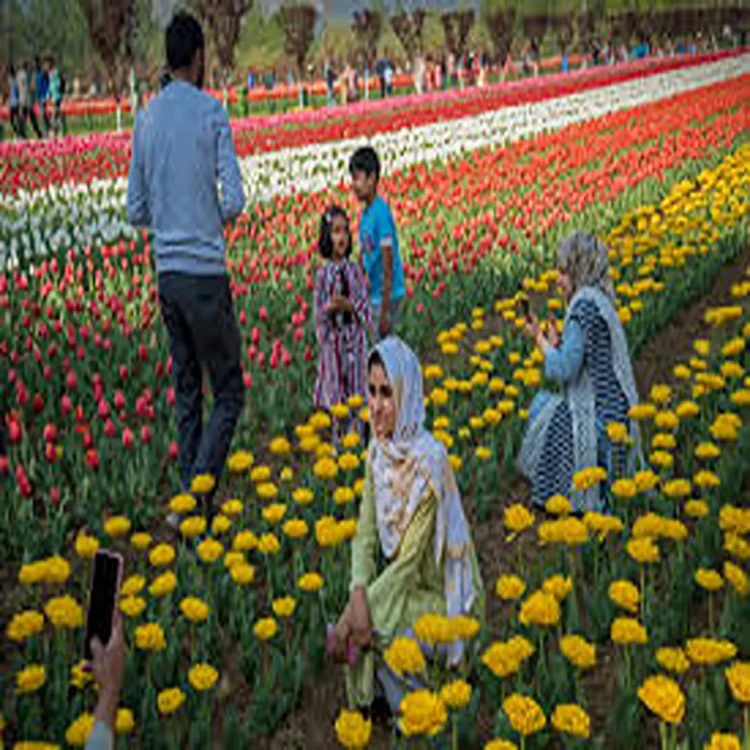
Another major attraction, the famous Tulip Garden in Srinagar, is scheduled to open to visitors on March 16. Every year, the garden becomes one of the biggest draws for travelers from across India and abroad.
The sprawling garden, located at the foothills of the Zabarwan range overlooking Dal Lake, features millions of tulips arranged in colorful patterns. The bloom season usually lasts only a few weeks, making it a key event in the region’s tourism calendar.
Tour operators and hotel owners generally expect a surge in bookings once the tulip season begins. However, this year many industry representatives say the enthusiasm is mixed with caution as geopolitical developments may influence travel decisions.
Industry Voices Concern Over Global Developments
Tourism stakeholders say the ongoing conflict in parts of West Asia has created uncertainty among travelers, particularly those planning long-distance trips. Industry representatives fear that global instability can affect visitor confidence and lead to delays or cancellations.
Abdul Wahid Malik, a senior hotelier and former president of the Kashmir Hotel and Restaurant Owners Federation, said the hospitality sector is already facing operational challenges.
According to Malik, hotels and restaurants are dealing with a shortage of commercial gas, which is widely used in kitchens across the hospitality industry. He explained that the combination of logistical issues and global tensions has left business owners cautiously watching how the season unfolds.
“Bookings have been made for the coming weeks,” Malik said, adding that the real picture will emerge once travelers begin finalizing their plans.
Travel Enquiries Show Signs of Slowdown
Travel agents in the region have also noticed a change in customer behaviour compared with previous seasons. While interest in visiting Kashmir remains strong, inquiries have slowed in recent days.
Farooq Ahmad Kuthoo, president of the Travel Agents Association of Kashmir, said the industry had initially expected a strong flow of visitors this spring. However, uncertainty linked to international developments has made potential travelers more cautious.
Kuthoo explained that some tourists appear to be delaying decisions rather than cancelling plans outright. Travel companies are hopeful that as the situation becomes clearer, bookings may stabilize and the Valley could still witness a healthy tourist season.
Hope Remains for a Steady Season
Despite the challenges, tourism stakeholders remain hopeful that the natural beauty of Kashmir and its spring attractions will continue to draw visitors. The combination of blooming almond trees, colorful tulip fields, and pleasant weather has historically attracted large numbers of travelers.
Industry representatives say the coming weeks will be crucial in determining whether the tourism season gathers momentum or faces another difficult period. For now, businesses across the Valley are preparing to welcome guests while keeping a close watch on both global developments and domestic travel trends.