
TerrorModule – Delhi Police Trace Cross-Border Conspiracy Links
TerrorModule – Delhi Police have uncovered fresh details about a cross-border terror network, revealing that its alleged handler remained in constant touch with operatives in India through an encrypted messaging platform. Investigators say the communications were routed via Signal, allowing the group to coordinate activities discreetly across states.
Encrypted Messaging and Poster Distribution
According to police sources, the suspected handler, identified as Shabbir and believed to be operating from Bangladesh, directed members of the module through secure digital channels. One of the key findings in the probe relates to anti-India posters that recently appeared in parts of Delhi and Kolkata.
Officials said the digital file of the poster was sent from Bangladesh to associates in Kolkata, where the materials were subsequently printed and circulated. The posters, including those carrying “Free Kashmir” messages, were later found pasted in public areas, prompting heightened surveillance in both cities.
Base Established in Kolkata
Investigators have indicated that the group had set up an operational base on the outskirts of Kolkata following instructions from the alleged handler. A residential property was rented for approximately Rs 8,000 per month, which police believe served as a logistical hub.
Sources further claim that over Rs 80,000 was transferred by the handler to support procurement efforts, including the purchase of weapons. Additional funds were reportedly expected. Authorities say Umar Farooq, a resident of Malda in West Bengal, functioned as the main liaison between the handler and the India-based operatives, maintaining regular contact through encrypted communication.
Arrests in Tamil Nadu and West Bengal
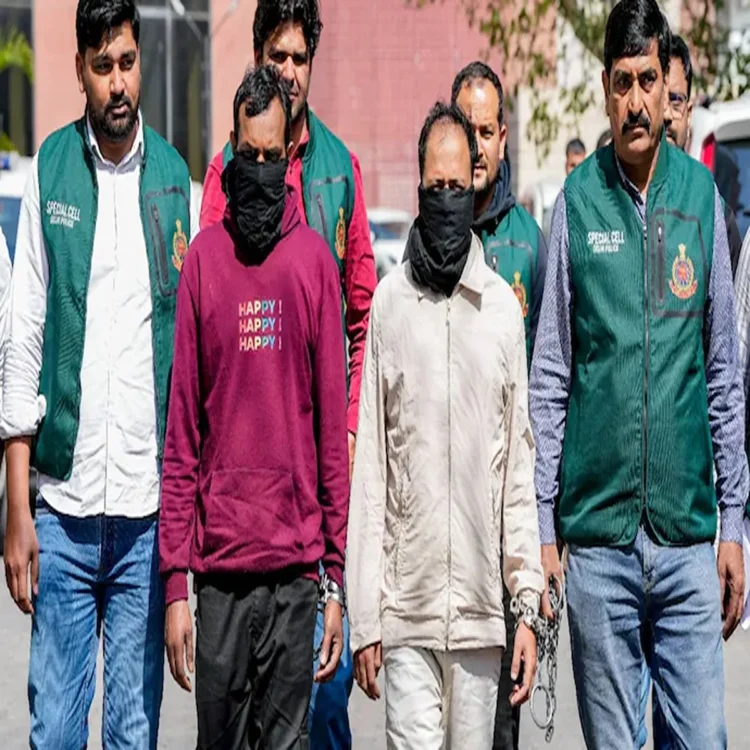
The investigation gained momentum after coordinated raids in Tamil Nadu led to the arrest of eight suspects, including one Bangladeshi national. Officials allege the group was preparing to execute a significant terrorist plot under the influence of Pakistan’s intelligence agency, the ISI, and extremist elements based in Bangladesh.
Earlier, six individuals — identified as Mizanur Rahman, Mohammad Shabat, Umar, Mohammad Litan, Mohammad Shahid, and Mohammad Ujjal — were detained in Tamil Nadu and later transported to Delhi for further questioning. Two additional arrests were subsequently made in West Bengal as the probe widened.
Police sources disclosed that the alleged handler had planned to relocate six Bangladeshi nationals arrested in Tamil Nadu to Kolkata. After carrying out attacks, the broader plan was reportedly to move all operatives back across the border into Bangladesh.
Digital Evidence and Fake Identities
During searches conducted in multiple locations, authorities seized eight mobile phones and 16 SIM cards. Investigators believe these devices were used to coordinate activities and circulate content online in support of Pakistan-based terrorist organisations.
The suspects were reportedly employed in the garment industry in Tamil Nadu, where they are accused of concealing their identities using forged Aadhaar cards. Arrests were made from Uthukuli, Palladam, and the Thirumuruganpoondi area, following intelligence inputs and local surveillance.
Officials have also indicated that the group conducted reconnaissance activities in several cities, allegedly assessing potential targets. The emergence of provocative posters in the national capital is being examined as part of a larger strategy to create unrest.
Ongoing Investigation
Delhi Police are now in the process of bringing all arrested individuals to the national capital to centralise the investigation. Agencies are analysing digital footprints, financial transactions, and cross-border communication records to map the full extent of the network.
Authorities have not ruled out further arrests as the inquiry continues. Security agencies remain on alert, particularly in regions where the module is believed to have operated.
The case underscores the growing challenges posed by encrypted communication platforms in counterterrorism operations, as agencies work to dismantle networks that span multiple states and international borders.