
Supreme Court : Declines Challenge to VIP Darshan Practice at Ujjain Temple
Supreme Court: The Supreme Court on Tuesday declined to entertain an appeal questioning the legality of the long-standing VIP darshan system at the Shri Mahakaleshwar Temple in Ujjain, effectively affirming a Madhya Pradesh High Court ruling that had upheld the practice. The top court indicated that such matters fall within the administrative domain rather than judicial oversight.
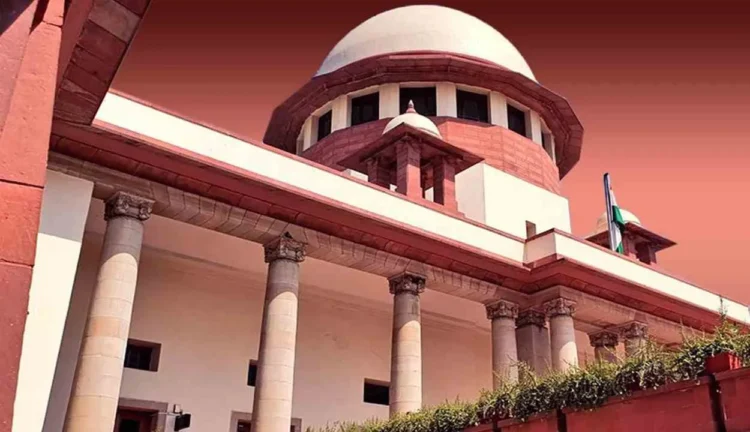
Appeal Sought Equal Access to Sanctum
The appeal was filed by Ujjain resident Darpan Awasthi, who argued that all devotees should be treated equally when it comes to entry into the Garbhagriha, or sanctum sanctorum, of the temple. He contended that allowing certain visitors preferential access for worship and rituals, while restricting others, amounted to unconstitutional discrimination.
Awasthi maintained that the practice violated the principle of equality before the law and sought directions to ensure uniform access for all devotees, regardless of social or official status.
Court Questions Scope of Judicial Intervention
A three-judge bench, headed by Chief Justice Surya Kant and comprising Justices R. Mahadevan and Joymalya Bagchi, was unconvinced by the submissions. The bench observed that courts are not the appropriate forum to frame or enforce policies governing temple administration or religious practices.
During the hearing, the bench remarked that petitions of this nature do not necessarily reflect genuine devotional concerns and warned against judicial overreach in matters better handled by authorities entrusted with temple management.
Arguments Presented by the Petitioner
Representing the petitioner, advocate Vishnu Jain argued that there should be a clearly defined and uniform policy governing entry into the Garbhagriha. He submitted that differential treatment between VIPs and ordinary devotees infringed Article 14 of the Constitution, which guarantees equality before the law.
Jain further asserted that the right to offer prayers, including performing rituals such as jalabhishek, should not be determined by a devotee’s status. According to him, both prominent individuals and members of the general public should enjoy the same opportunity to worship within the sanctum.
Bench Emphasises Administrative Authority
The Chief Justice, however, made it clear that such policy decisions are for those managing the temple and the state authorities to decide. The court stated that if the judiciary were to start regulating who may or may not enter the sanctum, it would stretch judicial functions beyond reasonable limits.
Following the hearing, the Supreme Court dismissed the appeal but granted the petitioner liberty to submit a representation to the appropriate government authorities for consideration.
Background of the Legal Dispute
Awasthi had approached the Supreme Court challenging a Madhya Pradesh High Court judgment dated August 28, 2025, which had rejected a similar plea. The High Court had upheld the authority of the Shri Mahakaleshwar Temple Administrative Committee to regulate access to the sanctum.
In his petition, Awasthi argued that the committee, constituted under the Shri Mahakaleshwar Adhiniyam, 1982, lacked the legal mandate to create special arrangements for VIPs, politicians, bureaucrats, or other influential individuals.
Claims of Constitutional Violations
The petitioner claimed that since 2023, general devotees had been consistently denied the opportunity to perform pooja and rituals inside the sanctum, while VIP visitors were permitted such access. He argued that this practice infringed upon the freedom of religion guaranteed under Article 25 of the Constitution.
Awasthi also sought interim relief, requesting a stay on the High Court’s order and directions restraining the Madhya Pradesh government, temple administration, district authorities, and police officials from granting special permissions to select individuals.
High Court’s Reasoning Reiterated
According to the petitioner, the High Court failed to address the central issue of whether exclusive access for VIPs could be justified under constitutional principles. He maintained that neither the state nor the temple committee could lawfully curtail the worship rights of ordinary citizens.
With the Supreme Court declining to intervene, the existing framework governing darshan at the temple remains unchanged, leaving any potential reforms to administrative or policy-level decisions.