
RoadSafety – Delhi High Court Denies Bail in Janakpuri Pit Death Case
RoadSafety – The Delhi High Court on Wednesday declined to grant anticipatory bail to two contractors accused in connection with the death of a 25-year-old motorcyclist who fell into an open pit in the Janakpuri area. The court underscored that public safety cannot be compromised and observed that citizens’ lives must not be treated casually or without due regard.
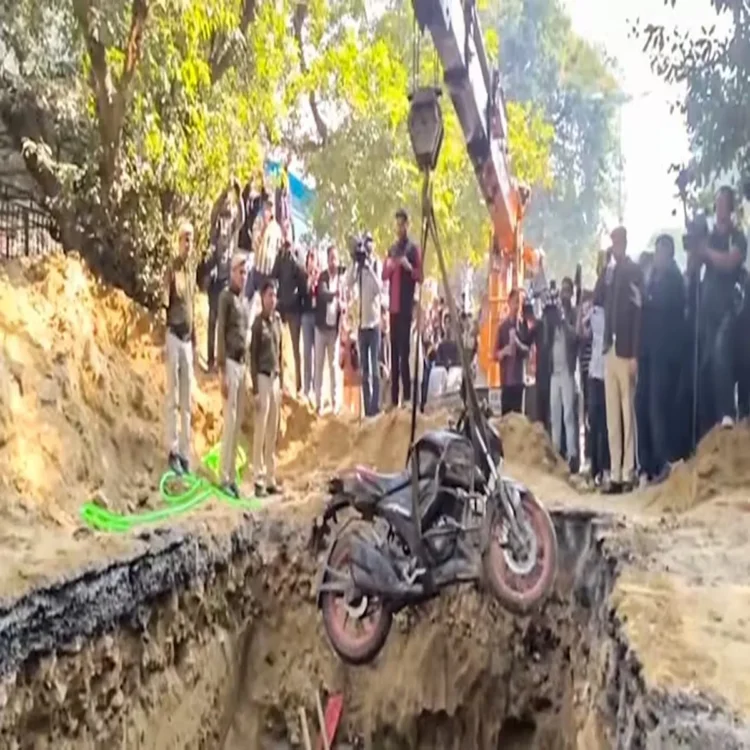
Court Stresses Responsibility of Contractors
Justice Swarana Kanta Sharma, while delivering the order, said contractors entrusted with public works carry a clear obligation to maintain strict safety standards at construction sites. The court noted that the accused were responsible for ensuring proper preventive measures, including adequate barricading, warning signals, and the availability of rescue equipment in case of an emergency.
According to the court, the excavation had been carried out in the middle of a busy road without complying with essential safety norms. The absence of blinkers, barricades, and other cautionary devices created a hazardous situation for commuters. The judge remarked that such negligence made an unfortunate incident almost certain.
Incident That Sparked Legal Scrutiny
The case stems from an incident in Janakpuri where the young biker reportedly fell into a pit dug for ongoing construction work. The accident led to his death, prompting legal action and raising concerns about adherence to safety guidelines in public infrastructure projects.
During the hearing, the prosecution argued that the excavation work had violated several conditions attached to the work permit, the terms outlined in the tender, and directives issued by the traffic police. The court took note of these submissions, observing that ignoring mandatory safeguards in a high-traffic zone demonstrated a serious lapse.
Observations on Urban Safety Standards
In its remarks, the court highlighted the broader issue of accountability in urban development projects. It stated that contractors cannot escape responsibility when safety protocols are disregarded. The order emphasized that public authorities and private agencies involved in civic works must prioritize human life over procedural shortcuts or cost-saving measures.
The court further observed that when digging is undertaken on a public road, especially in a densely populated city like Delhi, strict compliance with safety requirements is not optional. Adequate lighting, visible warning signs, and secure barricading are basic measures designed to prevent exactly such tragedies, the judge noted.
Bail Plea Rejected
While considering the anticipatory bail plea, the court found that the circumstances of the case did not justify granting protection from arrest at this stage. The seriousness of the allegations and the apparent disregard for stipulated safety conditions weighed against the applicants.
The judge reiterated that it was “high time” that the safety of Delhi’s residents be treated as a priority. The observation reflected the court’s concern that repeated lapses in implementing basic precautions continue to endanger lives.
Broader Implications
The ruling is likely to resonate beyond this individual case, as it signals a strict judicial approach toward negligence in public works. With rapid infrastructure expansion underway in many parts of the capital, compliance with safety norms remains under scrutiny.
Legal experts note that the order reinforces the principle that accountability extends not only to government bodies but also to contractors executing projects. The emphasis on rescue preparedness and preventive arrangements may influence how similar cases are evaluated in the future.
As investigations continue, the case serves as a reminder of the consequences that can arise when mandated safeguards are overlooked. For the family of the deceased, the court’s decision marks an important step in the legal process, while for civic agencies and contractors, it underscores the urgent need to ensure that development does not come at the cost of public safety.