
Religion – Supreme Court Upholds Limits on Prayers at Hill Shrine
Religion – The Supreme Court on Monday declined to overturn a Madras High Court ruling that restricts animal sacrifice and limits Muslim prayers at the dargah located on Thirupparankundram Hill in Madurai to the festival days of Ramzan and Bakrid.
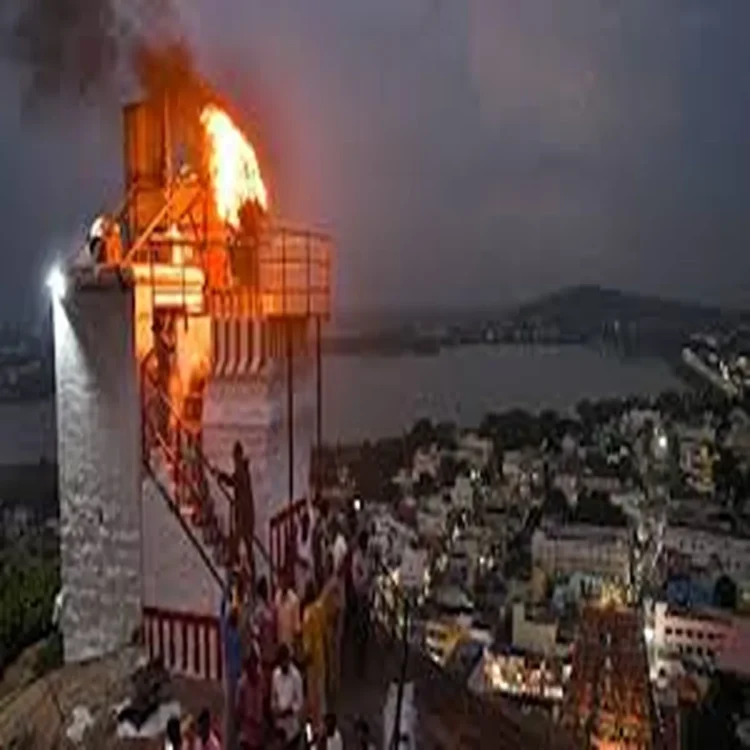
The decision came as a bench comprising Justices Aravind Kumar and P.B. Varale dismissed a petition challenging the High Court’s October 2025 order. The apex court clarified that it would not intervene in the matter and chose not to express any opinion on the rights claimed by the parties involved. With the dismissal, all pending applications connected to the plea were also disposed of.
Supreme Court Declines to Intervene
In its brief order, the court stated that it saw no grounds to interfere with the High Court’s directions. The bench described the earlier judgment as balanced, effectively endorsing the approach adopted by the Madras High Court in handling a sensitive dispute involving religious practices and access to a shared space.
The High Court had earlier ruled that Muslim devotees may offer prayers in the Nellithoppu area during Ramzan and Bakrid, provided that such gatherings do not disturb the traditional pathway leading to the Kasi Vishwanathar Temple situated on the hill. At the same time, it placed a prohibition on animal sacrifice, cooking, and the distribution of non-vegetarian food at the site until a competent civil court delivers a final decision on the matter.
Petition Raised Questions on Religious Freedom
The plea before the Supreme Court was filed by M. Imam Hussain and argued by senior advocate Prashant Bhushan. The petitioner challenged the High Court’s restriction limiting prayers to two specific Islamic festivals each year. According to the petition, confining worship to Ramzan and Bakrid amounted to an infringement of the constitutional right to freedom of religion.
Bhushan contended that the High Court’s observation—that namaz at the site was of recent origin—was flawed. He further argued that the court had effectively endorsed a peace committee arrangement without fully examining the historical and constitutional dimensions of the issue.
The petitioner also maintained that the Nellithoppu land belonged to the Muslim community and that prayers conducted there had not led to any law and order disturbances. In response, the bench observed that the formation of a peace committee itself suggested that tensions had arisen in the past, necessitating mediation.
High Court’s Emphasis on Maintaining Harmony
The underlying dispute centers on the coexistence of religious sites and practices on Thirupparankundram Hill, a location with historical and spiritual significance for multiple communities. The Madras High Court sought to strike a balance between preserving established traditions connected to the temple and allowing limited access for Muslim worship during major festivals.
In its earlier ruling, the High Court had stressed the importance of preventing conflict and safeguarding public order. By restricting animal sacrifice and related activities, the court aimed to avoid friction while leaving the final determination of property and usage rights to a civil court.
Broader Implications of the Ruling
The Supreme Court’s refusal to interfere effectively leaves the High Court’s framework intact for now. Legal observers note that the apex court’s endorsement of a “balanced approach” underscores judicial caution in matters involving competing religious claims.
While the petitioner had sought broader access for regular prayers, the current arrangement continues to permit worship during Ramzan and Bakrid under specific conditions. The final resolution of ownership and associated rights remains subject to further proceedings before a civil court.
The case highlights the ongoing challenges courts face in reconciling constitutional freedoms with concerns over public order and shared religious spaces. For the time being, the High Court’s directions will govern activities at the hilltop shrine, pending a definitive ruling from the competent authority.