
Ramesh : Cites Nehru-Patel Letters on Gandhi Anniversary, Targets BJP Narrative
Ramesh : Congress leader Jairam Ramesh on Friday marked the anniversary of Mahatma Gandhi’s assassination by drawing attention to historical correspondence involving India’s first generation of national leaders, using the moment to criticise the Bharatiya Janata Party and its ideological roots. His remarks, shared publicly on social media, reignited debate over the political interpretation of Gandhi’s legacy and the views held by some contemporary lawmakers.
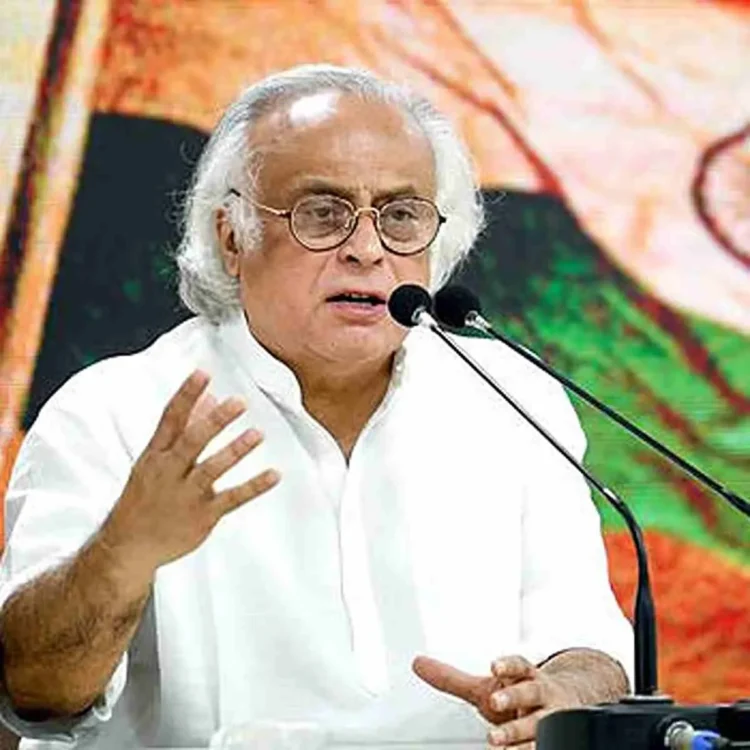
Reference to Letters From Early National Leaders
In his post, Ramesh referred to letters written by former prime minister Jawaharlal Nehru and former home minister Sardar Vallabhbhai Patel to Syama Prasad Mookerjee, the founder of the Bharatiya Jan Sangh. According to Ramesh, the letters expressed strong criticism of organisations such as the Hindu Mahasabha and the Rashtriya Swayamsevak Sangh, particularly in the period surrounding Gandhi’s assassination.
Ramesh noted that Nehru had written to Mookerjee just days before Gandhi was killed, while Patel followed up with another letter several months later in July 1948. He described these communications as historically significant documents that, in his view, challenged claims of nationalism made by groups associated with those organisations.
Criticism of Recent Political Remarks
The Congress MP also used the occasion to respond to comments made earlier by former judge and current BJP parliamentarian Abhijit Gangopadhyay. Without naming him directly in his post, Ramesh criticised what he described as an ideological position that placed Mahatma Gandhi and his assassin, Nathuram Godse, on the same moral plane.
Ramesh suggested that such statements reflected a troubling mindset, particularly when voiced by an elected representative. He added that the issue gained added significance because of the public standing of those making the remarks.
Background on the Controversial Statement
Gangopadhyay had made the comments in 2024 during an interview with a Bengali television channel. Explaining his position, he said that, as someone from a legal background, he believed it was important to study all perspectives before forming a conclusion. He stated that he wanted to read Godse’s writings to understand what led to Gandhi’s killing, adding that until then he could not choose between Gandhi and Godse.
The remarks sparked criticism across political lines at the time, with opponents arguing that any comparison between the leader of India’s freedom struggle and his assassin was inappropriate.
Gandhi’s Assassination and Historical Context
Mohandas Karamchand Gandhi, widely regarded as the moral force behind India’s independence movement, was shot dead on January 30, 1948. He was on his way to attend his evening prayer meeting in New Delhi when Nathuram Godse fired the fatal shots.
Gandhi’s death sent shockwaves across the country and the world, prompting an outpouring of grief. In the aftermath, Nehru addressed the nation on All India Radio, a speech that Ramesh also shared alongside his social media post to underline the historical gravity of the moment.
Observance of Martyrs’ Day
January 30 is observed annually as Martyrs’ Day in India, commemorating Gandhi and others who sacrificed their lives for the nation. This year marks the 78th anniversary of his death.
To mark the occasion, the central government is scheduled to organise an all-religious prayer meeting and a formal Martyrs’ Day ceremony at Rajghat in New Delhi, the site of Gandhi’s memorial. The event will be attended by Defence Minister Rajnath Singh, Union Minister Manohar Lal, who chairs the Rajghat Samadhi Committee, and other dignitaries.
The annual observance continues to serve as a reminder of Gandhi’s enduring influence on India’s political and moral discourse, even as contemporary debates reflect differing interpretations of his legacy.