
RajasthanPolitics – Vasundhara Raje’s Moves Spark Fresh State Debate
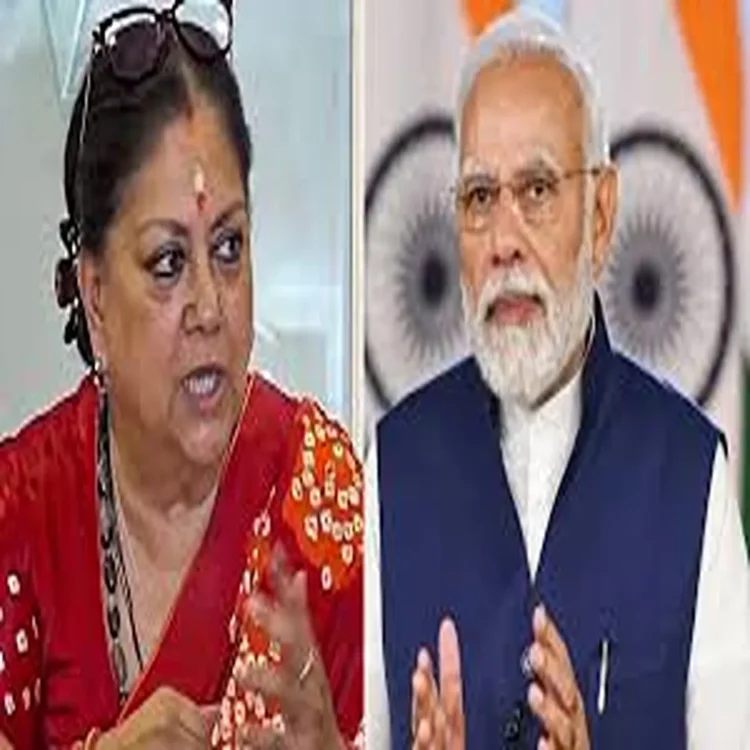
RajasthanPolitics – Former Chief Minister Vasundhara Raje has once again found herself at the center of political conversations in Rajasthan, despite not holding any key organizational or government position at present. Now serving solely as a Member of the Legislative Assembly, her recent public engagements have triggered renewed discussion across party lines and among political observers.
Support for Khejri Conservation Draws Attention
Raje’s endorsement of the Khejri tree conservation campaign in Bikaner has been widely noted. The movement, aimed at protecting the ecologically significant tree species in Rajasthan’s arid regions, has gained traction among environmental groups and local communities. Her support lent additional visibility to the initiative and prompted political circles to speculate about her evolving public positioning.
Soon after, she met with government employees who have been pressing for equal pay during their probationary period. The demand, which has been under discussion for some time, concerns salary disparities faced by employees before confirmation of service. By engaging directly with the employees, Raje signaled her willingness to align with workforce concerns, a move that added to the ongoing buzz about her political trajectory.
Remarks on Women in Politics Stir Speculation
The discussion intensified following her comments at a Jat community gathering in Jaipur. Speaking about the challenges faced by women in public life, Raje said that women in politics often need to work three times harder than men to receive recognition. While the remark was framed as a broader reflection on gender inequality in political spaces, analysts have been interpreting it through a political lens, debating whether it carried an underlying message about her own journey.
Though Raje currently holds no major party office, her statements and appearances continue to command attention, underscoring her enduring influence within Rajasthan politics.
Congress Questions ‘History Rewrite’ in Assembly
Meanwhile, a separate political exchange unfolded inside the Rajasthan Assembly. Senior Congress leader Shanti Dhariwal raised questions about the state government’s approach to revising historical content in textbooks. Targeting the Bharatiya Janata Party’s stance on Mughal history, Dhariwal referenced an inscription at Amer Fort that praises Mughal emperor Akbar.
During the debate, he asked whether such historical markers would also be reconsidered if the government was intent on correcting the historical narrative. His remarks come amid reports that chapters related to the Mughals are being removed from school textbooks under the current administration.
The exchange reflects a broader national conversation over how history is presented in academic material, with Rajasthan now becoming one of the focal points of that debate.
New Excise Policy Triggers Political Dispute
Another issue stirring discussion is the state’s newly approved excise policy. The Bhajanlal Sharma government has delegated authority to the Excise Commissioner to determine liquor shop operating hours. The decision is widely interpreted as paving the way for extending closing times from 8 pm to 10 pm.
Supporters argue that longer operating hours could increase state revenue, while critics contend that such measures require broader social consideration. Former Chief Minister Ashok Gehlot and Rajasthan Congress chief Govind Singh Dotasra have both voiced strong opposition, describing the move as problematic.
The policy shift has added another dimension to Rajasthan’s political discourse, particularly given past political slogans that targeted earlier administrations over liquor sale timings. With the debate now resurfacing in a new context, parties appear poised for further exchanges in the coming weeks.
As these developments unfold, Rajasthan’s political climate remains dynamic, marked by leadership speculation, policy disagreements, and ongoing debates over history and governance.