
Railways – Government Unveils Rail Tech Policy and e-RCT Upgrade
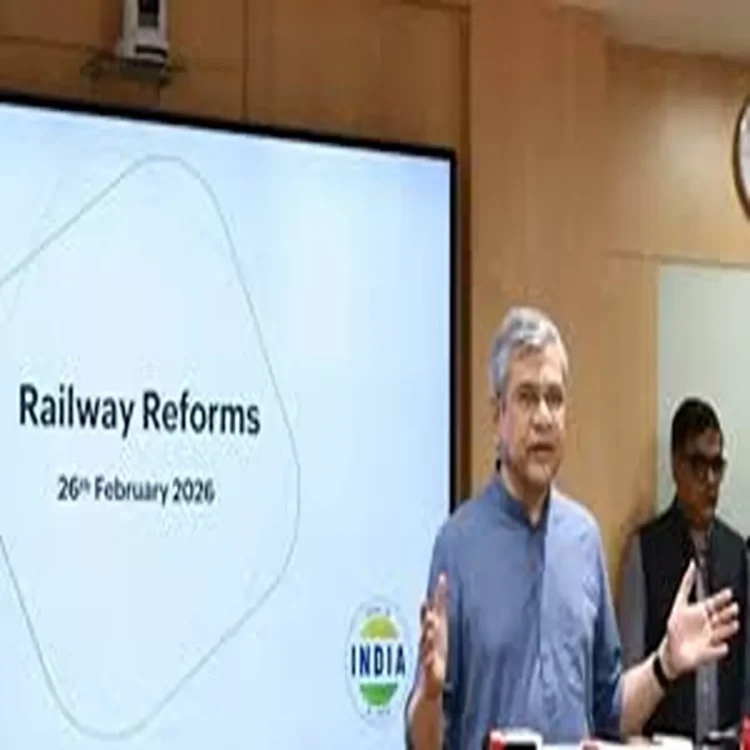
Railways – The Union government on Thursday introduced two major reforms aimed at modernising Indian Railways, with Railway Minister Ashwini Vaishnaw announcing the launch of the Rail Tech Policy and the second phase of the e-RCT system. The measures form part of the Centre’s ongoing “52 Reforms in 52 Weeks” programme designed to streamline operations and improve public services.
Rail Tech Policy to Drive Innovation in Railways
Addressing the media, Vaishnaw said the newly introduced Rail Tech Policy would create a structured pathway for integrating modern technologies into railway operations. At the heart of this policy is a newly developed Rail Tech Portal, which will function round the clock and serve as a direct platform for start-ups, technology firms and independent innovators to present solutions.
The minister stated that individuals or organisations with viable technological ideas would now have a formal channel to collaborate with Indian Railways. The portal is expected to ensure systematic evaluation and adoption of innovations that can address operational challenges and improve efficiency.
According to officials, the initiative seeks to accelerate technology-driven governance while encouraging industry participation in public infrastructure. The Rail Tech Policy is designed to identify practical, scalable solutions that can be implemented across the railway network.
Focus on Advanced Technologies and AI Applications
The ministry has identified several priority areas where emerging technologies can make a measurable difference. Artificial intelligence-enabled systems, predictive monitoring tools and smart automation solutions are among the focus segments.
Vaishnaw highlighted examples of innovation challenges where start-ups could contribute. These include drone-based systems for detecting rail fractures, rail stress monitoring technologies, sensor-based load calculation devices for parcel vans, and installation of solar panels on train coaches to enhance energy efficiency.
Officials indicated that proposals addressing these areas would be carefully assessed, with selected projects moving towards pilot implementation and possible large-scale deployment.
Safety Projects to Receive Highest Preference
The minister made it clear that safety-related innovations would be given top consideration under the new policy. Projects aimed at preventing accidents, improving track surveillance and enhancing passenger security will be prioritised during evaluation.
Following safety, solutions that improve maintenance efficiency and address operational bottlenecks will also receive significant attention. The ministry believes that targeted technological upgrades can help reduce downtime, enhance reliability and improve overall passenger experience.
Industry experts have noted that structured collaboration between government agencies and start-ups could help bridge gaps in railway infrastructure management, especially in areas requiring real-time data monitoring and predictive analytics.
Complete Digitisation of Railway Claims Tribunal
Alongside the Rail Tech Policy, Vaishnaw announced the full digitisation of the Railway Claims Tribunal through the second phase of the e-RCT platform. The upgraded system is expected to provide end-to-end computerisation of claims processing.
Under the revamped e-RCT framework, claimants will be able to file cases online at any time, eliminating the need for physical visits. The platform will also support virtual hearings and provide instant access to tribunal orders.
The minister said the digitised system would simplify procedures related to accident claims and other untoward incidents, ensuring faster and more transparent resolution. By enabling 24×7 e-filing and streamlined documentation, the government aims to reduce delays and improve accessibility for litigants across the country.
Officials added that the integration of digital records and online case tracking would strengthen accountability within the tribunal process.
With these two reforms, the government has signalled a stronger push towards technology-led transformation in Indian Railways. The Rail Tech Policy and the expanded e-RCT system are expected to play a key role in improving safety standards, operational efficiency and public service delivery across one of the world’s largest railway networks.