
Protocol – Growing Centre–Bengal Tension After Officials Called to Delhi Over Visit Row
Protocol – A dispute between the central government and the West Bengal administration has intensified following allegations of a protocol violation during President Droupadi Murmu’s recent visit to Darjeeling district. The situation escalated after the Union Ministry of Home Affairs decided to bring two senior officials from the state to Delhi on central deputation, a move that has added a new dimension to the ongoing political and administrative disagreement.
Centre Seeks Deputation of Two Senior Officials
The Ministry of Home Affairs has requested the West Bengal government to release two key officials — Darjeeling District Magistrate Manish Mishra and Siliguri Police Commissioner C. Sudhakar — for central deputation. The decision follows the Centre’s review of the events surrounding the President’s visit to North Bengal, particularly in Siliguri, where concerns were raised about security arrangements and adherence to official protocol.
According to officials familiar with the matter, the Centre treated the alleged breach of protocol during the President’s visit as a serious issue. The decision to bring the two officers to Delhi is believed to be part of a broader administrative response aimed at examining the circumstances surrounding the visit.
State Government Transfers Darjeeling District Magistrate
Shortly after the Centre’s move, the West Bengal government issued a notification on March 12 transferring Manish Mishra from his position as Darjeeling District Magistrate. He has been reassigned as Special Secretary in the state’s Home and Hill Affairs Department.
While the state administration has taken action regarding Mishra’s position, no official decision has yet been announced regarding Siliguri Police Commissioner C. Sudhakar. Some senior officials within the state home department have indicated that Mishra’s transfer could be linked to the Centre’s decision to call both officers to Delhi.
Political Reaction and Opposition Criticism
The controversy has also drawn political reactions. Suvendu Adhikari, Leader of the Opposition in the West Bengal Legislative Assembly and a senior member of the Bharatiya Janata Party, raised the issue during his first meeting with the newly appointed Governor, R. N. Ravi, at Lok Bhavan, previously known as Raj Bhavan.
Adhikari stated that he discussed what he described as an “insult” to the President during the visit and urged the governor to take note of the matter. He also welcomed the decision by Rashtrapati Bhavan not to schedule a meeting with Members of Parliament from the ruling Trinamool Congress who had sought to brief the President on the state government’s welfare initiatives.
Disagreement Over Presidential Visit Arrangements
The controversy began after President Murmu expressed disappointment regarding certain arrangements during her visit to North Bengal. In particular, she noted the absence of Chief Minister Mamata Banerjee and members of her cabinet at Bagdogra Airport when she arrived to attend an international tribal community conference.
Questions were also raised about the relocation of the event venue. The International Santhal Council Conference, which was originally planned to be held in Bidhannagar, was instead conducted on March 8 at Gosainpur, near Bagdogra Airport.
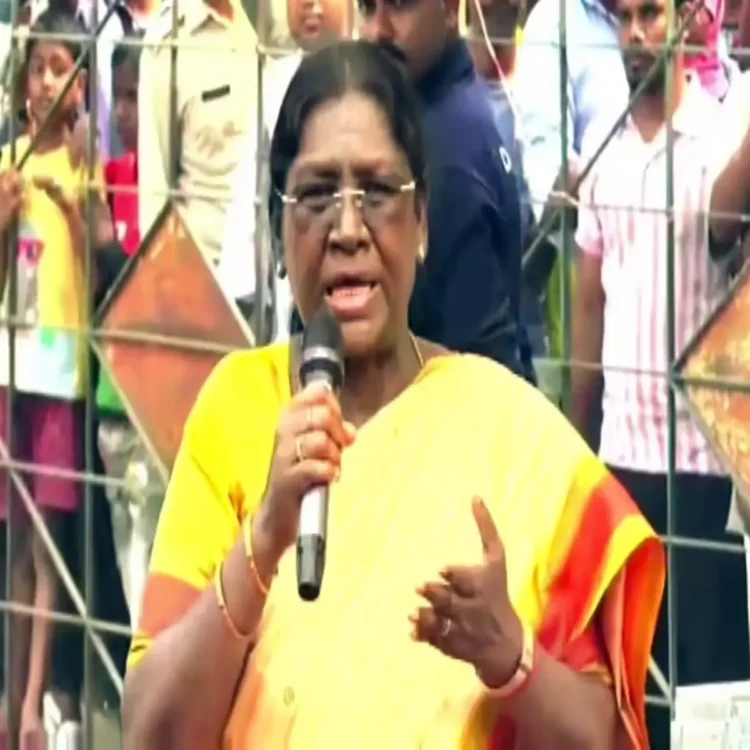
During her address, the President remarked that the earlier venue might have been more convenient due to better space and accessibility for attendees. She also pointed out that the change in venue appeared to affect participation at the event.
State Submits Report to the Centre
Amid the growing debate, the West Bengal government submitted a detailed report to the central government on March 9 explaining the sequence of events related to the President’s visit. Chief Secretary Nandini Chakraborty sent the report to Union Home Secretary Govind Mohan, along with supporting documents outlining the administrative decisions taken during the visit.
The report reportedly clarified the reasons for shifting the conference venue and explained why the Chief Minister was unable to attend the programme. The Centre had sought this clarification after public remarks from both the President and the Chief Minister highlighted differences over how the visit was handled.
The exchange of statements between the two sides has further deepened the political sensitivity surrounding the issue, particularly as the state approaches future electoral contests. Officials from both the Centre and the state administration have maintained that the matter is under review as discussions continue.