
PlacesOfWorshipAct – Supreme Court to Hear Challenges to 1991 Law Provisions
PlacesOfWorshipAct – The Supreme Court on Wednesday indicated that it will schedule a final hearing on a group of petitions questioning specific provisions of the Places of Worship (Special Provisions) Act, 1991, a law that restricts legal claims aimed at altering the status of religious sites as they existed on August 15, 1947.
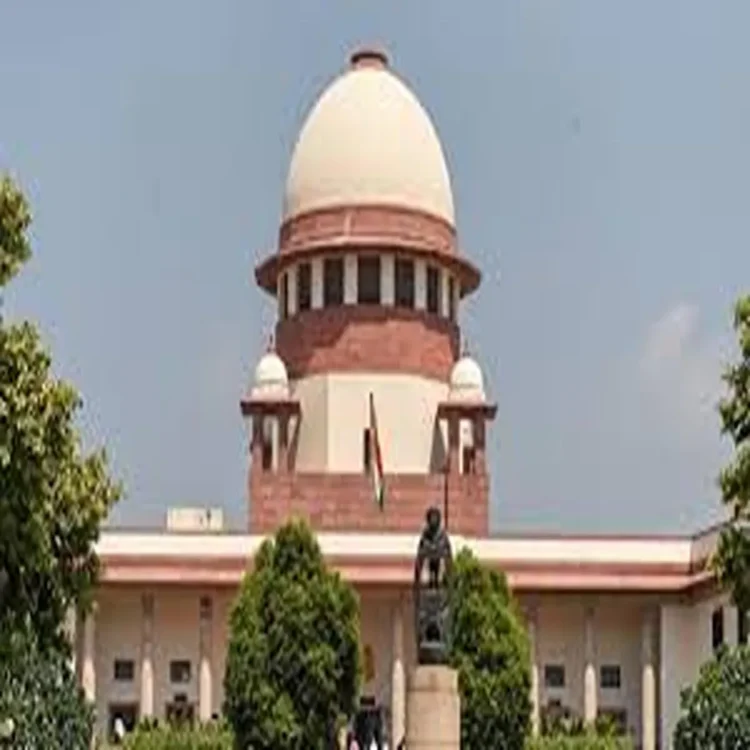
Bench Signals Readiness for Final Arguments
A three-judge bench led by Chief Justice Surya Kant, and comprising Justices Joymalya Bagchi and Vipul M. Pancholi, considered submissions seeking an early listing of the matter. Senior advocate Rakesh Dwivedi, appearing for petitioner Ashwini Upadhyay, pointed out that the court had framed key legal questions in October 2022, yet the case has not progressed to final arguments.
Dwivedi informed the bench that the Union government, which had been directed to submit its response by October 31, 2022, has not yet filed its affidavit addressing the constitutional challenges. He urged the court to take up the matter without further delay.
Responding to the request, the Chief Justice said the court would determine a suitable date for final hearing. However, he noted that two constitution bench matters involving nine judges are already listed for March and April. The schedule for the present case, he added, would likely be finalized after those proceedings conclude.
Dispute Over Scope of 1991 Law
The petitions challenge certain provisions of the 1991 legislation that bar courts from entertaining suits seeking to reclaim places of worship or alter their religious character as it stood at the time of India’s Independence. The law was enacted to preserve communal harmony by maintaining the status quo of religious sites.
Petitioners have argued that parts of the statute may infringe upon constitutional rights, while supporters maintain that the law is essential for social stability. The Supreme Court has yet to express any view on the merits of the arguments and has limited itself to procedural directions so far.
Court Declines Immediate Intervention in Ajmer Matter
During the hearing, the bench was also asked to restrain a civil court in Rajasthan from issuing any substantive orders in connection with a dispute relating to the Ajmer dargah. The court declined to pass such a direction at this stage.
Chief Justice Surya Kant observed that the Supreme Court has already issued binding orders on similar matters. He indicated that if any order inconsistent with those directions is passed by a lower court, appropriate steps can be considered at that time.
Earlier Directions on Fresh Suits
In December 2024, the apex court had directed that, until further orders, courts across the country should not entertain new lawsuits seeking to reclaim religious structures, particularly mosques and dargahs. It had also restrained courts from passing effective interim or final orders in cases already pending on similar claims.
That interim protection was granted to ensure that no irreversible steps are taken while the constitutional validity of the law remains under examination.
Awaiting Centre’s Stand
The matter has been pending since October 2022, when the Supreme Court first sought a detailed response from the Union government regarding the petitions. The court had set a deadline of October 31 that year for filing an affidavit. As of the latest hearing, that response remains awaited.
With the bench now indicating its intention to move toward final arguments, the case is expected to gain momentum once scheduling issues are resolved. The outcome could have significant implications for the interpretation of the 1991 statute and for ongoing disputes concerning religious places across India.