
MunicipalGovernance – Jayesh Ranjan Takes Charge of Three Hyderabad Civic Bodies
MunicipalGovernance – The Telangana government has rolled out a new administrative structure aimed at improving civic management across the Hyderabad metropolitan region.-
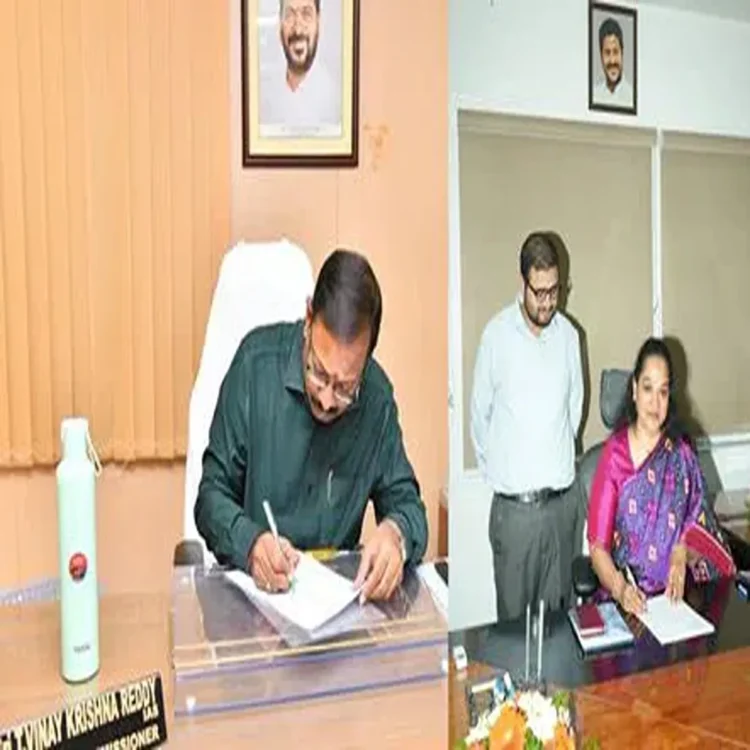
Jayesh Ranjan, Special Chief Secretary in the Metropolitan Area and Urban Development Department, formally took additional charge on Wednesday as Special Officer for three newly structured municipal corporations in and around Hyderabad. The development was confirmed by the Telangana Information and Public Relations Department, which outlined the government’s broader plan to reorganise urban governance in the state capital.
Government Push for Decentralised Administration
The state government has issued official orders constituting three separate municipal corporations: the Greater Hyderabad Municipal Corporation, the Cyberabad Municipal Corporation, and the Malkajgiri Municipal Corporation. The move is designed to decentralise civic administration and streamline the delivery of public services in one of India’s fastest-growing urban centres.
According to the department, the restructuring is being implemented under the CURE framework, an initiative focused on enhancing efficiency and citizen-focused governance. By dividing administrative responsibilities among three corporations, the government aims to ensure quicker decision-making and improved responsiveness to local needs.
Jayesh Ranjan, a 1992-batch IAS officer, has been entrusted with overseeing the transition and functioning of all three bodies as Special Officer. His appointment is expected to provide continuity and administrative coordination during the restructuring phase.
New Administrative Structure Explained
Under the revised framework, the Greater Hyderabad Municipal Corporation has been reorganised into six zones: Shamshabad, Rajendranagar, Charminar, Golconda, Khairatabad, and Secunderabad. These zones collectively comprise 30 circles and 150 wards, forming the core civic structure for Hyderabad city.
The newly formed Malkajgiri Municipal Corporation will function through three zones — Malkajgiri, Uppal, and L.B. Nagar. This corporation includes 14 circles and 74 wards, covering several densely populated residential and commercial areas in the northeastern part of the metropolitan region.
Similarly, the Cyberabad Municipal Corporation has been structured into three zones: Serilingampally, Kukatpally, and Qutbullapur. It consists of 16 circles and 76 wards. This area includes several IT corridors and rapidly developing suburban neighbourhoods that have witnessed significant growth in recent years.
Officials noted that the distribution of zones, circles, and wards has been designed to balance administrative workload and improve accessibility for residents seeking civic services.
Commissioners Assume Responsibilities
Alongside Jayesh Ranjan’s appointment as Special Officer, senior officials have taken charge as Commissioners for the respective corporations. R.V. Karnan has assumed charge as Commissioner of the Greater Hyderabad Municipal Corporation. Vinay Krishna Reddy has been appointed Commissioner of the Malkajgiri Municipal Corporation, while Srijana has taken over as Commissioner of the Cyberabad Municipal Corporation.
The Information and Public Relations Department stated that the new structure is expected to strengthen governance mechanisms, enhance accountability, and ensure faster resolution of civic issues. By narrowing administrative jurisdictions, authorities believe municipal bodies will be better positioned to address infrastructure demands, sanitation management, urban planning, and other essential services.
Focus on Efficiency and Citizen Services
The government order emphasised that the reorganisation is intended to improve administrative efficiency and provide faster, citizen-centric services. Hyderabad’s rapid urban expansion in recent years has increased pressure on civic infrastructure, prompting the need for a more streamlined system of governance.
With three distinct municipal corporations now in place, the state administration aims to bring decision-making closer to local communities. Officials maintain that decentralised governance will allow each corporation to focus more effectively on area-specific development priorities.
As the transition begins, the Special Officer and appointed Commissioners are expected to oversee the operational rollout, including coordination among departments and implementation of revised jurisdictional boundaries.
The restructuring marks a significant step in the evolution of municipal governance in Hyderabad, reflecting the state government’s focus on adapting civic administration to the demands of a growing metropolitan population.