
Mumbai Civic Election : Verdict and the Shifting Political Landscape of Maharashtra
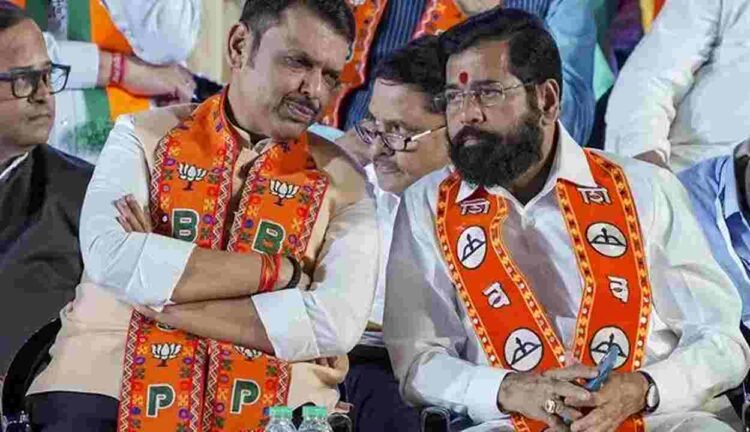
Mumbai Civic Election: The results of elections for 28 municipal corporations in Maharashtra, including the Brihanmumbai Municipal Corporation, are being seen as a decisive moment for state politics. Among these civic bodies, the Mumbai civic election holds special importance because it governs India’s richest municipal corporation and has historically shaped the political narrative of the state. Exit polls released ahead of the counting have created intense debate, as most of them indicate a clear advantage for the BJP-led Mahayuti alliance. If these predictions translate into actual results, the outcome could redefine power equations not only in Mumbai but across Maharashtra.
Background of the Mumbai Civic Elections
The Brihanmumbai Municipal Corporation election is not just a local contest. It is a prestige battle where governance, identity politics, and long-term political survival intersect. Over the years, the BMC has been dominated by regional forces that built their influence on local pride, language, and employment issues. This election, however, comes at a time when alliances have shifted, internal party splits have occurred, and voter priorities appear to be changing rapidly.
For the first time in two decades, Uddhav Thackeray and Raj Thackeray came together, setting aside years of rivalry. Their reunion was built on shared themes such as Marathi identity, protection of local culture, and concerns over migration into Mumbai. The expectation was that this emotional and cultural appeal would consolidate the Marathi vote in their favor and help them counter the growing influence of national parties in the city.
Exit Poll Trends and Voter Behavior
Exit polls have played a crucial role in shaping public perception ahead of the final results. According to surveys, nearly half of Marathi voters are estimated to have supported the Thackeray-led alliance in the Mumbai civic election. On the surface, this appears to validate the strategy of focusing on regional identity and cultural pride.
However, the same exit polls suggest that this support may not be enough to secure victory. A significant section of young voters and women reportedly favored the Mahayuti alliance. Additionally, communities such as North Indians, Gujaratis, and Rajasthanis are believed to have voted in large numbers for the BJP-led front. When combined, these groups form a decisive voting bloc that seems to have tilted the balance away from the Thackeray brothers.
Role of Youth, Women, and Minority Voters
One of the most striking findings of the exit polls is the role played by youth and women voters. These groups are increasingly driven by issues such as infrastructure development, employment opportunities, urban governance, and stability rather than purely emotional or identity-based narratives. The Mahayuti alliance appears to have successfully tapped into these aspirations through promises of development and efficient administration.
Interestingly, surveys also indicate that the Mahayuti has received support from sections of Muslim and Christian voters, along with a substantial portion of Marathis. This diverse voter base has strengthened its position and reduced the effectiveness of traditional vote-bank politics that once dominated Mumbai’s civic elections.
Implications for Uddhav Thackeray and the Maha Aghadi
For Uddhav Thackeray, the Mumbai civic election is more than just another political contest. It is being viewed as a test of survival. After losing ground in other key regions, including Thane, Mumbai was expected to serve as a stronghold where his leadership could be reaffirmed. A defeat here would significantly weaken his influence and raise questions about the future direction of his party.
The broader Maha Aghadi alliance also faces challenges. While it has managed to retain the loyalty of a considerable section of Marathi voters, it has struggled to expand its appeal beyond this core base. The division of votes within the Marathi community itself has further complicated matters, allowing the Mahayuti to emerge as the dominant force.
Seat Projections and Power Dynamics in BMC
Various exit polls have offered seat projections that highlight the scale of the challenge facing the opposition. Estimates suggest that the Mahayuti alliance could secure anywhere between 131 and 151 seats out of the total 227 wards in the BMC. Crossing the halfway mark of 114 seats would enable the alliance to elect its mayor and effectively control the municipal administration.
In contrast, projections for the combined strength of the Uddhav Thackeray faction and the Maharashtra Navnirman Sena remain significantly lower, ranging between 58 and 75 seats depending on the survey. If these numbers hold true, the BJP is expected to emerge as the single largest party, with Eknath Shinde’s Shiv Sena potentially taking the second position.
A Turning Point for Maharashtra Politics
The Mumbai civic election results are likely to have long-term consequences for Maharashtra’s political landscape. A strong performance by the Mahayuti would reinforce the growing influence of national-level politics in local governance, while a poor showing by the Thackeray-led alliance could mark the end of an era dominated by regional identity-based politics in Mumbai.
As counting unfolds, the focus will remain on whether voter preferences have truly shifted from emotional narratives to development-driven choices. Whatever the final outcome, this election will be remembered as a defining moment that reshaped alliances, voter behavior, and the future trajectory of Maharashtra politics.