
Military – China’s Marine Corps Outlines Ambitious Modernization Drive
Military – China’s naval leadership has detailed an extensive plan to modernize its marine corps, highlighting a broader push to strengthen combat readiness across key maritime regions.
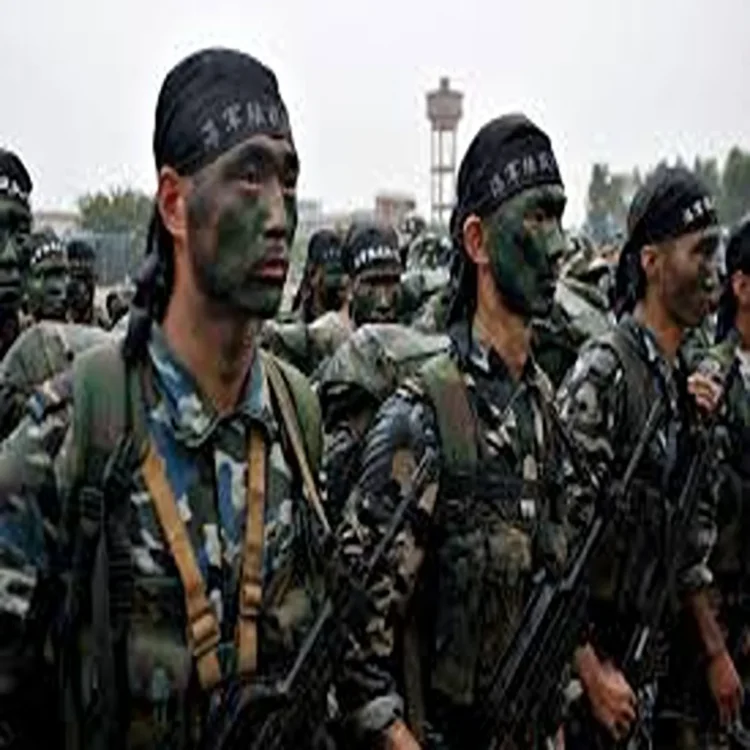
The United States has long relied on the United States Marine Corps as a rapid-response force capable of deploying quickly to global hotspots. China maintains a comparable formation within the People’s Liberation Army Navy Marine Corps, a unit that has expanded significantly in both size and capability over the past decade.
Rare Insight Into Strategic Vision
In a recent publication translated by the US Naval War College, Rear Admiral Zhu Chuansheng, commander of China’s naval marines, set out a detailed assessment of future missions and operational priorities. His article, originally published in the PLA journal Military Art, offers an uncommon look at how Beijing views the evolving role of its amphibious forces.
Zhu wrote that China’s security concerns are increasingly centered at sea, from its immediate periphery to distant waters. He argued that maritime regions now represent the focal point of national defense planning and the expansion of national interests.
Professor Andrew Erickson, a strategy expert at the Naval War College, described the article as a rare and authoritative explanation of the marine corps’ transformation blueprint.
Four Core Missions Identified
According to Zhu, the force must be prepared to conduct initial assault operations, breach defensive lines, and seize critical objectives in contested environments. The emphasis is on combined-arms integration, rapid maneuvers, and leveraging broader naval infrastructure to achieve operational surprise.
One scenario frequently discussed in defense circles is a potential Taiwan contingency. The Pentagon’s most recent report on Chinese military capabilities noted continued improvements in amphibious assault capacity, suggesting such preparations remain a priority. Since restructuring began in 2017, the corps has incorporated new armored platforms, including ZTQ-15 light tanks, expanding its operational reach beyond traditional amphibious vehicles.
Focus on Island Control and Maritime Deterrence
A second mission centers on securing islands and reefs, particularly in strategically sensitive waterways. This would involve establishing fortified positions equipped with air defense and long-range strike systems to deter rival forces. Beijing’s territorial claims in the South China Sea and around the Senkaku/Diaoyu Islands remain a source of regional tension.
Zhu also described the marine corps as a tool of maritime deterrence. Tasks could include safeguarding key sea lanes, countering blockades, boarding vessels, and supporting precision strikes near adversary facilities. These capabilities are framed as essential for maintaining sea control in contested zones.
Expanding Overseas Footprint
The commander further emphasized the importance of overseas deployment. China already maintains a military presence in Djibouti and has secured access to facilities in Cambodia. US defense assessments indicate that Beijing has explored additional basing options across parts of Africa, Asia, and the Pacific.
Zhu suggested that overseas garrisons, prepositioned equipment, and partnerships with Chinese-operated commercial ports could support missions ranging from evacuation operations to protection of strategic infrastructure.
Technology and High-End Warfare
Modernization efforts also prioritize advanced technologies. Zhu pointed to artificial intelligence, unmanned systems, cyber capabilities, and distributed maritime operations as central to future conflicts. He stressed the need for faster decision-making cycles and integrated reconnaissance-to-strike networks designed to shorten response times.
Recent additions to China’s amphibious fleet, including the Type 075 landing helicopter dock ships and the forthcoming Type 076 vessel Sichuan, are intended to strengthen force projection. The latter combines features of an amphibious assault ship and a light aircraft carrier, enhancing operational flexibility.
Training and Structural Reform
Zhu acknowledged internal challenges, particularly in personnel development and joint training. He called for more realistic exercises, integrated sea-based deployments, and closer coordination between marine units and naval crews.
External analyses, including research from the National Defense University in Washington, have highlighted hurdles such as limited overseas experience among personnel and logistical constraints. Nonetheless, recent large-scale drills suggest continued progress toward a more expeditionary posture.
As maritime competition intensifies, China’s marine corps appears positioned to play a central role in safeguarding what Beijing views as core interests.