
Jammu-Kashmir Weather: Avalanche Alert Issued in Jammu and Kashmir After Heavy Snowfall in Higher Regions
Jammu-Kashmir Weather: The India Meteorological Department has issued an avalanche alert for several mountainous districts of Jammu and Kashmir after continuous snowfall in the higher reaches over the past week. The warning comes amid growing concerns about snow accumulation at elevated altitudes, which has significantly increased the risk of snow slides. Authorities are urging both local residents and visitors to remain cautious, avoid vulnerable zones, and strictly follow official advisories to ensure safety during this critical period.
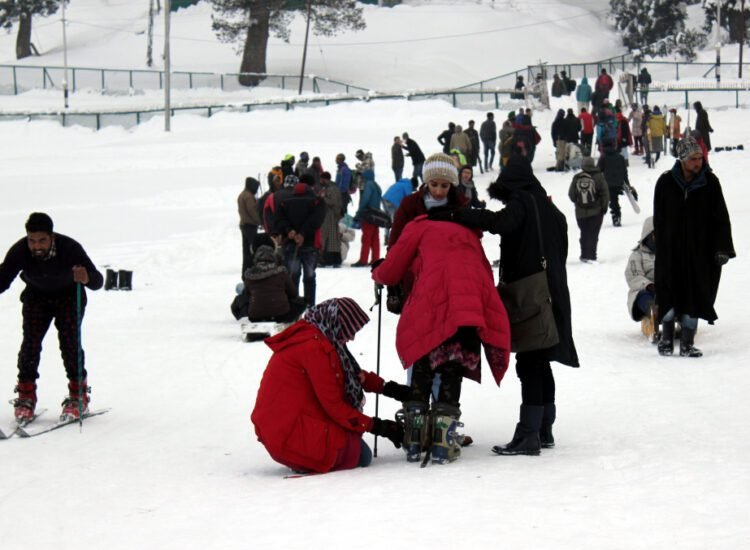
Official Avalanche Warning and Affected Districts
According to official updates, a low-danger avalanche warning has been issued for five districts of Jammu and Kashmir: Doda, Ganderbal, Kishtwar, Poonch, and Ramban. The alert is valid for the next 24 hours and is primarily applicable to areas located above 2,800 meters in elevation. These regions have witnessed moderate to heavy snowfall recently, creating unstable snow layers on steep slopes.
The Jammu and Kashmir Disaster Management Authority has emphasized that even low-danger avalanche conditions can turn hazardous if people ignore safety protocols. Mountain villages, remote hamlets, trekking routes, and tourist corridors in these districts are considered particularly sensitive during this time.
Impact of Recent Snowfall in Higher Reaches
The higher altitudes of Jammu and Kashmir have experienced sustained snowfall over several days, leading to excessive snow accumulation. When fresh snow piles up over older, compacted layers, it creates weak interfaces that can easily collapse. This phenomenon significantly raises the probability of snow slides, especially on steep inclines and wind-loaded slopes.
Such conditions not only disrupt daily life in remote areas but also affect road connectivity, power supply, and emergency services. For tourists and adventure enthusiasts, the risks are even greater, as unfamiliar terrain combined with unstable snow can lead to life-threatening situations.
Understanding Avalanche Formation and Risks
An avalanche is a sudden and rapid flow of snow down a slope, triggered when the weight of accumulated snow exceeds the stability of underlying layers. Factors such as heavy snowfall, temperature fluctuations, wind patterns, and human activity can all contribute to avalanche formation.
Once triggered, avalanches move at high speed and possess immense destructive power, capable of sweeping away vehicles, structures, and people in their path. This is why authorities consistently discourage activities like trekking, skiing, and mountaineering during high-risk weather conditions.
Safety Advisory for Residents and Travelers
Authorities have strongly advised residents living in high-altitude and avalanche-prone zones to limit outdoor movement unless absolutely necessary. People are encouraged to stay informed through official weather bulletins and local administration updates.
Travelers planning visits to snowbound areas are urged to postpone non-essential travel, avoid isolated routes, and refrain from venturing into steep or unmarked terrains. Emergency preparedness, including awareness of evacuation routes and communication channels, is crucial during such weather events.
Weather Forecast for the Coming Days
The Regional Meteorological Centre in Srinagar has predicted partly to generally cloudy weather across Jammu and Kashmir until December 29. During this period, intermittent light rainfall is expected in the plains, while higher elevations may witness light snowfall at isolated locations.
Looking ahead, a fresh western disturbance is likely to affect the region between December 30 and January 1. This system may bring another spell of light rain and snow, particularly in the upper reaches. Following this, mostly cloudy conditions are expected to persist from January 2 to January 3, which could further impact snow stability in high-altitude areas.
Importance of Preparedness and Awareness
Avalanche incidents are natural hazards that can be mitigated through awareness, timely warnings, and responsible behavior. The current alert serves as a reminder of the fragile balance in mountainous ecosystems during winter. Cooperation between authorities, local communities, and travelers plays a vital role in minimizing risks and ensuring safety during extreme weather conditions.