
Investment – Maharashtra Charts New Course of Industrial Growth
Investment – The political landscape in Maharashtra is shifting toward what leaders describe as a results-driven phase focused on rapid economic transformation and large-scale investment.
Deputy Chief Minister Eknath Shinde on Thursday told the Legislative Council that the state has moved beyond what he termed a period of “stagnant politics” and is now firmly positioned on a path of accelerated progress. Responding to the debate on the Governor’s address, he maintained that Maharashtra continues to lead the country in attracting industrial investment and remains committed to building a prosperous and secure future.
Tribute and a Focus on Development
Shinde began his address on a reflective note, paying tribute to the late Ajit Pawar. He said the ongoing session carries a sense of loss following Pawar’s passing, recalling that the senior leader consistently advocated development-oriented politics. According to Shinde, that spirit of prioritising economic growth continues to guide the present administration.
Maharashtra’s Position in India’s Economy
Highlighting the state’s economic standing, the Deputy Chief Minister noted that Maharashtra contributes 13.5 percent to India’s Gross Domestic Product. He pointed to robust foreign direct investment figures as evidence of sustained investor confidence.
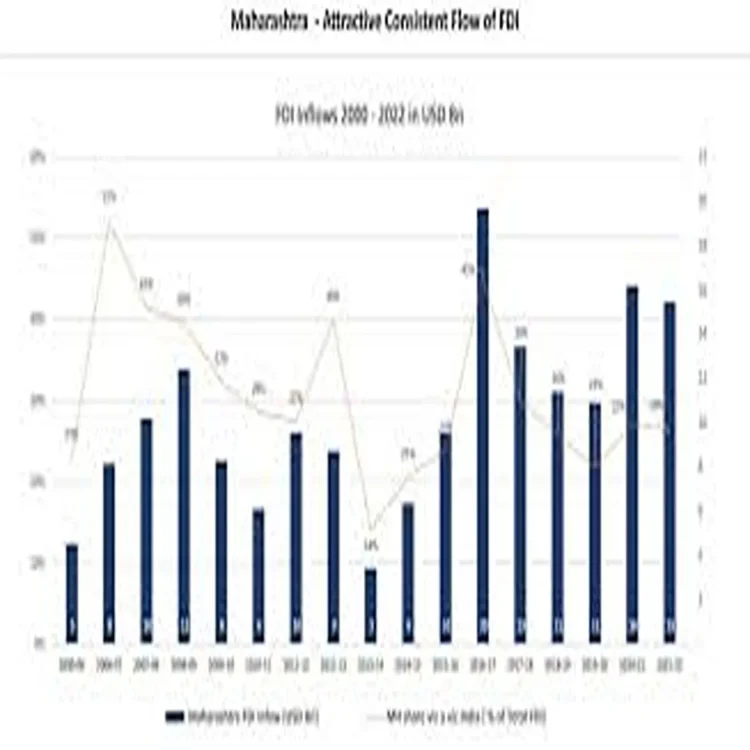
During the 2024–25 financial year, the state drew FDI worth Rs 1,64,875 crore, accounting for 39 percent of the country’s total inflows. In the first half of the current fiscal year alone, Maharashtra secured Rs 91,337 crore in investment, retaining its top ranking nationwide.
Shinde described the state as a preferred destination for global investors, adding that policy stability and infrastructure readiness have strengthened its appeal.
Major Agreements and Emerging Sectors
Referring to discussions held during the Davos summit, he said Memoranda of Understanding worth Rs 30 lakh crore were signed with companies from 18 countries. Of these proposed projects, 82 percent are already moving toward implementation.
He emphasized that many of these investments are directed toward emerging and technology-driven sectors such as quantum computing, artificial intelligence, semiconductors, and green energy. According to him, this strategic shift positions Maharashtra at the forefront of next-generation industries.
Infrastructure Projects to Drive Jobs
The Deputy Chief Minister outlined several large-scale infrastructure initiatives that he described as transformative for the state’s economy.
He said the upcoming World Competency Center in Mumbai is expected to become the largest of its kind in Asia and generate around 45,000 employment opportunities. The proposed Vadhavan port, with a capacity three times that of Jawaharlal Nehru Port, is projected to attract investment worth Rs 40 lakh crore and create an estimated 50 lakh jobs.
In addition, Chhatrapati Sambhajinagar is being developed as the country’s first Smart Industrial City, with a special focus on electric vehicle manufacturing. Connectivity projects such as the Samruddhi Mahamarg, the Coastal Road, and Atal Setu have significantly reduced travel time and strengthened regional linkages, he said.
Expanding Growth Beyond Urban Centers
Shinde stressed that development is no longer limited to the Mumbai–Pune corridor. He said the government is actively promoting balanced regional growth, with Rs 50,000 crore earmarked for North Maharashtra and Rs 11,519 crore allocated for Ahilyanagar district.
The administration’s approach, he noted, is aimed at decentralising opportunities so that investment and employment generation extend to smaller cities and districts.
Recruitment Plans and Administrative Reform
Looking ahead, the Deputy Chief Minister announced that 2026 will be observed as the “Year of Recruitment.” Of the 1.53 lakh government positions planned, 85,363 appointments have already been completed. He assured the House that recruitment processes would remain transparent and reliable across both public and private sectors.
Shinde also spoke about the ‘GPR 2.0’ initiative, which seeks to introduce structural reforms in governance and streamline administrative functioning. The program, he said, has received appreciation at the national level.
Concluding his address, Shinde reiterated that the government remains committed to round-the-clock service and sustained development. He expressed confidence that Maharashtra’s growth momentum would continue without interruption.