
IndiaUSDeal – India and US Seal Interim Trade Pact to Boost Exports
IndiaUSDeal – India and the United States have agreed on a framework for an interim trade arrangement that is expected to lower tariffs and widen access for Indian goods in the American market. The understanding, announced jointly by both governments, is being seen as a key step toward a broader Bilateral Trade Agreement currently under discussion.
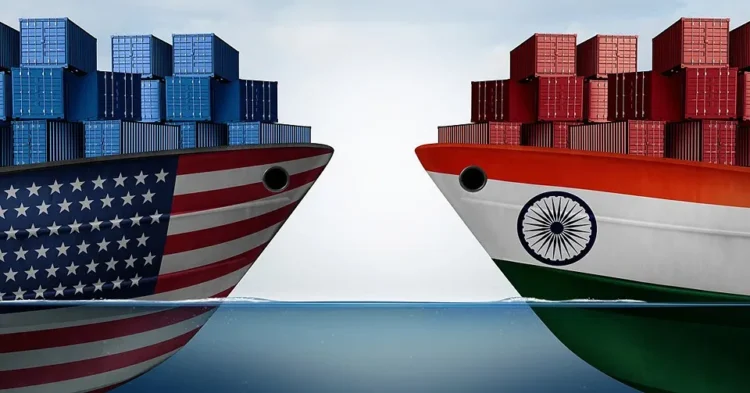
Government leaders said the pact would ease trade barriers and provide fresh momentum to sectors ranging from agriculture to manufacturing.
Policy Shift Aimed at Farmers and Small Businesses
Union Skill Development and Entrepreneurship Minister Jayant Singh said the agreement reflects a long-term effort to align trade policies with the interests of farmers, workers, artisans and young entrepreneurs. In a message shared on social media, he noted that the reduction in tariffs on Indian products from 50 percent to 18 percent would create better price realization and higher production opportunities.
According to him, the country’s farming community understands that sustained economic progress depends on a system guided by law, stability and scientific advancement. He emphasized that improved trade conditions would translate into stronger rural incomes and more resilient village economies.
Market Access in a $30 Trillion Economy
Commerce and Industry Minister Piyush Goyal described the interim framework as a major opening for Indian exporters. He said the agreement would provide improved entry into the US market, valued at nearly $30 trillion, with particular benefits for micro, small and medium enterprises, as well as farmers and fishermen.
Goyal added that the expected rise in exports could generate substantial employment, especially for women and young professionals. He underlined that the reduction of reciprocal tariffs to 18 percent would enhance competitiveness in sectors such as textiles and apparel, leather and footwear, plastics, rubber products, organic chemicals, home decor items and select machinery.
Zero Tariff Relief for Key Products
The minister also highlighted that several product categories would enjoy zero tariff access under the new framework. These include generic pharmaceuticals, gems and diamonds, and aircraft components. Officials believe this move will strengthen India’s position in high-value export segments and support the Make in India initiative.
In addition, India is set to receive exemptions under Section 232 for aircraft parts and secure a tariff rate quota for auto parts. Negotiated outcomes related to generic medicines are also expected to bring measurable export gains in the coming months.
Protection for Agriculture and Dairy Sectors
While the agreement opens new export channels, the government has maintained that sensitive agricultural and dairy products remain protected. Items such as maize, wheat, rice, soya, poultry, milk, cheese, ethanol, tobacco, certain vegetables and meat products have been kept outside tariff concessions to safeguard domestic producers.
Officials said this balanced approach demonstrates India’s commitment to rural livelihoods while pursuing global trade expansion. By shielding core agricultural interests, policymakers aim to ensure that growth in international commerce does not come at the expense of small farmers.
Step Toward a Broader Trade Partnership
The interim arrangement follows discussions launched earlier this year between the leadership of both countries to advance a comprehensive Bilateral Trade Agreement. A joint statement described the framework as a milestone reflecting shared goals of reciprocal and balanced trade.
Both sides reiterated their intention to deepen economic cooperation and focus on sustainable growth that benefits businesses and consumers in both nations. The agreement is expected to lay the groundwork for further negotiations in areas such as supply chains, technology collaboration and investment flows.
With tariff reductions now outlined and sector-specific provisions in place, policymakers view the development as a practical step toward expanding two-way commerce. As implementation begins, exporters across multiple industries will be watching closely to assess how quickly the promised opportunities translate into tangible gains.