
Indian States : Strengthen Global Investment Outreach at WEF Annual Meeting 2026
Indian States: Several Indian states are making a coordinated and strategic push at the World Economic Forum Annual Meeting 2026, held in Davos, Switzerland. With Chief Ministers, senior ministers, and high-level delegations in attendance, India’s presence at the global platform reflects a growing focus on foreign direct investment, global partnerships, and long-term economic positioning. The participation highlights how Indian states are independently branding their economic strengths while aligning with national growth priorities during a period of global economic transition.
Global Context of the WEF Annual Meeting 2026
The World Economic Forum Annual Meeting is being held from January 19 to January 23, bringing together political leaders, policymakers, corporate executives, and global institutions. The discussions are taking place against a backdrop of economic uncertainty, rapid technological advancement, geopolitical realignments, and sustainability challenges. For Indian states, the forum offers a rare opportunity to directly engage with global investors, technology leaders, and multilateral organizations in one place.
Maharashtra Positions Itself as an Investment Powerhouse
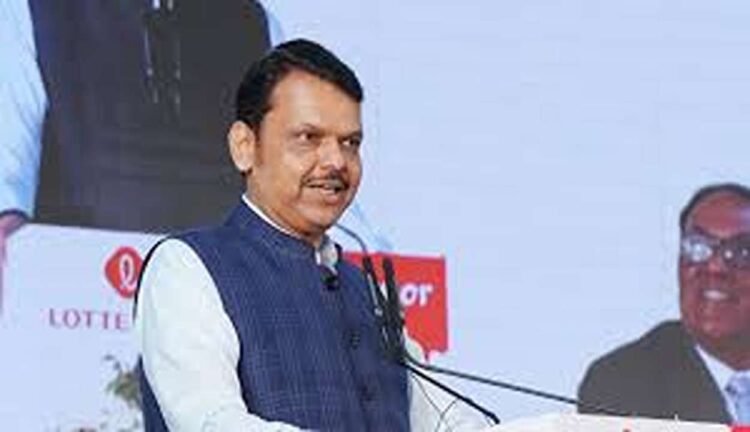
Maharashtra Chief Minister Devendra Fadnavis arrived in Switzerland as part of a five-day official visit to attend the forum. Upon his arrival in Zurich, he received a traditional welcome from members of the Marathi community, reflecting strong diaspora engagement. The visit focuses on reinforcing Maharashtra’s status as one of India’s most industrialized and investment-friendly states.
The Chief Minister’s engagements include interactions with global business leaders and policymakers, aimed at expanding partnerships in manufacturing, infrastructure development, technology, and innovation. Senior Union Ministers also met Fadnavis during the visit, underlining coordinated political outreach at the international level.
Andhra Pradesh Leads With High-Intensity Engagement Strategy
Andhra Pradesh Chief Minister N Chandrababu Naidu is leading a large delegation of ministers and senior officials to Davos. His four-day schedule includes 36 engagements, ranging from one-on-one meetings with global CEOs to thematic discussions and inter-governmental interactions. A Telugu diaspora program is also part of the agenda, strengthening cultural and business ties with overseas communities.
The state is positioning itself as a destination for technology-driven growth, infrastructure development, and industrial expansion. Andhra Pradesh’s outreach strategy emphasizes direct engagement, clarity in policy messaging, and readiness for large-scale investments.
Karnataka Adopts an Execution-First Investment Approach
Karnataka’s delegation is led by the Minister for Large and Medium Industries, M B Patil. The state has clearly articulated an execution-first approach, focusing not just on attracting investment proposals but on converting them into operational projects.
The delegation is participating in over 45 high-level engagements, including bilateral meetings and ecosystem interactions. Meetings are scheduled with global corporations and institutions across technology, manufacturing, education, consumer goods, and research sectors. Karnataka’s emphasis remains on innovation ecosystems, advanced manufacturing, and strengthening its position as a global technology hub.
Strong Indian Political and Corporate Participation
India’s presence at the forum extends beyond state delegations. At least four Union Ministers, six Chief Ministers, and over 100 top Indian CEOs are expected to attend. This strong representation signals India’s intent to remain an active player in shaping global economic conversations, particularly in areas such as digital transformation, supply chain resilience, clean energy, and industrial competitiveness.
Assam Marks Its First Appearance on the Global Stage
Assam is participating in the World Economic Forum for the first time, represented by Chief Minister Himanta Biswa Sarma. During his four-day stay, several key agreements and memorandums of understanding are expected to be signed. The state plans to present its governance reforms, industrial development roadmap, and technology-led growth initiatives.
Assam’s participation reflects increasing investor confidence in the northeastern region and highlights the state’s efforts to integrate with global value chains while promoting sustainable and inclusive development.
Gujarat Showcases Vision for Long-Term Growth
Gujarat’s delegation is led by Deputy Chief Minister Harsh Sanghavi, who is presenting the state’s long-term vision of Developed Gujarat 2047. The delegation plans to hold nearly 58 one-on-one meetings with global business leaders across sectors such as advanced manufacturing, semiconductors, pharmaceuticals, renewable energy, logistics, food processing, and aerospace.
The state’s focus remains on industrial expansion, job creation for youth, and strengthening its global manufacturing footprint through policy stability and infrastructure readiness.
Uttar Pradesh Highlights Rapid Economic Transformation
Uttar Pradesh is also participating with a high-level delegation led by Finance and Parliamentary Affairs Minister Suresh Kumar Khanna, coordinated by Invest UP. The state aims to highlight its transformation into a major destination for industrial growth, innovation, and sustainable development.
The outreach underscores Uttar Pradesh’s commitment to global partnerships, improved ease of doing business, and long-term economic planning supported by large-scale infrastructure investments.
India’s Expanding Role in Global Economic Dialogue
Along with Maharashtra, Andhra Pradesh, Karnataka, Assam, Gujarat, and Uttar Pradesh, other states such as Kerala are also present at the forum. The 56th World Economic Forum Annual Meeting is expected to host nearly 3,000 leaders from over 130 countries, with discussions centered on geopolitics, economic recovery, and technological transformation.
India’s multi-state participation reflects a decentralized yet coordinated approach to global economic engagement. It signals confidence, ambition, and readiness to play a larger role in shaping future growth narratives on the world stage.