
High-Stakes : Civic Election Counting Intensifies Across Vasai–Virar Region
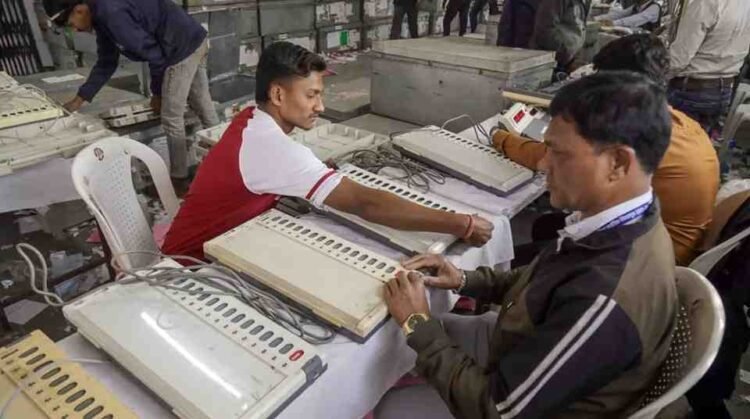
High-Stakes: Counting day in the Vasai–Virar municipal region has unfolded under intense security and heightened political anticipation. Counting centres located in Vasai, Virar, and Nalasopara have been placed under strict, multi-layered police protection to ensure a transparent and orderly process. Surveillance systems, controlled entry points, and the presence of senior administrative officials in every section highlight the importance of the exercise. Inside the centres, the environment remains charged, as even a minor shift in numbers during each counting round has the potential to alter the final political equation.
Record Number of Candidates and Complex Political Landscape
This civic election stands out due to the unprecedented scale of participation. A total of 547 candidates are contesting across 29 prabhags, making it one of the most competitive municipal elections in the region’s history. Such a large field has transformed the contest into a multi-cornered political battle, with local parties, state alliances, and national players all attempting to consolidate influence.
The diversity of candidates has also complicated vote counting, as margins in several wards are expected to remain narrow. Observers believe this complexity reflects growing political awareness among voters and a shift away from predictable voting patterns. The high number of contestants has made every ward strategically important, increasing pressure on counting officials to maintain accuracy and neutrality.
Bahujan Vikas Aghadi’s Bid to Retain Control
The Bahujan Vikas Aghadi has entered the counting phase with confidence, aiming to preserve its long-standing dominance over the municipal corporation. Under the leadership of experienced figures, the party has relied heavily on its established grassroots network and familiarity with local governance issues. Candidates such as Pankaj Thakur have been projected as strong representatives of continuity and stability.
Supporters of the party argue that its sustained presence in civic administration has helped address local infrastructure, water supply, and community welfare concerns. The party’s strategy has focused on reinforcing trust among traditional voters while countering challenges from emerging alliances. Early trends and survey projections suggest that this approach may have resonated with a significant section of the electorate.
Mahayuti Alliance and the Push for Development Narrative
The Mahayuti alliance, comprising the BJP and Shiv Sena along with allied partners, has positioned itself as a development-oriented alternative. Its campaign narrative has revolved around promises of improved urban infrastructure, better transport connectivity, and long-term planning for rapid population growth. Leaders such as Mahesh Patil and Chandrakant Gorivale have played visible roles in mobilising voters and strengthening the alliance’s presence on the ground.
Despite energetic campaigning, the alliance faces the challenge of breaking into areas traditionally dominated by local political forces. Analysts note that while development messaging appeals to urban voters, translating that appeal into votes within municipal elections often depends on strong local connections and credibility.
Maha Vikas Aghadi and Issue-Based Opposition
On the opposing front, the Maha Vikas Aghadi, which includes the Shiv Sena (UBT faction), NCP-SP, and Congress, has attempted to capitalise on anti-incumbency sentiments and concerns related to urban management. The alliance has highlighted issues such as traffic congestion, housing shortages, sanitation, and administrative accountability.
However, limited organisational depth in certain wards appears to have constrained the alliance’s reach. While its messaging has found some resonance among issue-focused voters, projections indicate that its overall footprint in the Vasai–Virar civic space remains modest.
Strategic Importance of Nalasopara East and Vasai Gaon
Nalasopara East has emerged as a key battleground due to its large migrant population and rapid urban expansion. Voters in this area often prioritise employment opportunities, affordable housing, and public transport over ideological alignment. For national and state-level parties, success here is viewed as a test of their ability to connect with a diverse and evolving electorate.
Vasai Gaon, on the other hand, represents the cultural and historical heart of the region. Electoral outcomes here are often seen as reflective of the broader mood of old Vasai, where heritage, community identity, and local concerns strongly influence voter choices. Political parties have invested significant resources in this ward, recognising its symbolic and strategic importance.
Exit Poll Projections and Expected Outcome
According to the exit poll released by VMJ, the Bahujan Vikas Aghadi appears poised for a comfortable majority in the 115-member civic body. The survey predicts that the party could secure around 82 seats, well above the majority mark of 58, setting the stage for a strong return to power in the Vasai–Virar Municipal Corporation.
The Mahayuti alliance is projected to win approximately 29 seats, placing it a distant second. Meanwhile, the Shiv Sena (UBT faction) is expected to secure only 2 seats, indicating limited influence in the region’s municipal politics. Other parties and independent candidates are collectively estimated to win around 2 seats.
As counting continues, all eyes remain on the final figures, which will determine not only control of the civic body but also the future direction of urban governance in one of Maharashtra’s fastest-growing regions.