
Headline: Supreme Court Signals Strong Oversight on Unstable Airline Pricing in India
Headline: The recent observations made by the Supreme Court of India have brought renewed attention to the issue of volatile airline ticket pricing and the growing concern among passengers. The court clearly indicated that it is willing to step in to address what it described as unpredictable fluctuations in airfares, especially during peak travel seasons and festivals. These remarks came at a time when domestic travelers have been repeatedly affected by sudden fare spikes, often making air travel unaffordable for a large section of the population.
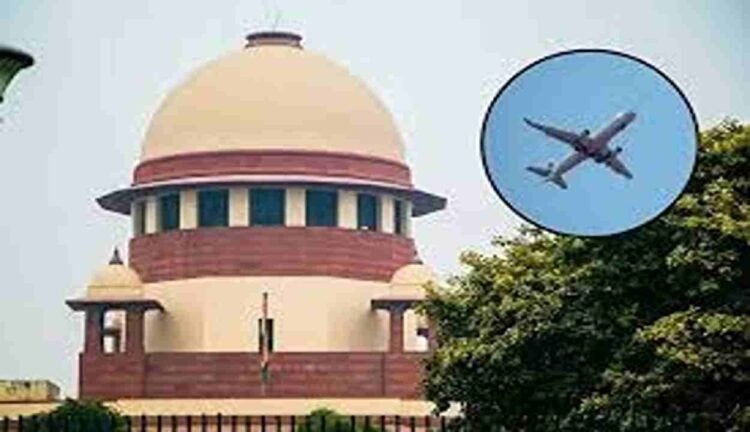
Background of the Judicial Intervention
The matter was heard by a bench of Justice Vikram Nath and Justice Sandeep Mehta. During the hearing, the judges expressed serious concern over the sharp and unexplained increase in ticket prices by private airlines. The court used strong language, describing such pricing practices as a form of exploitation of passengers. This observation reflects growing judicial sensitivity toward consumer rights in the aviation sector and highlights the need for fair market practices.
Concerns Over Exorbitant Airfares During Festivals
One of the key issues raised by the court was the dramatic rise in airfares during festivals and holiday seasons. These periods often see families traveling for social, cultural, or religious reasons, leaving them with little choice but to pay inflated prices. The bench noted that such pricing trends appear to lack transparency and consistency, raising questions about whether market demand alone justifies these increases. The court’s remarks suggest that unchecked pricing freedom could undermine public trust in the aviation industry.
Role of the Central Government
The Supreme Court directed the Central Government to submit its response to a public interest litigation that seeks the introduction of binding regulatory guidelines. These proposed guidelines aim to bring stability and predictability to airfare pricing across the country. The government’s stance will be crucial, as it must balance market competition with consumer protection. The court granted time to the Centre to file its reply, indicating that it intends to examine the issue thoroughly rather than issue a rushed decision.
DGCA and Regulatory Responsibility
The court also asked the Directorate General of Civil Aviation to present its response. As the primary aviation regulator in India, the DGCA plays a critical role in overseeing airline operations, safety, and pricing mechanisms. The PIL argues that existing regulations are insufficient to control arbitrary airfare hikes and additional charges. The outcome of this case may push the regulator to adopt a more proactive role in monitoring airline pricing strategies.
Impact on Airline Industry
If the Supreme Court decides to intervene decisively, the airline industry could face significant changes in how fares are structured and advertised. Airlines may be required to justify sudden price increases or adhere to a pricing framework that limits excessive variation. While airlines often argue that dynamic pricing is essential for profitability, the court’s observations indicate that consumer interest cannot be overlooked in a sector that serves the public at large.
Consumer Rights and Transparency
At the heart of this case lies the question of consumer rights. Passengers frequently complain about last-minute fare hikes, hidden charges, and lack of clarity in ticket pricing. Judicial scrutiny may encourage greater transparency, ensuring that travelers understand why prices change and what factors influence final ticket costs. Such measures could strengthen accountability and restore confidence among air travelers.
Next Hearing and Future Implications
The Supreme Court has scheduled the matter for further hearing on February 23. This upcoming session is expected to provide more clarity on whether binding guidelines will be introduced to regulate airfare fluctuations. The case has the potential to set an important precedent, not only for aviation pricing but also for how regulatory bodies manage private sector practices that directly affect consumers.
In conclusion, the Supreme Court’s firm stance signals a possible shift toward stronger regulation in the aviation sector. By questioning unpredictable airfare fluctuations and calling out exploitative practices, the court has opened the door for reforms that could benefit millions of travelers. The final outcome will depend on the responses submitted by the government and the aviation regulator, but the issue has already sparked a nationwide conversation about fairness, transparency, and accountability in air travel.