
Goa Liberation Day: Who supported Goa’s liberation from Portuguese domination
Goa Liberation Day: Goa’s independence from Portuguese domination and subsequent integration with India on December 19, 1961, make today a significant occasion in Goan history. Notably, Goa was ruled by the Portuguese for 451 years.
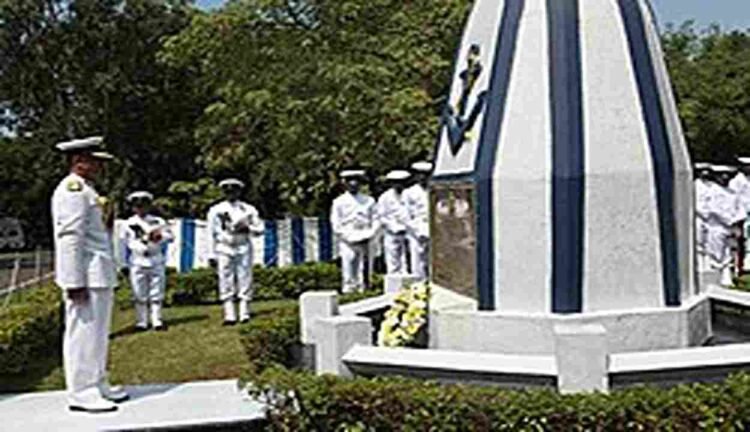
Goa was not granted independence nor permitted to join India by Portugal in 1947, when much of the subcontinent was liberated from British domination. Portugal argued that Goa was not only a colony but an essential part of Portugal, with a distinct culture and religion from the rest of India.
During Jawaharlal Nehru’s time as prime minister, the Indian Armed Forces initiated Operation Vijay to capture Goa and integrate it with the rest of India.
The Indian Armed Forces carried out synchronized air, naval, and ground attacks throughout the more than 36-hour-long operation.
A number of individuals helped free Goa from Portuguese domination. In opposition to colonial authority in Goa, they organized demonstrations and started a number of movements.
Crucial figures in the independence of Goa Tristao de Braganca Cunha:
Because he started the first campaign to overthrow Portuguese control in Goa, TB Cunha is regarded as the “Father of Goan Nationalism.” After finishing his studies in France, Cunha returned to India during the huge uprising against colonial authority led by Mahatma Gandhi.
He said Goa shouldn’t be kept apart from the fight for national liberation. He established the Goa Congress Committee with this goal in mind and was successful in securing its affiliation with the Indian National Congress.
Later, Cunha relocated to Mumbai, where he persisted in his fervent efforts to liberate Goa. He produced a number of books and essays that vehemently criticized Portuguese control.
Menezes, Juliao:
Indian independence warrior Juliao Menezes was a key figure in the effort to free Goa from Portuguese domination. He actively participated in campaigns to instill nationalist beliefs among Goan citizens. To encourage nationalism in the area, Menezes founded the journal Gomantak Praja Mandal. During Goa’s Portuguese rule, the program’s main goal was to raise political consciousness.
In Portuguese Goa, he was also associated with the Indian National Congress. As a sign of his involvement with the larger national movement, Menezes attended the party’s 1948 session and was a member of its provisional committee.
Menezes assisted in organizing a civil disobedience campaign against the Goan government of Portuguese monarch Antonio de Oliveira Salazar with socialist leader Ram Manohar Lohia.
Lobo Sardesai Libia:
Sardesai, a Goan lawyer, was a key figure in the fight for Goa’s independence. She ran the Voice of Freedom clandestine radio station from 1955 to 1961, which disseminated messages across Portuguese-ruled Goa and encouraged support for the independence fight.
Lobo helped the region’s tourist industry grow when Goa was freed by serving as the first Director of tourist for Goa, Daman, and Diu. In January 2025, she received the Padma Shri.
Sardesai Vaman:
Vaman Sardesai, an Indian poet, independence warrior, and diplomat, played a significant role in the liberation struggle in Goa. He was Libia Lobo Sardesai’s spouse and had a significant role in the Voice of Freedom radio station’s activities. He was appointed Goa Today magazine’s second editor after Goa’s freedom. Later on, he joined the IAS and held the position of Indian Ambassador to Angola.
Vaman received the Padma Shri award, just like his wife.
Kakodkar Purushottam:
Purushottam Kakodkar was a key figure in the freedom struggle of Goa. The Portuguese colonial authorities arrested and even deported him because of his aggressive participation. Following his return to Goa, he founded an ashram in Margao, which developed into a covert center for the liberation movement, offering numerous freedom fighters refuge and assistance.
Kakodkar was one of eleven Goans chosen to meet with Prime Minister Jawaharlal Nehru in June 1957.
He became the leader of the Indian National Congress’s newly established Goa section, which had its headquarters in Panjim, when Goa was freed. In the Lok Sabha, he served as a member of parliament for North Goa.