
Gig Workers Strike: Nationwide Gig Workers Strike on New Year’s Eve May Disrupt India’s Celebrations and Deliveries
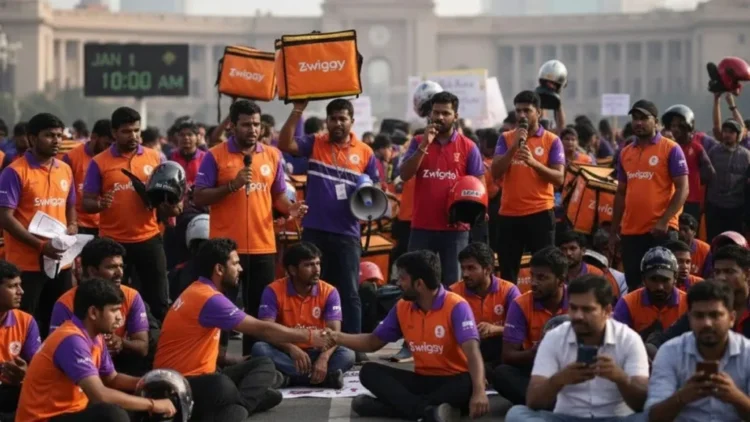
Gig Workers Strike: India’s New Year’s Eve celebrations may encounter unexpected challenges as thousands of gig workers associated with leading delivery and ecommerce platforms prepare for a nationwide strike on December 31. The protest, planned on one of the busiest commercial days of the year, is expected to affect food delivery, grocery supply, and last-minute online shopping across multiple cities. Customers relying on app-based services for party essentials, gifts, or daily needs could face delays, limited availability, or complete service interruptions in several regions.
Background of the Nationwide Gig Workers Strike
The strike has been jointly called by the Telangana Gig and Platform Workers Union and the Indian Federation of App-Based Transport Workers. Over time, these unions have emerged as key voices representing app-based workers who form the backbone of India’s rapidly growing digital economy. Several regional worker groups from states such as Maharashtra, Karnataka, Tamil Nadu, West Bengal, and the Delhi-NCR region have extended their support, giving the protest a truly national character.
Gig workers associated with platforms like Zomato, Swiggy, Blinkit, Zepto, Amazon, and Flipkart are expected to participate by either logging out of their apps completely or limiting their availability throughout the day.
Key Reasons Behind the Protest
Over the past few years, the gig economy in India has expanded rapidly, promising flexibility and income opportunities. However, workers argue that reality has become increasingly demanding. Intense competition between platforms has led to aggressive delivery timelines, higher performance pressure, and reduced margins for workers.
Unions have pointed out that algorithm-driven work allocation leaves little transparency in how tasks are assigned or how earnings are calculated. Many workers report sudden account suspensions without clear explanations, leaving them without income overnight. Rising fuel costs, vehicle maintenance expenses, and lack of social security have further added to their concerns, especially at a time when inflation continues to impact household budgets.
Major Demands Raised by Gig Workers
One of the central demands of the strike is the withdrawal of ultra-fast delivery models, particularly 10-minute delivery promises. Workers say these targets compromise road safety and increase stress, pushing them to take risks to meet unrealistic timelines.
Another major demand relates to fair treatment and due process. Gig workers want assurance that accounts will not be suspended arbitrarily and that there will be a transparent grievance mechanism. Clear and transparent payment structures are also high on the agenda, with workers asking for earnings that accurately reflect hours worked, distance covered, and additional costs.
Safety and social protection form a critical part of the demands. Workers are seeking accident insurance, better safety guidelines, and long-term social benefits. Additionally, they are calling for accountability in how algorithms determine pay and work intensity, along with stronger technical and customer support systems to resolve routing, payment, and app-related issues efficiently.
Cities Likely to Face the Maximum Impact
According to union estimates, more than 100,000 delivery workers across India may participate in the strike on December 31. Metropolitan cities such as Delhi, Mumbai, Pune, Kolkata, and Hyderabad are expected to witness the most visible disruptions due to their heavy reliance on app-based services.
Tier-two cities are also likely to feel the impact. Places such as Lucknow, Ahmedabad, Jaipur, Indore, and Patna may experience slower deliveries or reduced service availability, particularly during peak evening hours when demand traditionally spikes on New Year’s Eve.
What This Means for Consumers and Businesses
For consumers, the strike could mean planning ahead, placing orders earlier than usual, or opting for offline alternatives. Restaurants, grocery stores, and ecommerce sellers may also face operational challenges due to reduced delivery capacity. At a broader level, the protest highlights growing tensions within India’s gig economy and raises important questions about sustainable business models, worker welfare, and the future of platform-based employment.
As New Year’s Eve approaches, the situation remains fluid. Whether negotiations will take place or the strike will proceed at full scale remains to be seen, but its potential impact has already drawn national attention.