
ElectoralRolls – Supreme Court Orders Judges to Oversee Bengal Voter Revision
ElectoralRolls – The Supreme Court has stepped in to supervise the ongoing special intensive revision of electoral rolls in West Bengal, directing that serving and former district judges be deployed to assist the Election Commission in completing the exercise.
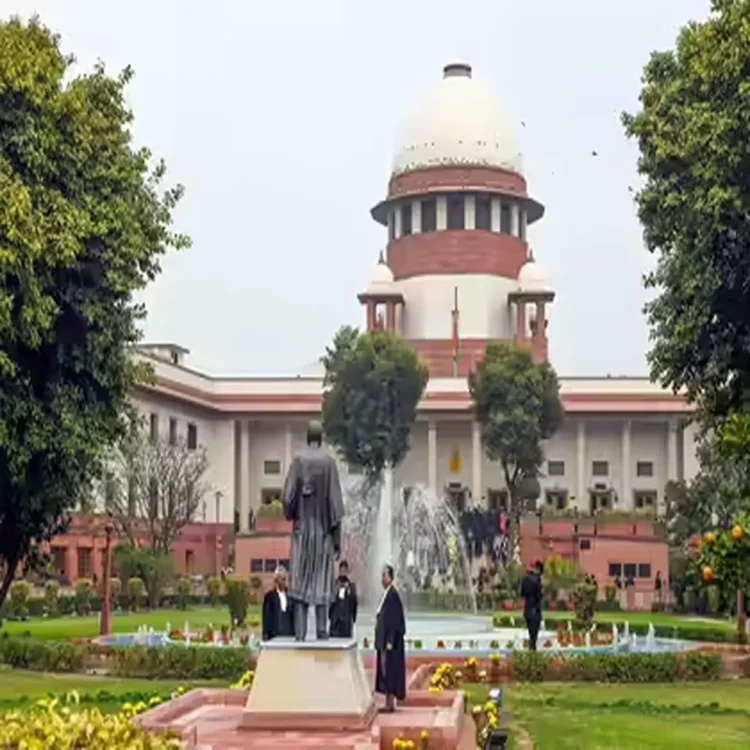
In an order issued on Friday, a bench led by Chief Justice Surya Kant, along with Justices Joymalya Bagchi and Vipul M. Pancholi, outlined a series of measures aimed at ensuring that the revision process proceeds without further controversy or administrative hurdles.
Court Intervenes Amid Institutional Dispute
The bench expressed concern over what it described as an “unfortunate blame game” between the Election Commission and the state government led by the Trinamool Congress. The court observed that the ongoing dispute had the potential to affect the credibility and timely completion of the electoral roll revision.
To address the impasse, the court directed that judicial officers be deputed to handle claims and objections arising from the special intensive revision (SIR) process. Specifically, these officers will adjudicate cases involving individuals whose names have been placed on the logical discrepancy list.
Deployment of Judicial Officers Ordered
The Supreme Court instructed the Chief Justice of the Calcutta High Court to make available serving judicial officers and also identify former district judges who could assist in the revision work. The direction came after the court took note of submissions indicating that the state government had not provided an adequate number of Grade ‘A’ officers for the exercise.
According to the order, decisions taken by the deputed judicial officers in relation to claims and objections will carry the status of court orders. This move is intended to lend institutional authority and legal clarity to the process, reducing the scope for further administrative disputes.
Logistical Support and Security Mandated
To facilitate the work of the judicial officers, the bench directed district collectors and superintendents of police across the state to provide necessary logistical assistance and security. The court emphasized that smooth coordination between local administration and the judicial officers is essential for the timely completion of the SIR process.
In addition, the judicial officers will be supported by micro-observers and relevant state government officials during the verification and adjudication stages. The court’s directions aim to create a structured mechanism that ensures transparency and procedural fairness in the revision of electoral rolls.
Draft Voter List Timeline Clarified
The Supreme Court granted permission to the Election Commission to publish a draft voter list for West Bengal by February 28. The poll body has also been allowed to issue supplementary lists thereafter, if required, based on the outcome of objections and corrections.
By setting a clear timeline, the court sought to prevent further delays in the electoral roll revision, which has been under scrutiny due to concerns raised by various stakeholders.
High-Level Meeting to Coordinate Process
As part of its directions, the bench asked the Chief Justice of the Calcutta High Court to convene a meeting by Saturday involving key stakeholders. The proposed meeting is to include the state’s Chief Secretary, the Director General of Police, and a representative of the Election Commission.
The objective of this meeting is to streamline coordination among institutions and ensure that the court’s directives are implemented without friction. The Supreme Court indicated that collaborative engagement between the judiciary, the state administration, and the Election Commission would be crucial in maintaining the integrity of the electoral process.
Understanding the Logical Discrepancy List
The controversy surrounding the special intensive revision stems partly from the identification of so-called logical discrepancies in voter records. These discrepancies include mismatches between a voter’s details and the 2002 electoral roll, particularly in cases involving parent-child linkage.
Examples cited include inconsistencies in a parent’s name as recorded in official documents and unusual age differences between a voter and their listed parent — such as a gap of less than 15 years or more than 50 years. Individuals flagged under these criteria have been placed on the logical discrepancy list, prompting the need for verification and adjudication.
With the latest order, the Supreme Court has sought to bring procedural certainty to a politically sensitive exercise. The involvement of judicial officers is expected to reinforce confidence in the process as West Bengal moves forward with the revision of its electoral rolls.