
DefamationCase – Rahul Gandhi Appears in Bhiwandi Court Amid Tight Security
DefamationCase – Leader of Opposition in the Lok Sabha, Rahul Gandhi, arrived in Mumbai on Saturday to attend a hearing at the Additional Sessions Court in Bhiwandi in connection with a 2014 defamation case related to remarks about the Rashtriya Swayamsevak Sangh.
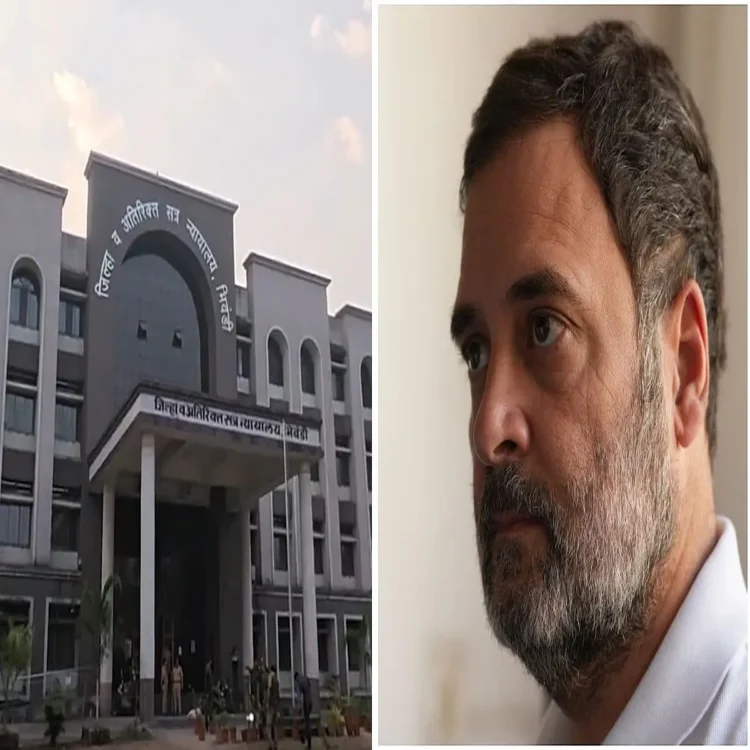
Tight Security Around Court Complex
Authorities in Thane district implemented extensive security arrangements ahead of Gandhi’s court appearance. Police presence was significantly increased in and around the court premises, with personnel deployed at key entry and exit points. As a precaution, shops located within a 100-meter radius of the courthouse were directed to remain closed during the proceedings.
Officials said the measures were intended to maintain law and order during the high-profile visit. Gandhi’s presence in the city drew the attention of both supporters and political observers, prompting local authorities to remain vigilant.
Bail Surety to Be Updated
The court appearance also involves procedural requirements linked to Gandhi’s bail. Former Union Home Minister Shivraj Patil had earlier stood as surety for him in the case. Following Patil’s passing, Gandhi is required to present a new surety before the court to continue his bail arrangement.
Legal sources indicated that the appearance was part of the ongoing judicial process and did not involve any fresh charges.
Congress Leaders Call Case Politically Motivated
Senior leaders from the Congress party described the case as an attempt to target their leader. Maharashtra Congress chief Harshwardhan Sapkal said Gandhi’s appearance in court reflects his willingness to comply with the legal process.
According to Sapkal, the opposition leader has faced repeated scrutiny for his criticism of the Bharatiya Janata Party and Prime Minister Narendra Modi. He alleged that the case fits into a broader pattern of political confrontation.
Congress leader Aslam Sheikh echoed similar sentiments, stating that Gandhi and the party would continue to engage in political opposition despite legal challenges. He maintained that the legal action would not deter the Gandhi family from its political activities.
Arif Naseem Khan, another senior Congress figure, said Gandhi often becomes the focus of legal and political disputes when he speaks out on issues such as corruption and governance. He described the defamation case as part of an ongoing political rivalry between the ruling party and the opposition.
Background of the 2014 Defamation Case
The case was initiated by Rajesh Kunte, a local functionary of the Rashtriya Swayamsevak Sangh, who filed a complaint following remarks made by Gandhi during an election rally on March 6, 2014. At the rally, Gandhi had alleged that the organisation was linked to the assassination of Mahatma Gandhi, a statement that led to the defamation proceedings.
The matter has been in the courts for several years. In 2016, Gandhi approached the Supreme Court seeking relief from the criminal proceedings. However, after the apex court declined to intervene, he withdrew his petition and expressed his intention to contest the case in the trial court.
Since then, the proceedings have continued at the local level. Saturday’s appearance marks another step in the prolonged legal process.
Ongoing Legal Process
The case remains under judicial consideration, and no final verdict has been delivered. Gandhi’s legal team has previously maintained that he is prepared to defend his statements in court.
For now, the focus remains on the procedural aspects of the hearing, including the submission of a new surety. With security measures in place and political reactions continuing, the case underscores the intersection of law and politics in India’s public life.