
Chennai: Protest Against Foreign Intervention Draws Strong Police Response
Chennai: A political protest in Chennai on Monday brought heightened security measures and mass detentions after members of the Communist Party of India (Marxist) demonstrated against recent developments in Venezuela. The agitation was sparked by the reported capture of Venezuelan President Nicolás Maduro following military action by the United States, an incident that has triggered widespread condemnation from left-wing groups across India. The protest highlighted growing concerns over foreign intervention, national sovereignty, and the right to political expression within democratic societies.
Background of the Protest
The demonstration was organised by the Communist Party of India (Marxist), commonly known as CPI(M). Party leaders described the US action in Venezuela as an example of imperialist interference in the internal affairs of a sovereign nation. According to the organisers, the protest aimed to send a clear political message opposing unilateral military actions and forced regime changes carried out without international consensus.
Activists gathered near Peters Road in Royapettah, not far from the United States Consulate Chennai. The location was chosen to symbolically register dissent directly in the vicinity of a foreign diplomatic mission, though this decision also placed the protest within a high-security zone.
Leadership and Participation
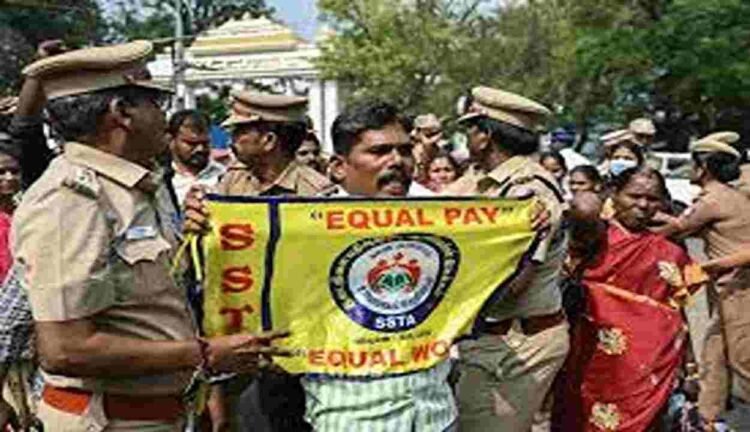
The agitation was led by senior CPI(M) leaders, including former legislators and district-level office bearers. Around 150 protesters participated, among them nearly 25 women activists. Party members carried flags and placards, voicing slogans critical of US foreign policy and demanding respect for Venezuela’s political independence.
Speakers at the gathering accused global powers of selectively applying democratic principles while undermining elected governments that do not align with their strategic interests. They argued that such actions destabilise regions, worsen humanitarian crises, and set dangerous precedents in international relations.
Police Preparations and Security Measures
Anticipating the protest, Chennai police implemented extensive security arrangements well in advance. A large police contingent was deployed along Peters Road and surrounding streets. Metal barricades were installed to block any approach toward the consulate, and vehicular traffic was temporarily diverted to avoid congestion and potential confrontations.
Authorities cited the sensitivity of the area, noting that diplomatic zones are governed by strict security protocols under both national and international norms. Officials maintained that their preparations were preventive rather than punitive, aimed at ensuring public safety and avoiding any breach of peace.
Detentions and Crowd Control
Despite repeated warnings and the imposition of prohibitory orders, protesters attempted to move closer to the consulate. Police alleged that some demonstrators tried to push past the barricades, prompting intervention. Brief scuffles and heated verbal exchanges followed before officers detained the protesters to prevent escalation.
Those detained were transported in police buses to a nearby community hall in Royapettah. They were held there for several hours while authorities assessed the situation. Later in the day, all detainees were released after being formally warned against violating restrictions in sensitive areas.
Official and Political Reactions
Senior police officers clarified that the detentions were carried out solely to maintain law and order. They reiterated that while the right to peaceful protest is respected, demonstrations near foreign missions require prior permission and adherence to security guidelines.
CPI(M) leaders, however, criticised the police action, accusing the authorities of suppressing democratic dissent. They argued that peaceful protests are a cornerstone of democracy and that detentions send a chilling message to citizens seeking to express political opinions. Party representatives also urged the Indian government to take a clear and independent stance on Venezuela, rather than remaining silent on what they described as unjustified foreign aggression.
Social Media and Wider Discourse
Following the incident, the party shared a statement on social media platform X, detailing the detentions and reiterating opposition to US actions in Venezuela. The post quickly gained attention, sparking debates online about foreign policy, civil liberties, and India’s role in global political affairs.
The episode has once again brought into focus the balance between security concerns and freedom of expression. As global geopolitics continue to influence domestic political discourse, such protests underline the interconnected nature of international events and local democratic responses.