
CampusProtest – Student Groups Challenge DU Gathering Ban
CampusProtest – Student organisations at the University of Delhi have raised objections to a recently imposed restriction that bars public assemblies across the campus for a month. The order, issued by the university administration on February 17, has triggered concerns among several student groups who argue that it curtails democratic engagement within the institution.
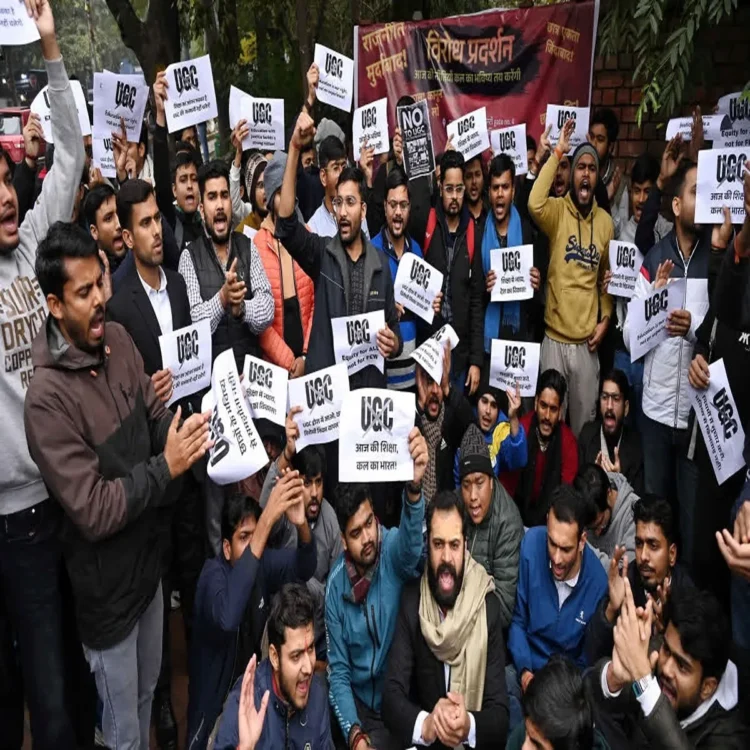
Press Conference at Arts Faculty Gate
On Thursday, members of the All India Democratic Students’ Organisation (AIDSO), along with two other Left-leaning student groups, assembled near the Arts Faculty gate to address the media. The gathering was intended as a press conference to question the rationale behind the university’s prohibitory order and to demand its withdrawal.
Participants described the meeting as peaceful, stating that students had come together to voice their concerns and explain their position publicly. They maintained that the campus has historically served as a space for debate and dialogue, and that restrictions on assemblies could affect students’ ability to express their views.
Administration’s Month-Long Restriction
The university’s directive enforces a blanket ban on public meetings, demonstrations, and similar activities within campus premises for a period of one month. While officials have not publicly elaborated on the detailed reasoning behind the measure, such orders are generally introduced to maintain order and prevent disruptions to academic activities.
Student representatives, however, argue that the scope of the restriction is too broad. According to them, the order applies across departments and common spaces, leaving little room for even small, organised discussions. They contend that the directive affects not only political groups but also other student-led forums that rely on public interaction.
Tension at the Protest Site
Eyewitness accounts from the gathering indicate that tensions rose when security personnel intervened. Students allege that barricades were set up around the site, limiting movement and access to the area. Some participants claimed that posters displayed during the press conference were removed and that organisers were physically pushed aside.
Several students further stated that security staff formed a cordon around the group, restricting their ability to document the events on their phones. There was no immediate official statement from the university’s security department addressing these claims.
Despite the disruption, the students continued to raise slogans and address the media from within the restricted space, insisting that their actions were non-violent and within their rights.
Student Leaders Speak Out
The Delhi University unit in-charge of AIDSO strongly criticised the administration’s decision. She described the order as a serious setback to democratic participation on campus and argued that universities should remain open environments for discussion and dissent.
She also indicated that the organisation would consider intensifying its campaign if the administration does not review the directive. According to her, dialogue between student representatives and university authorities is essential to resolve the issue without further escalation.
Other participating groups echoed similar concerns, emphasising that restrictions on gatherings could set a precedent affecting future student engagement. They called for a formal discussion with university officials to clarify the objectives and limits of the order.
Broader Implications for Campus Life
The development has drawn attention to the balance between maintaining campus discipline and safeguarding freedom of expression. Universities across India periodically face similar debates, particularly when administrative measures intersect with student activism.
For now, the prohibitory order remains in effect. It is unclear whether the administration plans to review or amend the directive in response to the students’ objections. As the academic session continues, both sides appear firm in their positions, setting the stage for further dialogue—or confrontation—over the coming weeks.