
BJP: has the youngest head among the main parties, underscoring the disparity in leadership
BJP: The Bharatiya Janata Party (BJP) has gained notice for a different reason at a time when the majority of India’s main political parties are led by individuals well into their seventies and eighties. The recently appointed BJP National Working President Nitin Nabin, at 45, is the youngest among top national-level leaders of major political parties, highlighting a clear disparity in leadership age profiles across the political spectrum.
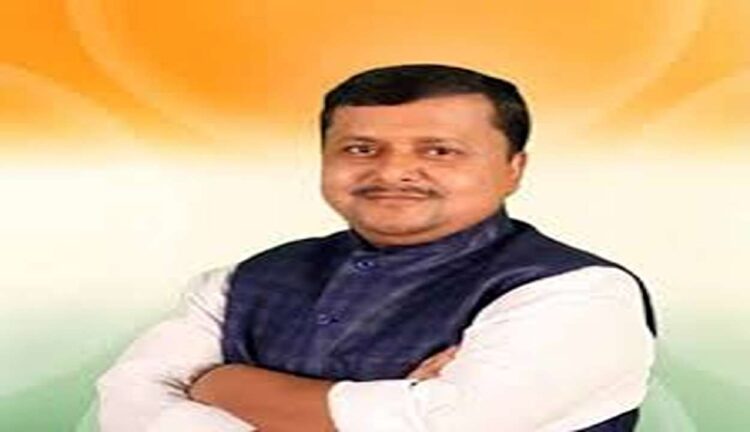
This disparity is evident when compared to other national and regional parties. Sharad Pawar, the leader of the Nationalist Congress Party-SP (NCP-SP), is 85 years old, while Mallikarjun Kharge, the president of the Congress, is 83.
Mamata Banerjee, the leader of the Trinamool Congress and chief minister of West Bengal, is 70 years old; Mayawati, the leader of the Bahujan Samaj Party (BSP) and former chief minister of Uttar Pradesh, is 69; and M.K. Stalin, the president of the Dravida Munnetra Kazhagam (DMK) and chief minister of Tamil Nadu, is 72. Veterans who have controlled their organizations for many years still hold the reins of power in each of these parties.
Aam Aadmi Party (AAP) national convenor and former Delhi chief minister Arvind Kejriwal, 57, National Conference leader and Jammu & Kashmir chief minister Omar Abdullah, 55, and Samajwadi Party president and former Uttar Pradesh chief minister Akhilesh Yadav, 52, are among the other leaders older than Nitin Nabin.
In light of this, Nitin Nabin’s age makes him stand out. A politician being nominated to a significant national position before reaching 50 represents a generational divide that has influenced political narratives more and more.
Shehzad Poonawalla, the national spokesman for the BJP, commented on the news on X, writing: “BJP versus. Congress. Nitin Nabin, 45, has been chosen by the BJP to serve as its National Working President. It demonstrates how the BJP prioritizes Yuva Shakti, talent, and merit. We recently saw Mohammad Moquim, an Odisha Congress politician, writing that Kharge ji, who is eighty-three, ought to be replaced since he lacks a connection with the younger generation.
Political analysts point out that the BJP places a deliberate focus on long-term organizational stability and succession planning in its leadership structure. Instead of depending only on legacy personalities who are approaching the end of their careers, the party has continuously projected leaders over the last ten years who are anticipated to continue to be politically active for years to come.
This strategy has been especially evident in the way the BJP has handled leadership changes after election wins.
In Rajasthan, Chhattisgarh, and Madhya Pradesh, the BJP picked comparatively younger and first-time chief ministers after the 2023 Assembly elections. They chose individuals with administrative prowess and lengthy political careers over more experienced candidates.
The choices were seen by many as an effort to invest in leaders who might influence state politics in the next ten years.
Analysts claim that the BJP has also prioritized developing leaders by giving them long-term positions in the party and government, which enables them to get administrative expertise at a young age.
The party has always indicated that longevity and flexibility are just as important as seniority, from state units to parliamentary leadership.
On the other hand, a lot of opposition groups are still based on established individuals whose power is almost unquestioned inside their own ranks. Critics contend that a protracted concentration of power at the top might impede generational transition and leadership renewal, even while these leaders have strong loyalty and political expertise.
However, a number of senior leaders from both parties continue to play important roles in strategy and governance, thus age alone does not determine political effectiveness.