
ArtExhibition – Sunita Bali Weaves Himalayan Stories in Delhi Showcase
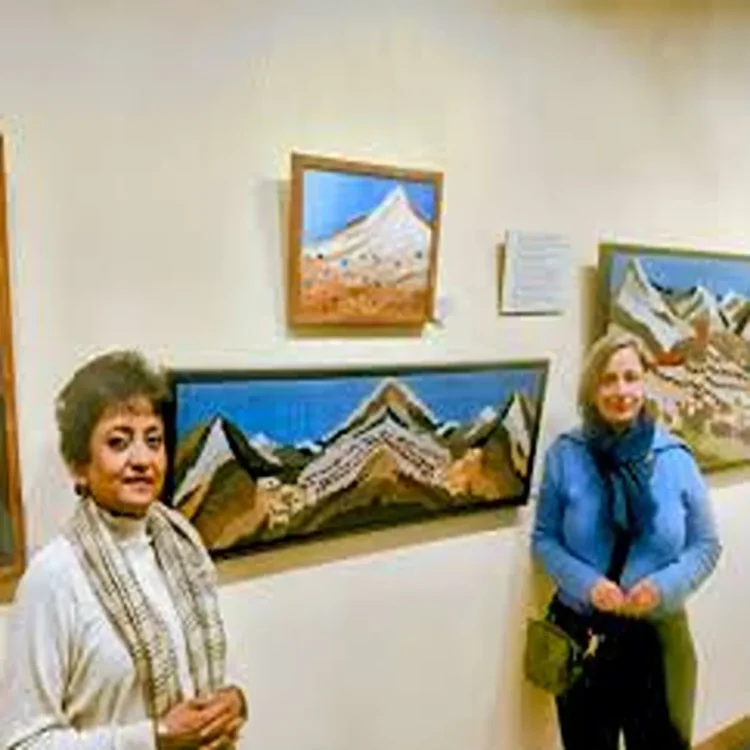
ArtExhibition – An evocative blend of painting and handwoven textiles took centre stage in the capital earlier this month as artist Sunita Bali unveiled her latest collection at the Habitat Convention Foyer Gallery. Titled ‘Sacred Threads of the Himalayas’, the exhibition brought together visual art and traditional weaving techniques, drawing attention for its thoughtful engagement with craft communities in the Himalayan belt.
A Dialogue Between Canvas and Loom
At the heart of the exhibition were tapestries first imagined as paintings and later transformed into woven pieces on handlooms. Bali worked closely with skilled artisans based in remote villages of Himachal Pradesh, ensuring that the translation from brushstroke to thread preserved the essence of her original ideas. Rather than limiting her role to that of a designer, she participated directly in the weaving process, collaborating with craftsmen at the loom.
This partnership allowed each piece to maintain artistic coherence while also reflecting the distinctive character of regional weaving traditions. The process was not merely technical; it was an exchange of ideas, textures and interpretations. Through this collaborative approach, the works emerged as layered creations shaped by both artistic vision and inherited craftsmanship.
Landscapes Inspired by the Mountains
The Himalayas serve as the emotional and visual anchor of the collection. Bali’s works depict prayer flags suspended against expansive mountain horizons, valleys bursting into bloom during spring, and the quiet transition from dusk to night in high-altitude settlements. The imagery moves between vivid daylight scenes and meditative nocturnal landscapes, offering viewers a range of moods associated with life in the mountains.
The exhibition’s title reflects this deep connection. Threads are not just materials but symbols of continuity, devotion and memory. Each woven surface becomes a quiet tribute to the terrain that inspired it, capturing fleeting light, shifting skies and the rhythm of mountain life.
Use of Light to Enhance Texture
A notable feature of the display was the strategic use of backlighting for selected works. Pieces such as ‘Forest Fire’ and ‘Mount Kailash’ were illuminated from behind, accentuating their colour gradients and intricate detailing. The technique heightened the sense of depth, allowing textures to stand out and giving the woven surfaces an almost three-dimensional quality.
Visitors found themselves drawn closer to observe how light filtered through the threads, revealing subtle variations that might otherwise have gone unnoticed. The presentation underscored how traditional textile practices can be reimagined within contemporary gallery settings.
Poetry and Reflection in the Collection
Accompanying the visual works was a short poetic reflection that echoed the atmosphere of the exhibition. The verses spoke of still nights in the mountains, villages glowing softly under moonlight, and peaks illuminated beneath a vast sky. The imagery of time standing still reinforced the contemplative tone that runs through the collection.
By pairing poetry with textile art, Bali extended the narrative beyond the visual frame. The words encouraged viewers to pause and absorb the quiet grandeur of the landscapes portrayed, mirroring the stillness often associated with Himalayan settings.
Portraits in Thread
While landscapes formed the backbone of the exhibition, the artist also introduced expressive handwoven portraits. These pieces drew significant attention from visitors, many of whom spent extended time studying the intricate renderings. The portraits demonstrated the versatility of weaving as a medium capable of conveying emotion and individuality alongside scenery.
Together, the landscapes and portraits formed a cohesive body of work that celebrated both place and people. ‘Sacred Threads of the Himalayas’ ultimately stands as a testament to sustained artistic commitment, meaningful collaboration with rural artisans, and the enduring visual power of the Himalayan region. By bridging fine art and traditional weaving, the exhibition offered audiences a textured journey into the spirit of the mountains.