
AirPollution – Thick Smog Covers Mumbai as Air Quality Deteriorates Across City
AirPollution – Residents across Mumbai began their Thursday morning under clear skies and light winds, yet a dense layer of smog hovering over several parts of the city significantly reduced visibility. The hazy conditions quickly became a talking point among citizens, many of whom posted images and short videos on social media platform X showing a grey blanket covering buildings and skyline views in multiple neighbourhoods.
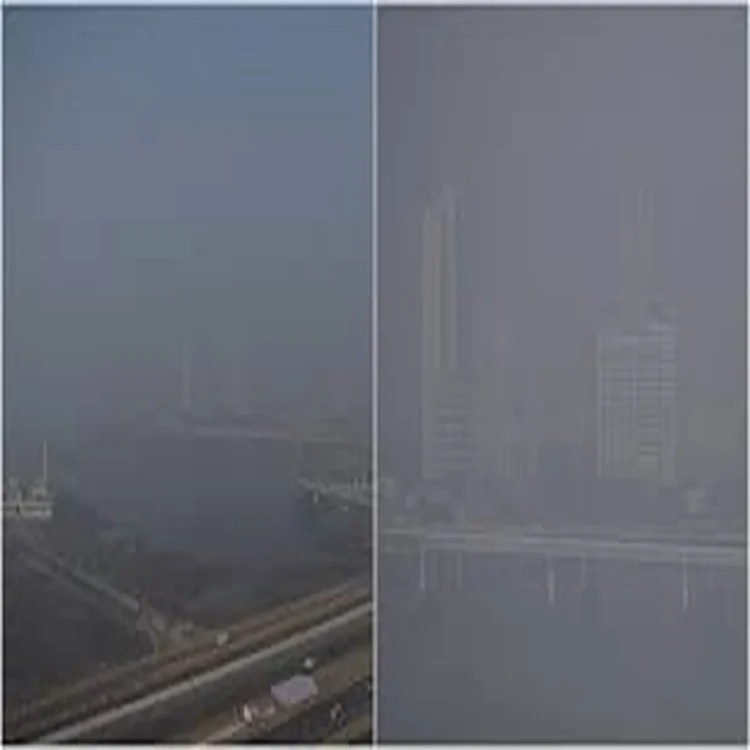
Despite the calm weather, the presence of suspended pollutants in the atmosphere created a gloomy start to the day and renewed concerns about deteriorating air quality in India’s financial capital.
Weather Conditions Remain Hot and Humid
According to the India Meteorological Department (IMD), the city is expected to experience warm and humid conditions throughout the day. Meteorologists estimate that the minimum temperature may remain around 23°C, while daytime temperatures could rise close to 34°C.
In recent days, residents have already been dealing with heatwave-like conditions. The addition of polluted air has made outdoor movement uncomfortable for many citizens. Health experts often note that when high temperatures combine with poor air quality, breathing discomfort and fatigue can become more noticeable, especially for people spending long hours outdoors.
Air Quality Index Reaches Unhealthy Levels
Data released by air monitoring platform AQI.in indicated that Mumbai’s overall Air Quality Index reached 299 during the early hours of Thursday. This reading places the city within the “unhealthy” category, signalling conditions that may affect a broad section of the population.
The sudden increase in pollution has surprised many residents because air quality levels had shown signs of improvement earlier in the week. For a brief period, clearer skies and lower pollution readings had provided temporary relief to people across the city.
Environmental analysts suggest that dust particles and fine particulate matter suspended in the air are largely responsible for the worsening conditions. These tiny particles can remain airborne for long periods, contributing to the visible haze that covered parts of the city during the morning hours.
Construction Activity Adds to Dust Levels
Experts believe that ongoing construction across Mumbai is one of the main contributors to the current pollution levels. The city is undergoing extensive infrastructure development, and many large-scale projects are active simultaneously.
Major construction work includes metro rail expansion, new flyovers, the coastal road project, road widening initiatives and several private real estate developments. These activities often release significant amounts of dust into the atmosphere, particularly when construction zones are not adequately covered or managed.
Urban planners and environmental observers have repeatedly stressed the importance of stronger dust control measures at construction sites to prevent particles from spreading into nearby residential areas.
Several Neighbourhoods Report Severe Pollution
Air monitoring stations across Mumbai recorded extremely high readings in several locations. Kanjurmarg East registered one of the highest pollution levels with an AQI of 392, placing the area in the severe category. Vikhroli and Sion followed with readings of 388 and 381 respectively, indicating similarly alarming conditions.
Other neighbourhoods also reported unhealthy air quality levels. Ghatkopar recorded an AQI of 368 while Powai measured 364, both reflecting significantly polluted air.
A few locations experienced comparatively lower readings, though the conditions were still far from ideal. Gamdevi recorded an AQI of 107 and Santacruz West reported 143, both falling under the poor category. Kandivali West registered 217, Malad 227 and Worli around 240, showing that many residential areas across the city are still facing unhealthy pollution levels.
Understanding Air Quality Index Categories
The Air Quality Index is used to measure pollution levels and assess potential health risks. According to standard classifications, AQI readings between 0 and 50 are considered good and indicate minimal health concerns.
Values ranging from 51 to 100 fall into the moderate category. Readings between 101 and 200 are classified as poor, while levels from 201 to 300 are described as unhealthy. Any AQI above 300 enters the severe category and can pose serious health risks.
Such conditions are particularly concerning for children, elderly citizens and individuals with respiratory or heart-related illnesses. With pollution levels once again rising in Mumbai, environmental experts and residents are increasingly discussing the need for stronger pollution control measures to protect long-term public health.