
US: promises a vigorous worldwide counterterrorism campaign and issues threats from Iran and ISIS
US: The candidate for America’s top counterterrorism position told legislators that the Trump administration is dedicated to averting a significant terrorist assault on the US homeland by breaking up international terror networks, taking on state sponsors, and increasing burden-sharing with partners.
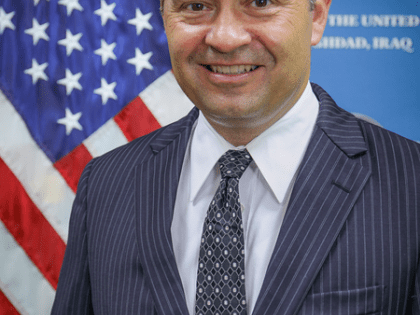
Gregory D. LoGerfo, the State Department’s ambassador-at-large and nominee for counterterrorism coordinator, told the Senate Foreign Relations Committee that the terrorist threat to the United States has changed since the September 11 attacks, with organizations like al-Qaida and ISIS still recruiting and inciting violence around the world.
“Around the world, ISIS and al-Qaida are still recruiting, radicalizing, and encouraging their followers to carry out attacks in their home countries,” LoGerfo said. “ISIS’s enduring reach, capabilities, and ambitions were starkly brought to light by the New Year’s Day attack in New Orleans.”
“Destroying and disrupting terrorist networks, holding state sponsors accountable, securing our borders, and degrading the capacity of terrorist groups to threaten the United States” are the main goals of the administration’s counterterrorism strategy, according to LoGerfo.
The government will take on “the narco terrorists wreaking havoc in the homeland and across the Western Hemisphere,” he said, citing President Trump’s classification of “14 cartels and gangs as foreign terrorist organizations.”
Despite Tehran’s diminished position, LoGerfo cautioned about the ongoing risks posed by Iran and its affiliates.
“Tehran and its terrorist proxies, such as the Houthis, Hezbollah, and Hamas, continue to destabilize the Middle East and show interest in expanding their reach to other regions, despite Iran’s significant weakness,” he said.
He issued a warning that there may be increased dangers for Iranian dissidents, US officials, journalists, and Jewish targets.
“We must stay focused on potential increased Iranian lethal planning globally as we exert maximum pressure on Iran and its terrorist proxies,” said LoGerfo.
LoGerfo said that despite the fall of the ISIS territorial caliphate in Syria, there are still terror risks in Afghanistan.
“We have taken decisive action and are working with partners to address the threat of ISIS Khorasan,” he said, noting that Pakistan and Afghanistan are still issues.
In response to the expansion of activities by ISIS and al-Qaida affiliates in the Sahel, LoGerfo said that the United States should prioritize burden-sharing with its regional and European allies.
He cited expanding collaboration with coastal West African nations including Côte d’Ivoire, Benin, and Togo when he said, “When we share risk, we need to share burden, and we also need to share resources.”
“America first does not mean America alone,” LoGerfo said as he promised to strengthen international counterterrorism alliances.
He promised that Congress would be closely consulted and that foreign aid would be closely examined.
He said, “I will make sure that our foreign assistance funds are used effectively on programs that keep America safe and that each program is carefully examined and evaluated.”
Senator Ted Cruz questioned LoGerfo, who said that he thought the Muslim Brotherhood was a danger to national security.
When asked explicitly whether the organization is a danger to US security, he said, “Yes.”
He said that the administration will cooperate diplomatically with friends that have already named the Brotherhood and seek more designations “in accordance with the law.”
Regarding Syria, LoGerfo said that the United States backs de-radicalization initiatives in addition to the repatriation and reintegration of people from detention camps like al-Hol and al-Roj.
He pledged to bolster counterterrorism initiatives that promote reintegration, saying, “These facilities have been and continue to be breeding grounds for extremism.”
Since 9/11, the US has spearheaded international counterterrorism initiatives, using changing tactics to deal with state-backed militancy, decentralized jihadist networks, and new dangers in South Asia, Africa, and the Middle East.
India continues to carefully monitor US counterterrorism goals, especially with respect to risks associated with ISIS, organizations supported by Iran, and transnational terror finance networks that operate across the Indo-Pacific region.