
US President Donald Trump: Renewed US–Russia Diplomacy Signals Fresh Momentum in Ukraine Peace Efforts
US President Donald Trump: The ongoing Russia-Ukraine conflict, now approaching its fourth year, has once again moved to the center of global diplomacy. Recent high-level conversations involving the United States, Russia, and Ukraine suggest a renewed push toward de-escalation and possible peace negotiations. These developments indicate increased international engagement, with Washington taking a proactive role in exploring diplomatic solutions to one of the most complex geopolitical crises of recent times.
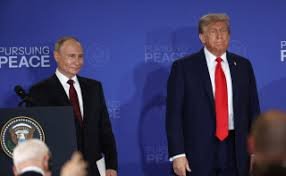
Intensified Diplomatic Engagement Between Washington and Moscow
In a notable development, the President of the United States held two telephone conversations with the Russian President within a 24-hour period. Such frequent communication between the two leaders highlights the urgency surrounding efforts to reduce tensions and find a pathway toward ending the conflict. According to official statements, the discussions were described as constructive, with Ukraine remaining the central focus.
This surge in diplomatic activity reflects a broader strategy by Washington to reassert its influence in peace negotiations. Officials emphasized that these talks were aimed at assessing Russia’s willingness to engage in meaningful dialogue while addressing ongoing security concerns in Eastern Europe.
Context of the Miami Meeting With Ukraine’s Leadership
The renewed dialogue with Moscow followed closely after a face-to-face meeting between the US President and Ukraine’s President in Miami. That meeting reinforced Washington’s commitment to supporting Kyiv while also encouraging diplomatic avenues that could lead to a ceasefire. The timing of these engagements suggests a coordinated effort to balance pressure and persuasion, signaling that the United States is attempting to act as a mediator rather than solely a military backer.
The Miami discussions reportedly included sensitive topics such as territorial integrity, security guarantees, and the conditions required for halting active hostilities. These issues remain central obstacles to any lasting agreement.
Security Concerns and Controversial Statements
During the phone call with the Russian leader, recent security incidents were also discussed. Russian officials claimed that an alleged drone attack near a high-security location had raised alarm, an assertion that Ukraine has firmly rejected. The US President reportedly expressed concern over these developments, emphasizing the risks of further escalation.
A remark attributed to the US President regarding advanced missile systems also drew attention. While the comment sparked debate among analysts and policymakers, it underscored the ongoing discussion within Western capitals about the scale and limits of military assistance to Ukraine. These debates continue to influence the broader diplomatic environment surrounding the conflict.
Perceptions of Progress Toward Peace
Despite continued fighting on the ground, the US President has repeatedly voiced optimism about the potential for progress. He has stated that negotiations appear closer to a breakthrough than at any previous point, though he acknowledged that significant challenges remain unresolved. Importantly, no specific timeline has been set, reflecting the complexity of the issues involved and the need for cautious diplomacy.
This optimism contrasts with the realities on the battlefield, where clashes persist and humanitarian concerns continue to mount. Nevertheless, diplomatic engagement is widely viewed as a necessary step toward testing the sincerity of all parties involved.
Ukraine’s Position on Referendum and Ceasefire Conditions
Ukraine’s leadership has made it clear that any agreement involving territorial matters must be approved by its citizens through a national referendum. According to Kyiv, such a vote would only be feasible after a sustained ceasefire lasting at least 60 days. This condition is framed as essential for ensuring public safety, transparency, and democratic participation.
Key unresolved issues include control over contested regions and the future of critical infrastructure sites. Ukraine maintains that constitutional requirements leave little room for compromise without direct public consent, reinforcing its stance that peace cannot come at the cost of sovereignty without democratic approval.
Russia’s Firm Stance and Ongoing Disputes
On the other side, Moscow continues to hold a hard line. Russian officials have stated that Ukraine would need to make territorial concessions to demonstrate a genuine commitment to peace. Warnings have also been issued that failure to reach an agreement could result in further losses for Ukraine.
Currently, Russia controls a significant portion of Ukrainian territory, including areas annexed or occupied since 2014. These claims are rejected by Ukraine and widely disputed by the international community, remaining a major stumbling block in negotiations.
The Road Ahead for Ceasefire Talks
As hostilities continue, global attention is focused on whether a ceasefire can be achieved. For Ukraine, a halt in fighting is seen as a critical test of Russia’s intentions and a prerequisite for broader peace talks. For the international community, it represents a potential turning point that could reduce civilian suffering and stabilize the region.
While uncertainty remains high, the recent surge in diplomatic activity suggests that all sides recognize the growing costs of prolonged conflict. Whether these efforts translate into tangible results will depend on compromises, trust-building measures, and sustained international engagement.