
US: is apprehensive about Venezuela’s transition after Maduro’s detention
US: The most prominent political figure in Venezuela has been removed with Nicolás Maduro’s arrest, but US officials admitted that there remains a great deal of ambiguity about who will lead the nation next and how a political transition would play out.
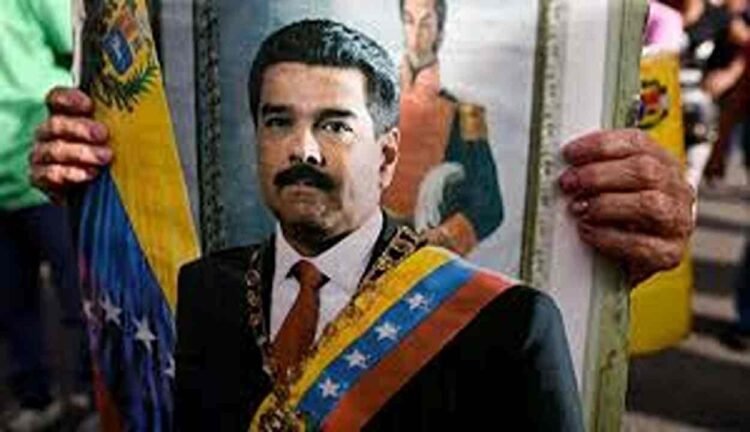
According to Secretary of State Marco Rubio, the United States must address what he called the “immediate realities on the ground” rather than acknowledging Maduro or his successors as legitimate presidents.
In an interview with NBC’s Meet the Press, Rubio said, “We have to deal with the people who had the guns,” alluding to the institutions and security forces that are still in place in Venezuela.
In appearances with ABC News and CBS News, Rubio said that he had talked with Vice President Delcy Rodríguez, who has taken on a leadership position since Maduro’s detention. He refused to elaborate on any promises she could have made.
“What they do is what matters,” Rubio said on Face the Nation on CBS News. “Everything will be evaluated based on their actions.”
Engagement does not equate to recognition, Rubio said. He said on ABC’s This Week that in order to accomplish certain goals, the US has often had to work with authorities it does not recognize.
“That’s not the same as acknowledging their legitimacy,” Rubio said on ABC News.
Discussions on Sunday were dominated by the legitimacy issue. Analysts on CNN pointed out that Rodríguez was a key member of Maduro’s administration and had been sanctioned by the US and the EU.
On CNN’s well-liked Sunday talk program GPS with Fareed Zakaria, journalist David Sanger of The New York Times said that the administration seemed to be favoring practicality above democratic symbols, negotiating with whomever will provide short-term acquiescence.
Meanwhile, opposition leaders Edmundo González and María Corina Machado declared victory in the contentious 2024 election, and some of the experts cited them. So yet, she has not participated in the changeover process.
After years of autocratic control, Rubio said it was impractical to have elections right away, even while he admitted sympathy for the opposition. He told ABC News, “Everyone wants an election tomorrow.” “That is ridiculous.”
Rubio said, “These things take time,” on CBS News. “There is a method.”
Military experts cautioned that Venezuela’s military forces are still strong and unified. Admiral James Stavridis, the former head of U.S. Southern Command, said on CNN that Washington must now make tough decisions.
Stavridis said that a gradual transition could be the only practical choice, saying, “You either work with existing structures, or you risk chaos.”
According to Rubio, the US will keep up its pressure on Venezuela’s interim government by enforcing maritime laws and imposing oil sanctions.
Rubio said on NBC News, “We retain multiple levers of leverage,” referring to the continued oil quarantine.
Maduro is now being held in the United States and is being prosecuted. However, eliminating one leader has not addressed the more fundamental issue of governance, as authorities and observers admitted on Sunday.
“The hardest part is what comes next,” Stavridis said on CNN.