
US : is advised to challenge China by implementing the “tech triad.”
US: According to a recent analysis by senior aerospace and defense executive Vivek Lall, the United States must immediately embrace a unified national plan to develop nuclear energy, artificial intelligence, and autonomous systems if it intends to remain ahead of China in developing military technology.
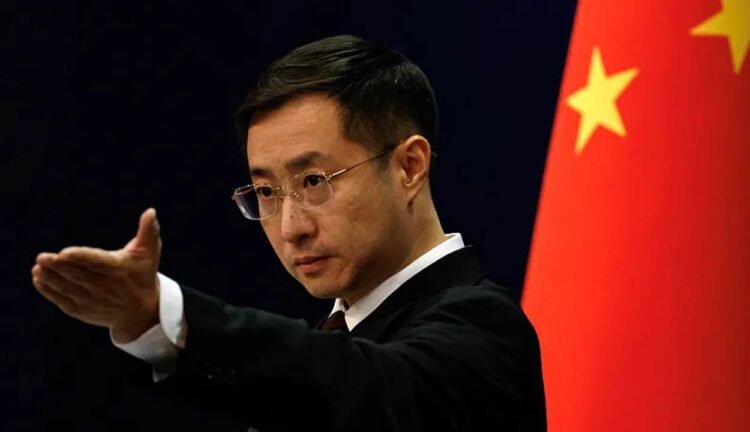
Lall contends in the National Review piece that while China made its nuclear triad public in September 2025, it has made more rapid and significant advancements in what he refers to as a “tech triad” that combines nuclear energy, artificial intelligence, and autonomous systems.
He claims that although the United States has just recently realized how interrelated these technologies are, Beijing has been linking them “at lightning speed.”
Lall argues, “You can say this for the Chinese Communist Party: It sees the big picture.” China sees autonomous systems, artificial intelligence, and nuclear energy as the three main foundations of its future military might.
He claims that although AI allows autonomy across platforms, from unmanned aircraft to coordinated drone swarms, nuclear energy provide the consistent power needed for sophisticated AI.
As part of a concerted effort to power energy-intensive AI models, Lall cites China’s building of 34 nuclear reactors and plans for over 200 more. He claims that China is already using AI for autonomous technologies with military applications, such as robot scout dogs and war-game simulations, utilizing a lot of power. He adds that Chinese AI projects like DeepSeek are anticipated to advance quickly as additional nuclear reactors come online, allowing power projection over land, sea, air, space, and cyberspace.
He claims that the “future of military power” would be determined by “AI, quantum computing, and autonomous systems, plus the energy necessary to fuel these domains,” as stated in President Donald Trump’s new National Security Strategy.
Lall urges the president to immediately order the Department of Energy and the Department of War to launch a National Integration Initiative.
According to him, such a program should empower the private sector rather than replace it, reduce regulatory barriers, expedite licenses and reviews, relax export restrictions with friends, and finance high-impact demonstration projects.