
US: India is a major AI, IT, and defense partner, according to the Congress
US: On Monday, US legislators said that India is becoming a vital partner in sophisticated manufacturing, artificial intelligence, and Indo-Pacific security, rather than just a defense customer or technology market.
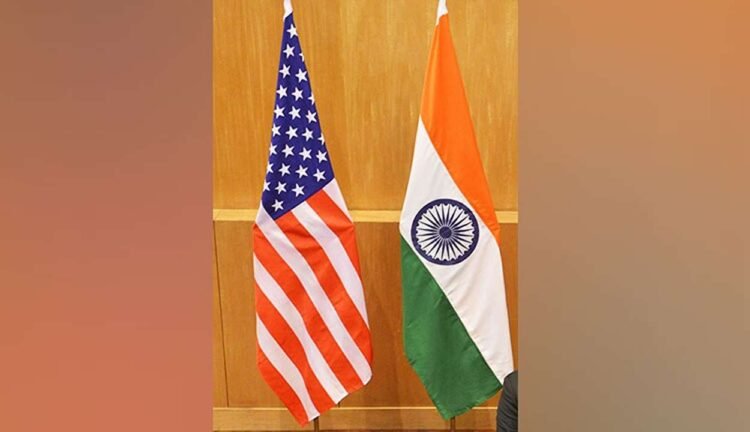
Representative Rich McCormick cautioned against limiting India’s access to cutting-edge technology at a CSIS session. “It will be detrimental to our nation if we begin restricting access to our products,” he said.
According to McCormick, it is strategically critical to maintain India’s alignment with US technological norms. “They’ll get them from somewhere else if we limit our good chips to the rest of the world, and then they become the standard,” he said.
AI is “a transformational technology” that requires tight collaboration, according to Indian American Representative Ami Bera. “To both develop AI and address the challenges that will arise, the United States and India should collaborate extremely closely,” he said.
Global development and health care should be included in this kind of cooperation, according to Bera. He proposed new mobility corridors for highly qualified people, saying, “It’s also an opportunity for us to rethink what visas look like.”
Both politicians connected defense links to technological collaboration. Citing joint exercises and co-production, Bera said that defense-to-defense ties are on “a good trajectory.” He said, “We want to keep doing more joint exercises, joint training, and joint development.”
McCormick mentioned India’s efforts to become self-sufficient in its defense. He cited India’s demands for 75% local ownership when he said, “Prime Minister Modi’s ultimate goal… is to be independent as a defense contractor.”
He maintained that modernization of US defense equipment is necessary. Criticizing dependence on “antiquated systems,” McCormick said, “Our technologies have not kept up in the defense industry.”
The QUAD group was enthusiastically supported by both legislators. “Beijing despises the Quad, which is why I know it’s so important,” Bera said.
Additionally, they emphasized interpersonal relationships as a strategic advantage. “We have a quarter million Indian students here right now,” McCormick said, pointing out the size of Indian talent in the US and cautioning that sending them back would empower rivals.
Talent flows are already shifting, according to Bera. He said, “They can move back and forth because they see how quickly the Indian domestic market is growing.”
Data infrastructure and energy were also discussed. According to McCormick, AI and data centers use enormous amounts of electricity. “There is no other option than nuclear power to generate that kind of power,” he said.
India has electricity and water shortages, Bera continued. He pointed to prospects for cooperation on desalination and civil nuclear technology, saying, “They don’t have enough energy, and they don’t have enough water, as Prime Minister Modi wanted to build out data centers.”
Cooperation with India, according to both congressmen, boosts US competitiveness internationally. “This is a two-way street. Bera said, “This is a two-way street.