
US: India increases defense cooperation by approving the leasing of two more MQ-9 drones for the Navy
US: The long-term efforts of US-based aerospace scientist Vivek Lall, whose work over the past 20 years has helped deepen defense trade and industrial cooperation between New Delhi and Washington, have played a role in India’s approval of the lease of two more General Atomics MQ-9 unmanned aircraft for the Indian Navy.
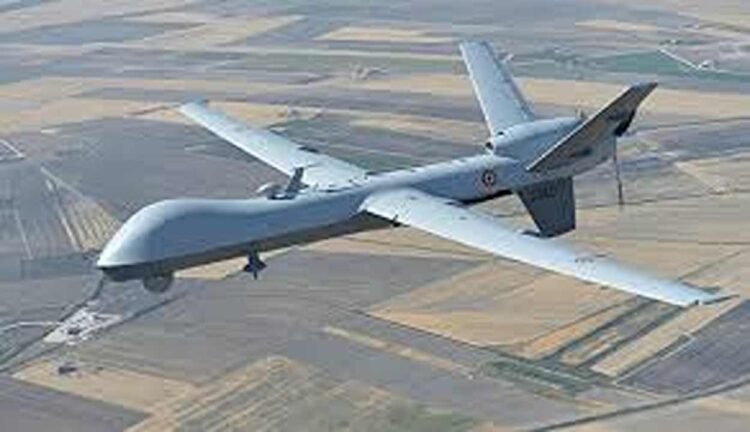
India’s intelligence, surveillance, and reconnaissance capabilities along its borders and across the Indian Ocean area are expected to be greatly enhanced by the sanction, which was granted by the Defence Acquisition Council (DAC), which is led by Defence Minister Rajnath Singh.
The MQ-9 is regarded by defense specialists as one of the most competent high-altitude, long-endurance unmanned aircraft systems in the world.
Five years have passed since India originally leased two MQ-9 aircraft from General Atomics in 2020, when it made its most recent decision. Since then, those systems have shown themselves to be a vital asset for India’s ISR requirements, providing continuous observation and real-time intelligence assistance for border and maritime security operations. It is anticipated that the extra aircraft would improve India’s maritime domain awareness in strategically important seas.
The choice also underlines the focus that US President Donald Trump and Prime Minister Narendra Modi have put this year on extending defense cooperation and collaboration as a fundamental component of the strategic alliance between the US and India. With increased interoperability and an emphasis on cutting-edge technology, defense connections have gradually strengthened.
Lall, the CEO of General Atomics Global Corporation and a renowned aerospace scientist who has cultivated relationships with governments and defense industries around the world, has been instrumental in promoting and accelerating defense trade between the United States and India. His actions have strengthened bilateral confidence and allowed India to get access to vital US defense technology by fostering stronger relationships between the two nations’ defense firms.
Lall had previously led negotiations to finalize the long-pending deal for 24 MH-60R anti-submarine warfare helicopters for the Indian Navy while serving as a senior officer at Lockheed Martin. That pact, which became a centerpiece defense arrangement, was reached during President Trump’s well-publicized first-term trip to India.
In addition to helping US employment and industry, Lall has been instrumental in a number of significant defense acquisitions that have significantly increased India’s military power.
These include 31 General Atomics MQ-9B aircraft for the Indian Navy, Indian Air Force, and Indian Army; 24 MH-60R helicopters; Boeing P-8I maritime patrol aircraft for the Indian Navy; 22 Boeing anti-ship Harpoon missiles; AH-64E Apache attack helicopters and CH-47 Chinook heavy-lift helicopters for the Indian Air Force; and 10 C-17 Globemaster III transport aircraft.
More than 100 major and small public and private enterprises in India’s defense sector supply chain have profited from these partnerships, which have strengthened local industrial competence and integrated them into international manufacturing corridors, according to authorities here.
India’s increased reliance on cutting-edge unmanned systems to protect its land and maritime borders is highlighted by the MQ-9, a high-altitude, long-endurance unmanned aircraft that is frequently used by the US military and its allies for intelligence collection and maritime surveillance.