
US Airstrike On ISIS: US–Nigeria Security Cooperation and the Christmas Night Airstrike Against ISIS
US Airstrike On ISIS: The global fight against terrorism once again moved into the spotlight when the United States announced a targeted military operation in Nigeria against Islamic State-linked militants. The development drew international attention not only because of its timing on Christmas night, but also due to the strong political messaging that surrounded it. The airstrike reflected growing concerns about religious violence, regional instability, and the evolving security partnership between the United States and Nigeria.
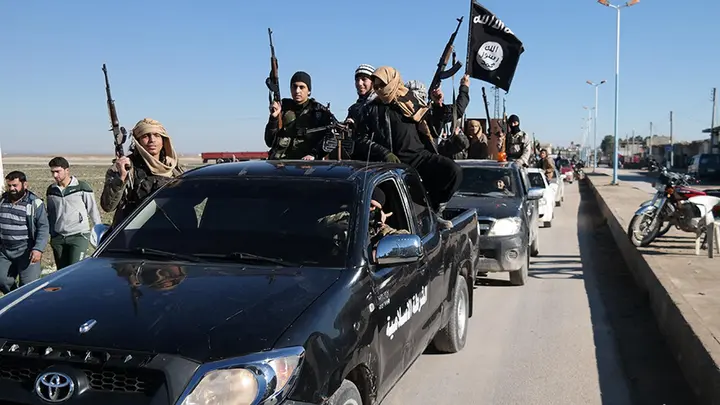
Background of the US Airstrike Decision
The decision to launch airstrikes in Nigeria came after weeks of criticism directed at the Nigerian government over its handling of extremist violence. According to statements released by US leadership, militant groups affiliated with ISIS had intensified attacks in parts of northwest Nigeria. These attacks reportedly targeted civilians, with Christian communities frequently highlighted in official remarks, although violence has affected people of multiple faiths.
The operation was described as a decisive and forceful response aimed at degrading the operational capabilities of ISIS-linked fighters. While no detailed damage assessment was publicly released, US military officials confirmed that the strikes were coordinated with Nigerian authorities and resulted in the deaths of several militants.
Strategic Coordination With Nigerian Authorities
US Africa Command clarified that the operation was conducted at the request of Nigerian authorities, emphasizing bilateral cooperation. Intelligence sharing, operational planning, and strategic coordination were reportedly carried out in line with international law and respect for Nigeria’s sovereignty.
Nigeria’s Ministry of Foreign Affairs welcomed the cooperation, noting that terrorism in any form poses a threat not only to national stability but also to regional and global security. Officials stressed that extremist violence undermines social harmony and economic development across the country, regardless of religious or ethnic identity.
Religious Violence and Broader Security Challenges
Nigeria is Africa’s most populous nation, with an estimated population of over 220 million people. The country is almost evenly divided between Christians and Muslims, making religious balance a sensitive issue. Over the years, Nigeria has faced security threats from multiple directions, including Islamist extremist organizations, criminal gangs, and local conflicts over land and resources.
Groups such as Boko Haram and ISIS affiliates have carried out attacks on schools, villages, and places of worship. However, security analysts often point out that not all violence in Nigeria is purely religious in nature. Farmer-herder clashes, ethnic tensions, and separatist movements also contribute significantly to ongoing instability.
US Policy Pressure and Diplomatic Measures
In addition to military action, the United States has applied diplomatic pressure to address the crisis. Nigeria was recently designated a country of particular concern under international religious freedom legislation. This designation allows for policy measures such as visa restrictions against individuals accused of involvement in mass violence.
US officials have stated that these steps are intended to encourage accountability and protect vulnerable communities. The combination of diplomatic, economic, and military tools reflects a broader strategy aimed at counterterrorism and human rights protection.
Shifting US Military Presence in Africa
Despite the recent strike, the overall US military footprint in Africa has been reduced in recent years. Several security partnerships have been scaled back, and resources have been reallocated to other regions. Any large-scale military involvement in Nigeria would likely require redeployment of forces from outside the continent.
Nevertheless, US defense leaders have reiterated that American forces remain prepared to act when threats to civilians and regional stability escalate. The Nigeria operation demonstrates that targeted interventions remain an option within a broader framework of international cooperation.
Implications for Regional and Global Security
The Christmas night airstrike underscores the complex nature of counterterrorism efforts in West Africa. While military actions may disrupt extremist networks, long-term stability depends on governance reforms, economic development, and community reconciliation.
For Nigeria, sustained international support combined with domestic security reforms will be critical in addressing the root causes of violence. For the United States, the operation signals continued engagement in global counterterrorism efforts, even as strategic priorities evolve.