
Ukraine – UN General Assembly Backs Ukraine’s Territorial Integrity Amid Divisions
Ukraine – The United Nations General Assembly has reaffirmed its support for Ukraine’s territorial integrity, adopting a resolution that calls for an immediate ceasefire to end the ongoing conflict with Russia. The vote, held on Tuesday to mark four years since Moscow launched its invasion, revealed growing differences among Western nations over how to bring the war to a close. India and the United States were among the countries that chose to abstain.
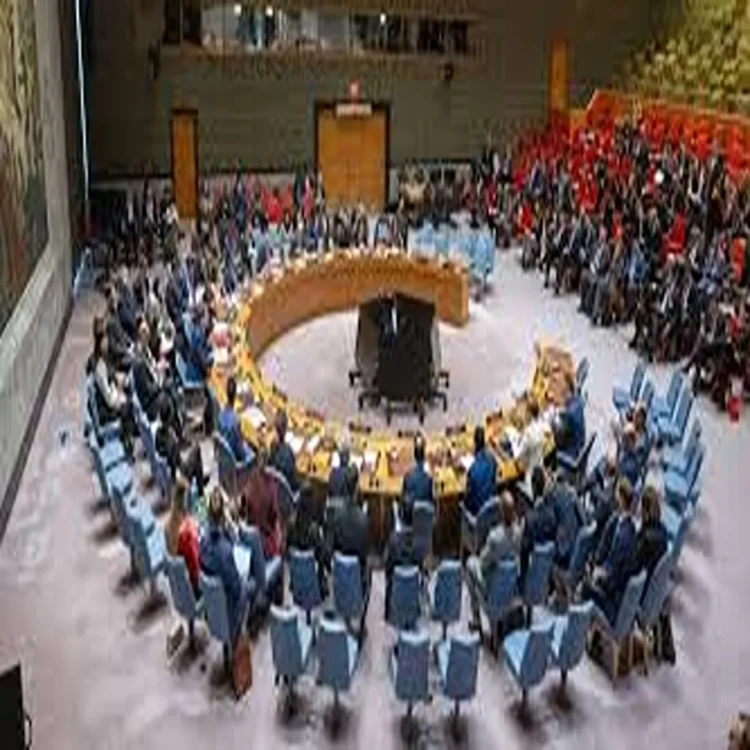
Resolution Gains Majority Support
The measure was approved with 107 votes in favor. Twelve countries voted against it, while 51 member states abstained. Although the resolution passed comfortably, the voting pattern highlighted a visible split within the Western bloc, particularly regarding diplomatic strategies to secure peace.
The text reaffirmed the Assembly’s strong commitment to Ukraine’s sovereignty, independence, unity, and internationally recognized borders. It also called for a comprehensive and lasting peace consistent with international law and the principles of the UN Charter.
US Abstention Reflects Diplomatic Calculations
In a notable departure from its earlier stance, Washington refrained from supporting the resolution. US officials explained that their decision was guided by ongoing diplomatic efforts aimed at securing a negotiated settlement between Kyiv and Moscow.
The United States had requested the removal of two specific paragraphs from the draft. These sections reiterated support for Ukraine’s territorial integrity and emphasized the need for a just and durable peace under international law. According to US representatives, retaining those passages could complicate sensitive negotiations currently underway.
When the proposal to delete the paragraphs failed to gain sufficient backing — with 69 countries opposing the change and 11 supporting it — Washington chose to abstain from the final vote. India was among the 62 countries that did not support the amendment.
Rare Alignment Between US and Russia
In an unusual development, Russia voted alongside the United States in favor of removing the contested paragraphs. Meanwhile, several of Washington’s traditional allies opposed the US request, underscoring diverging approaches within the Western alliance.
US Deputy Permanent Representative Tammy Bruce stated that the two references in question might divert attention from active negotiations. She noted that Washington believes progress toward a potential agreement is closer than at any time since the conflict began.
Russia’s Deputy Permanent Representative Anna Evstigneeva echoed the sentiment, arguing that the current moment presents a genuine opportunity for political settlement. She emphasized the importance of prioritizing diplomacy over declarations.
Despite abstaining, the United States reiterated its support for an immediate ceasefire, clarifying that it remains committed to ending the war through negotiation.
European Allies Defend UN Principles
France strongly opposed the US attempt to alter the resolution. French Permanent Representative Jerome Bonnafont warned that removing references to sovereignty and territorial integrity would undermine the foundational principles of the UN Charter.
Several other Western nations also resisted Washington’s position, signaling concern that softening language on territorial integrity could weaken international norms governing state sovereignty.
The adopted resolution specifically expressed concern that Russia’s full-scale invasion of Ukraine has continued for four years, causing severe and lasting consequences for Ukraine as well as broader regional and global stability.
Ongoing Peace Efforts
While campaigning for office, US President Donald Trump had pledged to end the Ukraine war swiftly, a goal that has proven more complex in practice. Nonetheless, Washington continues to facilitate dialogue between the two sides. Talks supported by the United States were held last week in Geneva as part of ongoing efforts to bridge differences.
US officials said their negotiators are working intensively with both parties to resolve outstanding issues and reach an agreement as quickly as possible. The General Assembly’s vote, while symbolic, reflects the broader international community’s desire for an end to hostilities, even as debates continue over the most effective path toward lasting peace.