
Trump : increases tariffs and halts relations with Iran
Trump: In addition to imposing fresh trade penalties associated with Iran, US President Donald Trump said that he had canceled all talks with Iranian officials and encouraged Iranian demonstrators to continue their protests against what he saw as abuses by the country’s administration.
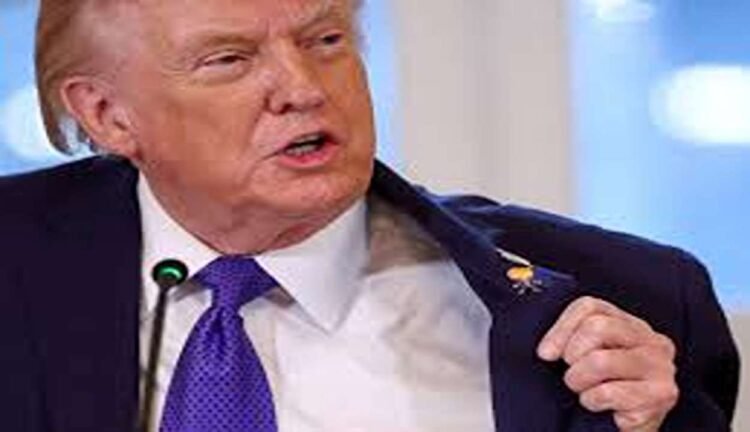
Trump said that violence against Iranian demonstrators was a factor in the decision to suspend diplomatic relations when speaking at the Detroit Economic Club. He said, “I’ve canceled all meetings with the Iranian officials until the senseless killing of protesters stops.”
He spoke to what he referred to as “Iranian patriots,” exhorting them to continue their demonstrations and to track down the perpetrators of violence. Trump said, “To all Iranian patriots, keep protesting.” “If at all possible, seize control of your institutions and preserve the identities of the murderers and abusers.”
Trump asserted that accountability will follow despite the fact that reports on fatalities in Iran differed. He said, “I hear five different sets of numbers.” “One fatality is excessive.” He forewarned violent offenders that there will be repercussions.
Trump said, “They’ll pay a very high price, so save their names.”
Trump said that further economic pressure, aimed at Iran via trade sanctions, had already begun. He said, “You saw that I imposed tariffs on anyone doing business with Iran.” “Just became operative today.”
He said that tariffs were being utilized to economically isolate Iran and portrayed them as a key component of his foreign strategy. Additionally, Trump criticized Iran’s existing government by using the term “make Iran great again.”
He said, “This country was fantastic until these monsters invaded and seized control of it.”
He noted that the situation in Iran was precarious and cautioned that under earlier US leadership, comparable circumstances may have extended worldwide. “This would have happened to us if I hadn’t won this election,” Trump said.
Trump said that he thought external pressure would contribute to reform. “I just tell them that help is coming,” he added.
He said that economic pressure has been successful against other nations and connected tariffs on Iran to a larger trade strategy. Tariffs, according to Trump, are a better option than protracted warfare.
“You wouldn’t have been able to end any of them without trade and tariffs,” he said, alluding to earlier disputes that he claimed were settled under his leadership.
He compared Iran to past successful foreign policy initiatives, including as attacks on nuclear facilities and operations against extremist leaders. Trump said, “We carried out the nuclear attack on Iran.” “We destroyed their nuclear arsenal.”
According to Trump, nations who rejected US demands on trade and security were also subject to tariffs. He described how he placed pressure on countries during talks by saying, “If you don’t do it, then I’m going to put a tariff on you.”
He maintained that tariffs provided leverage that was not possible via diplomacy alone. Trump said, “The tariffs will be 20 times higher than the cost.”
Trump said legal challenges were underway and criticized what he saw as a hesitance on the part of the US political system to fully support such actions.
He said, “The Supreme Court will now decide whether or not we can use tariffs.” He said that tariffs were necessary for national security and accused opponents of being “foreign centric” and “China centric.”
Trump said that the pressure campaign against Iran was a component of a larger initiative to bolster American influence overseas. He said, “Our country was laughed at.” “We are once again respected.”
Iran and the United States have not maintained official diplomatic ties for decades, and tensions have often increased due to Iran’s human rights record, regional influence, and nuclear program. One of the main components of Washington’s Iran policy has traditionally been US trade restrictions and sanctions.
Subsequent US administrations have used secondary sanctions and tariffs as means of exerting pressure on Tehran without resorting to outright military action.