
TradeRelations – Trump Criticizes Canada Over Bridge and Tariffs
TradeRelations – President Donald Trump has renewed his criticism of Canada’s trade practices, accusing the neighboring country of long-standing economic imbalance and warning that future cooperation could be affected unless changes are made.
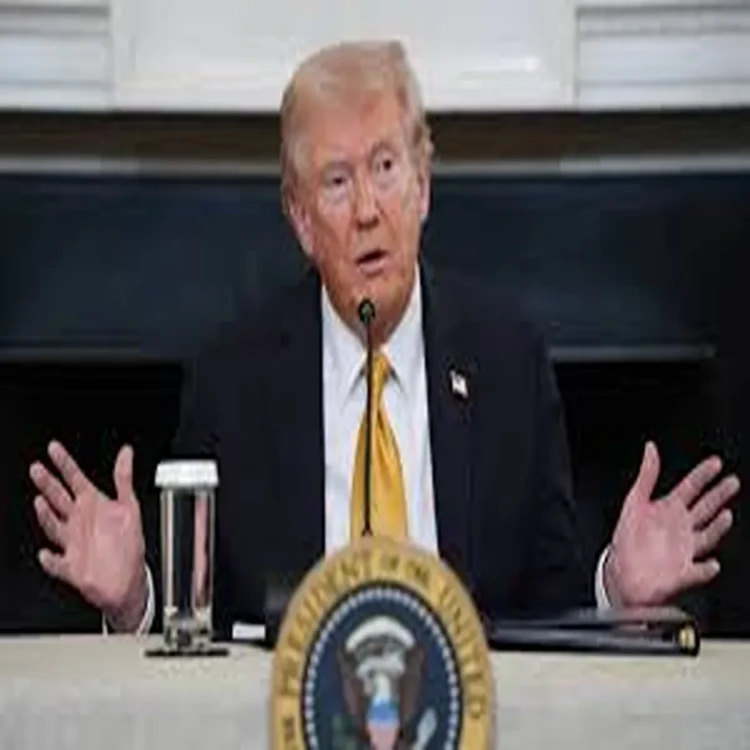
In a message posted on Truth Social, Trump claimed that Canada has treated the United States unfairly for decades. He pointed specifically to the construction of a major cross-border bridge connecting Ontario and Michigan, arguing that the project offers limited economic benefit to American industries.
Dispute Over Cross-Border Bridge Project
The bridge in question links Ontario with Michigan and is intended to improve trade and transportation between the two countries. Trump alleged that Canadian authorities control both sides of the project and that the construction has involved minimal American materials or labor.
According to the president, past US leadership allowed Canada to bypass certain requirements under the Buy American Act, enabling the use of non-American products, including steel, in major infrastructure initiatives. Trump directly referenced former President Barack Obama, asserting that policy decisions made during his administration weakened domestic manufacturing protections.
Trump said he would not permit the bridge to become operational unless the United States receives what he described as full compensation and fair treatment. He further suggested that revenue generated through access to the American market would be significant and that the US should hold at least partial ownership in the project.
Concerns Over Tariffs and Market Access
Beyond infrastructure, Trump also raised concerns about Canadian tariffs on US dairy exports, describing them as harmful to American farmers. He argued that these long-standing trade barriers have placed US agricultural producers at financial risk.
The president additionally criticized restrictions within Ontario that limit the sale of certain American alcoholic beverages in government-run retail outlets. He said such policies reflect broader trade inequities that need to be addressed through negotiations.
Trump stated that talks between the two countries would begin immediately, signaling a possible shift toward tougher trade discussions. While he did not outline specific policy measures, his comments suggest a willingness to use executive authority to influence cross-border agreements.
Remarks at World Economic Forum
This is not the first time Trump has publicly voiced frustration with Canada’s trade relationship. Speaking last month at the 56th Annual Summit of the World Economic Forum in Davos, he described Canada as benefiting disproportionately from its economic ties with the United States.
During that address, Trump said Canada receives significant advantages from Washington and suggested that its leadership has not expressed adequate appreciation. He also emphasized the strategic and security partnership between the two countries, noting that US defense initiatives, including a proposed missile defense system, would extend protection to Canada.
His remarks were widely seen as directed at Canadian Prime Minister Mark Carney, who in his own speech at the forum highlighted the challenges of growing geopolitical rivalry and cautioned against the use of tariffs as political leverage.
Broader Context of Bilateral Relations
Trade between the United States and Canada represents one of the largest bilateral economic relationships in the world, with goods and services flowing across the border daily. While disagreements over dairy quotas, tariffs, and procurement rules have surfaced periodically, both nations remain deeply integrated through shared supply chains and security cooperation.
Trump’s latest comments underscore ongoing tensions that could shape future negotiations. Analysts note that infrastructure projects such as the Ontario-Michigan bridge are typically framed as mutually beneficial, designed to ease congestion and strengthen commerce. However, disputes over materials sourcing and ownership structures have occasionally complicated cross-border developments.
As discussions move forward, officials from both sides are expected to weigh economic interests alongside diplomatic considerations. The outcome of any negotiations could have implications for farmers, manufacturers, and businesses operating along one of the world’s busiest trade corridors.