
Tariffs – Supreme Court Blocks Presidential Authority to Impose Taxes
Tariffs – The United States Supreme Court has delivered a significant ruling that reaffirms Congress as the sole authority to impose taxes, marking a major moment in the ongoing debate over executive power.
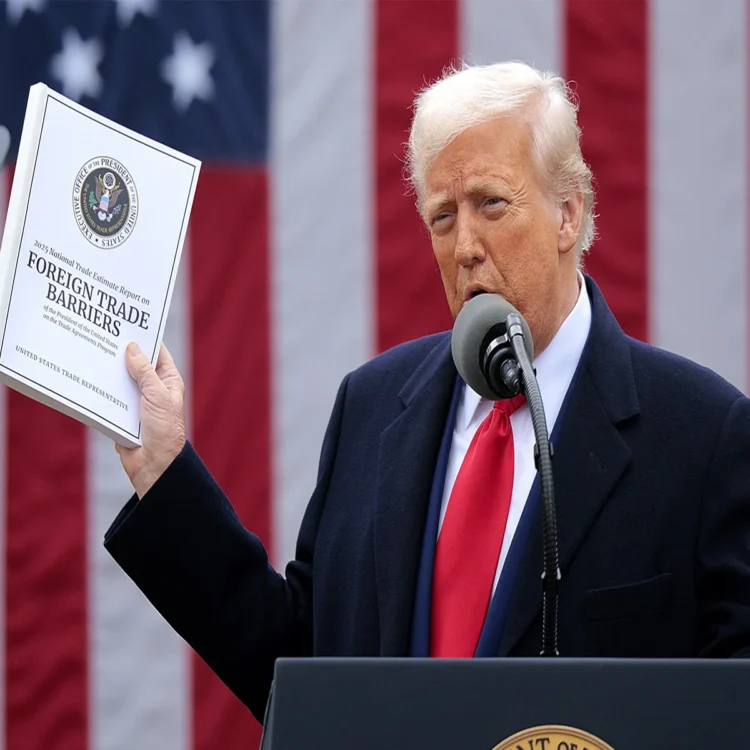
Former Acting Solicitor General Neal Katyal, who argued the case challenging the tariffs, described the judgment as a clear endorsement of constitutional principles. Katyal said the Court’s decision reinforces the separation of powers and places firm limits on unilateral action by the executive branch.
Court Reasserts Congressional Taxing Authority
At the heart of the dispute was whether a president could independently impose tariffs without explicit approval from Congress. The plaintiffs, supported by the Liberty Justice Center and a group of small business owners, contended that such actions amounted to unconstitutional taxation.
In siding with the challengers, the Supreme Court concluded that the Constitution grants taxing authority exclusively to Congress under Article I. The ruling underscored that even in matters of trade policy, the executive cannot bypass the legislative branch when it comes to imposing financial burdens on Americans.
Katyal called the outcome comprehensive, stating that the Court accepted every central argument presented by his legal team. He emphasized that the judgment was not about political rivalry but about maintaining the constitutional structure designed by the nation’s founders.
A Broad Decision with Notable Support
Speaking publicly after the verdict, Katyal noted that the ruling was decided by a 6–3 majority, rather than the narrower margins often seen in high-profile cases. In an interview with CNN anchor Kaitlan Collins, he pointed out that two of President Donald Trump’s own Supreme Court appointees joined the majority.
According to Katyal, it is rare for challengers to prevail in cases involving presidential authority. He remarked that winning such disputes against a sitting president is uncommon, highlighting the significance of the Court’s determination in this instance.
Support from Advocacy Groups and Businesses
Katyal also credited the Liberty Justice Center for backing the legal challenge. He praised the organization’s leadership, particularly its chair, Sara Albrecht, for pursuing the case despite its complexity and political sensitivity.
The lawsuit was initiated by five small business owners who argued that the tariffs had imposed unjust financial burdens on their operations. Katyal said their decision to step forward had implications far beyond their individual enterprises, potentially affecting thousands of businesses and millions of consumers nationwide.
By taking legal action, the plaintiffs sought clarity on constitutional boundaries rather than policy preferences. The Court’s ruling, according to legal observers, provides that clarity by reinforcing that taxation cannot originate from the executive branch alone.
Focus on Institutional Principles
Katyal, currently a partner at Milbank LLP and a professor of national security law at Georgetown University Law Center, has long concentrated his academic and courtroom work on the limits of executive authority. He reiterated that the case was about safeguarding the presidency as an institution, not targeting any particular officeholder.
In public remarks following the decision, he stressed that the Constitution remains the supreme governing framework. He described the Supreme Court as a longstanding pillar of American democracy and said the ruling reflects its role in preserving foundational checks and balances.
When asked what might have changed the outcome for the administration, Katyal suggested that adherence to constitutional processes would have been essential. He maintained that respecting legislative authority is central to sustaining the balance envisioned by the framers.
The decision is expected to influence future debates over the scope of presidential power, particularly in areas where economic policy intersects with constitutional law. Legal experts say the ruling strengthens congressional authority and may shape how future administrations approach trade and