
Southern: Deadly High-Speed Train Collision in Spain Raises Safety Concerns
Southern: A tragic railway accident in southern Spain has resulted in the loss of at least 21 lives, with many others injured, after a high-speed passenger train derailed and crashed into another train in the province of Cordoba. The incident has shocked the nation and once again brought attention to rail safety, emergency preparedness, and infrastructure resilience on busy European train routes. The collision occurred near the town of Adamuz and involved two long-distance trains operating on major intercity routes.
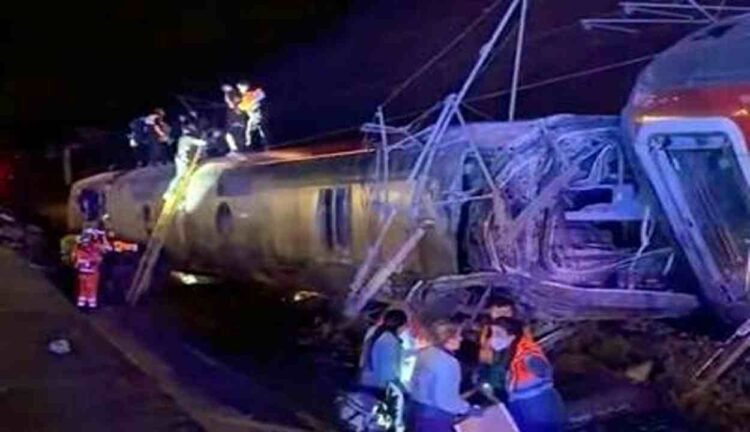
Details of the Train Accident
The accident took place when an Iryo-operated high-speed train, carrying approximately 300 passengers, was traveling from Malaga to Madrid Puerta de Atocha. While moving at high speed, the train reportedly derailed after crossing onto an adjacent track. Moments later, it collided with an AVE train that was operating on the Madrid to Huelva route. The second train was operated by Renfe, Spain’s state-owned railway company.
The force of the impact caused severe damage to several carriages. Passenger-recorded videos that later surfaced showed mangled compartments, shattered windows, and overturned sections of the train. Authorities confirmed that multiple coaches suffered structural damage, making rescue operations extremely challenging during the initial hours.
Passenger Experiences and Eyewitness Accounts
Passengers described the collision as sudden and terrifying. Several witnesses compared the moment of impact to an earthquake due to the violent shaking and loud noise. Many travelers were thrown from their seats, while luggage and debris flew through the compartments.
In the aftermath, some passengers broke windows using emergency hammers in order to escape from damaged carriages. During these evacuations, several people sustained cuts and minor injuries. Smoke was reported inside parts of the trains, causing panic and breathing difficulties for some passengers. Medical assistance was required on-site for many individuals suffering from shock, fractures, and other trauma-related injuries.
Emergency Response and Rescue Operations
Emergency services were quickly deployed to the accident site. Firefighters, paramedics, police, and civil protection teams worked together through the evening and night to rescue trapped passengers and provide immediate medical care. According to reports, operations continued overnight due to the complexity of the wreckage and the number of people involved.
The Red Cross played a crucial role by dispatching multiple ambulances from Cordoba and Jaen. In addition to medical care, relief teams distributed water, blankets, and basic necessities to passengers from both trains. Temporary shelters were also arranged for those unable to continue their journeys.
Impact on Rail Services and Infrastructure
Following the collision, ADIF, the national railway infrastructure manager, suspended all train services between Madrid and the Andalusia region until further notice. This decision was taken to ensure passenger safety and to allow investigators and engineers to assess track conditions, signaling systems, and structural damage.
The suspension has caused significant disruption to long-distance and regional travel, affecting thousands of passengers. Authorities have advised travelers to seek alternative transportation options and to stay updated through official railway communication channels.
Official Statements and Government Response
Transport Minister Oscar Puente has been closely monitoring the situation from the ADIF Operations Control Centre. He stated that updates would be shared once more verified information becomes available. The focus, according to officials, remains on rescue efforts, medical care, and a thorough investigation into the cause of the accident.
Madrid regional president Isabel Diaz Ayuso expressed condolences to the victims and offered full support to the Andalusian regional government. She confirmed that Madrid’s hospitals and emergency response teams were placed on standby. Support units were also deployed to Madrid’s Atocha station to assist relatives and friends seeking information about passengers involved in the collision.
Ongoing Investigation and Safety Concerns
Railway safety experts and investigators are now examining multiple factors, including track conditions, train speed, signaling systems, and possible human error. Data recorders from both trains are expected to provide crucial insights into the moments leading up to the derailment and collision.
This incident has reignited public debate around high-speed rail safety in Europe, particularly on heavily trafficked routes. While Spain is known for having one of the most extensive high-speed rail networks in the world, accidents of this magnitude highlight the need for continuous safety audits, technological upgrades, and strict operational oversight.