
New Jersey: In the special election in a congressional candidate tries to win over Indian Americans
New Jersey: Voting rights lawyer and county commissioner John Bartlett, who is running in the special election to represent New Jersey’s 11th Congressional District, is directly appealing to Indian American voters by characterizing himself as politically sensitive to the community’s concerns and having a personal connection to it.
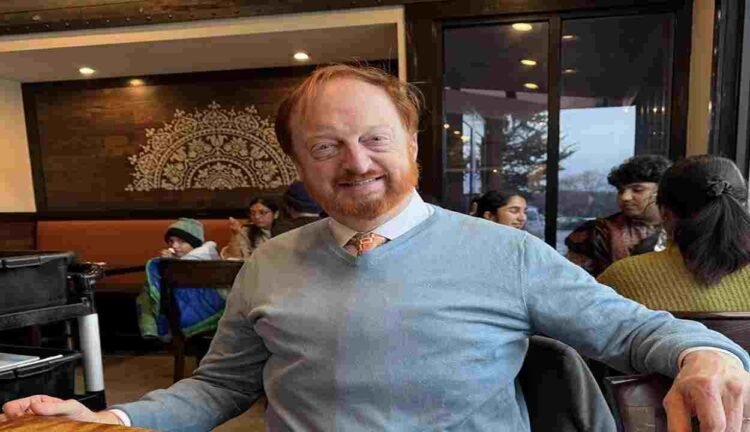
Following Rep. Mikie Sherrill’s election as governor of New Jersey, Bartlett indicated his campaign would fill the vacancy in the district and lead to a highly anticipated special election. “A dozen of us are running in the Democratic primary election, and we have a special election on February 5th,” he said. “I am among those contenders. I’m looking for the chance to serve as this district’s representative in the US Congress.
In an interview with IANS, Bartlett emphasized his connections to Indian Americans, saying that his wife, Dr. Kathy Joshi, is Indian American and that he is “a member of the community by marriage.” He said that he has traveled extensively in India and has tried to establish connections with Indian American citizens in northern New Jersey, saying, “I have learned so much through her.”
Bartlett said that while serving as a Passaic County commissioner, he prioritized immigrant populations’ inclusion, especially with regard to language access. According to him, outreach initiatives were carried out “not just in English and Spanish, but also in Arabic and Hindi and Bengali” during the 2020 census, which reflected the county’s high concentration of immigrants from Bangladesh and India. “Those communities receive the resources they require when you count everyone,” he said.
Some of the most well-known Indian American neighborhoods in the state, including Parsippany, Livingston, Short Hills, Randolph, and Wayne, are located in New Jersey’s 11th District, according to Bartlett. He referred to the 11th district as one where Indian American families span generations, occupations, and immigrant experiences, noting that it is 12 percent Asian American and that over half of its residents are Indian Americans.
According to him, Indian American families in the area deal with a variety of problems, such as immigration and visa complications, prejudice based on race and religion, and growing expenses for homes and companies. “It is a priority of mine to have someone who is going to be responsive to those communities in particular and who understands that from the inside,” Bartlett said.
Bartlett, who has practiced voting rights law for over 25 years, said that he is running for Congress in response to what he perceives as increasing challenges to democratic norms and civil rights. He said that people in his area share his criticism of the Trump administration for “disinvesting in civil rights and voting rights.” He said that electing a voting rights lawyer to Congress would assist safeguard the objective, saying, “We have one chance to make sure that the 2028 presidential election is free and fair.”
In a low-turnout special election, Bartlett again emphasized the political significance of Indian American participation. He urged Indian American voters to cast their ballots early, by mail, or on February 5, primary day, saying, “If you turn out your base and your supporters, you are going to be the winning candidate in a special election.”
Bartlett focused on immigration, healthcare, and US-India ties while discussing policy. He attacked measures that he claimed increased prices for families and said that he is in favor of bringing back the concept of a public healthcare alternative. He also mentioned how Indian American families and companies are harmed by tariffs and immigration restrictions. Citing the effects of tariffs on Indian American commercial corridors like Oaktree Road in Edison and Newark Avenue in Jersey City, he said, “We need somebody who understands the real human meaning of all that work.”
Bartlett referred to India as “one of the most vital American relationships around the world” and said that Congress should prioritize economic and people-to-people links between the two nations above regulations that hinder commerce and immigration.
“This February 5th election is an opportunity for the Indian American community to demonstrate its strength, political clout, and ability to accomplish something truly remarkable,” he said.
Early voting will take place from January 29 to February 3 for the special Democratic primary, which is scheduled for February 5. On April 16, an extraordinary general election is planned. The 11th District of New Jersey is seen as a crucial suburban seat in the state’s political landscape and has been held by Democrats in recent years.