
Khaleda Zia: The Accidental Leader Who Shaped Bangladesh’s Political History
Khaleda Zia: Khaleda Zia remains one of the most influential and debated figures in the modern political history of Bangladesh. As the first woman prime minister of the country and the second female leader in the Muslim world to hold such a position, her life and career were marked by dramatic turns, intense rivalries, political achievements, and serious controversies. For more than four decades, she stood at the center of national politics, leaving a legacy that continues to influence Bangladesh today.
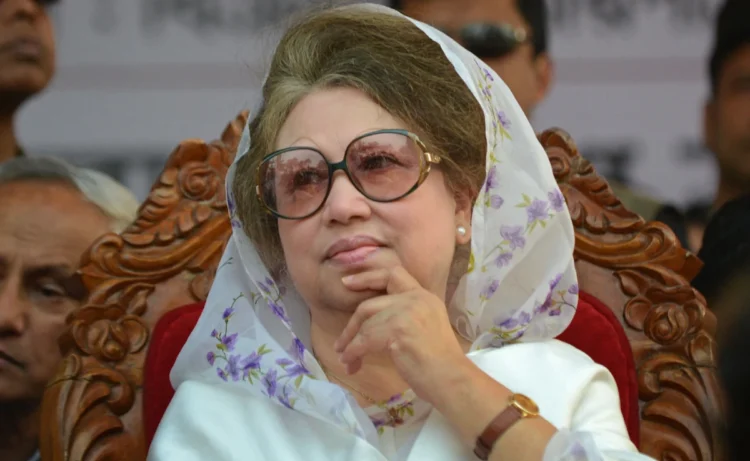
Early Life and an Unexpected Political Beginning
Khaleda Zia’s entry into politics is often described as accidental rather than strategic. Born on August 15, 1946, in the Dinajpur district, her early life was largely private and removed from political activism. She was known mainly as the wife of a military officer, later becoming the First Lady when her husband, Ziaur Rahman, rose to power as the President of Bangladesh.
Her life took a dramatic turn in 1981 when Ziaur Rahman was assassinated during a failed military coup. Widowed at a relatively young age, Khaleda Zia had little prior exposure to politics. However, national circumstances and pressure from party leaders pushed her into public life. What began as a reluctant step soon evolved into a defining political journey.
Rise Within the Bangladesh Nationalist Party
The Bangladesh Nationalist Party, founded by her late husband in 1978, became Khaleda Zia’s political platform. She joined the party in early 1982 and rose rapidly through its ranks. Within a short span, she became vice president and later chairperson, a position she held until her death.
Initially, many party members doubted her leadership abilities. The BNP itself was struggling after the 1982 military takeover that pushed it into opposition. Despite skepticism, Khaleda Zia proved to be a determined organizer, gradually consolidating the party and transforming it into a formidable political force.
Struggle Against Military Rule
One of the most significant phases of Khaleda Zia’s career was her resistance to military-backed governance. Following the coup led by General HM Ershad, she launched a sustained movement demanding the restoration of democracy. Her decision to boycott the 1986 elections, which were widely viewed as manipulated, significantly boosted her public image.
This period strengthened her reputation as a pro-democracy leader. Her stance resonated with citizens frustrated by authoritarian rule, and her popularity surged, positioning her as a central figure in the eventual downfall of the military regime.
Becoming Prime Minister and Political Dominance
After the collapse of the Ershad government, democratic elections were held in 1991. Contrary to widespread expectations, the BNP emerged victorious. Khaleda Zia became the first woman prime minister of Bangladesh, marking a historic milestone. Under her leadership, the country transitioned from a presidential to a parliamentary system, reshaping the structure of governance.
She served multiple terms, including re-election in the mid-1990s and a return to power in 2001 through a coalition government. During these years, she dominated national politics, often locked in fierce rivalry with Sheikh Hasina. This rivalry defined Bangladesh’s political landscape for decades.
Relations With India and Regional Diplomacy
Khaleda Zia’s approach to foreign policy, particularly relations with India, was complex. Her early years in office saw a mix of diplomatic engagement and tension, especially over water-sharing disputes and border security issues. Her government emphasized alternative regional partnerships, focusing more on China and other Muslim-majority nations.
Despite strained relations, she made several official visits to India, including state-level engagements that resulted in agreements on trade and security cooperation. These visits reflected her pragmatic side, even when political differences persisted.
Corruption Charges and Legal Battles
Later in her career, Khaleda Zia faced serious legal challenges. She was arrested on corruption charges that her party consistently described as politically motivated. Despite these cases, her electoral record remained strong, as she never lost a parliamentary seat she contested.
In 2018, she received prison sentences in multiple corruption cases, significantly limiting her political activity. These events marked a dramatic fall from power and reshaped her public image, both domestically and internationally.
Final Years and Enduring Legacy
After years of legal battles and declining health, Khaleda Zia was granted a presidential pardon in 2024. Her brief return to active politics energized her party and supporters, even as her physical condition worsened. She passed away at the age of 80, closing a chapter in Bangladesh’s political history.
Her supporters remember her as a symbol of democratic resistance and political resilience. Critics, however, point to governance challenges and corruption allegations. Regardless of perspective, Khaleda Zia’s impact on Bangladesh is undeniable. Her life story reflects the turbulence, ambition, and resilience that have shaped the nation’s political journey.