
Israel – Rights Group Raises Alarm Over White Phosphorus Use in Lebanon
Israel – An international human rights organization has accused Israel of using white phosphorus munitions over a residential area in southern Lebanon, raising renewed concerns about the safety of civilians caught in the ongoing cross-border conflict.
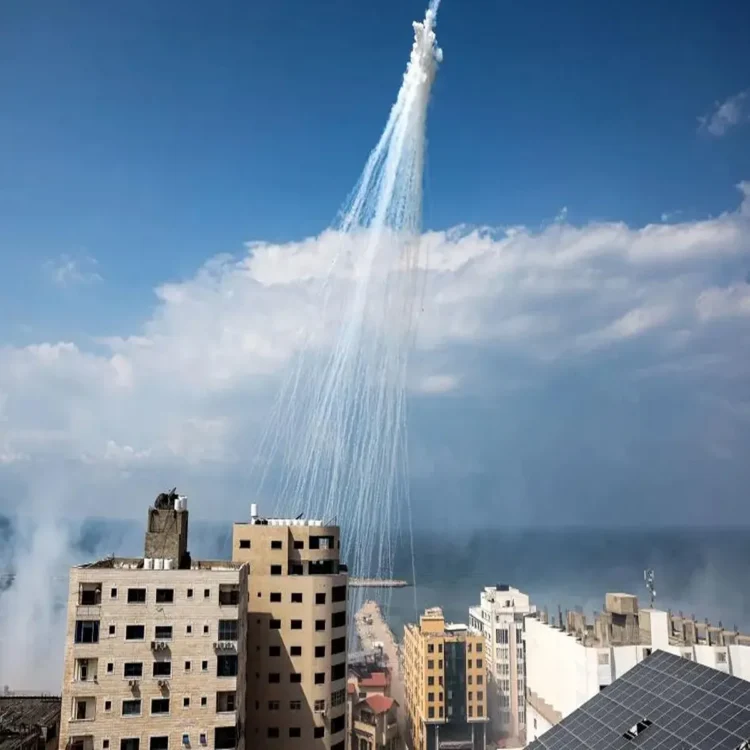
Human Rights Watch Findings
Human Rights Watch (HRW) said in a report released Monday that Israeli forces fired artillery shells containing white phosphorus over the Lebanese town of Yohmor on March 3, 2026. According to the New York-based organization, the use of these munitions in populated areas may violate international humanitarian law.
The group stated that its investigators analyzed visual evidence from the scene and confirmed the deployment of the substance above residential neighborhoods. HRW said it reviewed and geolocated seven images that appear to show white phosphorus shells exploding in the air over homes. The organization also noted that local civil defense teams were seen responding to fires that broke out in at least two houses and a vehicle.
Concerns Over Civilian Safety
White phosphorus is a chemical substance that ignites immediately when it comes into contact with oxygen. Militaries sometimes use it to create smoke screens or illuminate areas during combat operations.
However, when deployed near populated locations, the material can also function as an incendiary weapon. Contact with burning phosphorus can cause severe burns, respiratory injuries, organ damage, and in some cases death. Because it continues burning until deprived of oxygen, it poses a particularly dangerous threat in residential environments.
Human rights advocates have repeatedly warned that the use of such munitions near civilian areas can lead to uncontrolled fires and long-term harm to residents.
Escalation Along the Israel–Lebanon Border
The accusations come amid escalating tensions along the Israel–Lebanon frontier. Lebanese authorities say at least 394 people have been killed during Israeli strikes in recent months. Officials have also reported that more than half a million residents have been displaced as hostilities intensified.
Israel has continued targeting positions linked to Hezbollah, the Iran-backed armed group operating in southern Lebanon. Although a ceasefire agreement was reached in 2024, exchanges of fire have persisted, with both sides accusing each other of violations.
In response to recent attacks by Hezbollah, Israeli forces launched several waves of airstrikes across parts of Lebanon last week. Ground troops were also sent into areas near the border during the operation.
Evacuation Warnings Issued
Following the latest escalation, the Israeli military issued warnings to civilians living south of the Litani River to evacuate. The river lies roughly 30 kilometers north of the Israeli border and marks a sensitive area where tensions between Israeli forces and Hezbollah fighters frequently flare.
Military officials have said the warnings were intended to reduce civilian casualties as operations against militant positions continue. Nevertheless, rights organizations argue that the use of certain weapons in populated areas significantly increases the risk to non-combatants.
Calls for Immediate Action
Ramzi Kaiss, a Lebanon researcher at Human Rights Watch, described the reported use of white phosphorus in residential neighborhoods as deeply concerning. He said such actions could have serious consequences for civilians living in the affected communities.
Kaiss urged Israel to stop using white phosphorus in populated areas and called on governments that supply weapons to Israel to reconsider military assistance involving these munitions. According to the report, international partners should pressure Israel to avoid deploying such weapons near civilian homes.
Previous Allegations and Environmental Concerns
This is not the first time white phosphorus has become a point of dispute in the region. Lebanese authorities and human rights groups have previously accused Israel of using the substance during earlier confrontations along the border, saying it caused injuries and environmental damage.
Lebanon’s state-run National News Agency also reported Sunday that Israeli artillery targeted the towns of Khiam and Tal Nahas near the border, including shells believed to contain phosphorus.
In a separate dispute last month, Lebanon accused Israel of spraying the herbicide glyphosate along the shared frontier. Lebanese President Joseph Aoun described the alleged action as an environmental crime, arguing that the chemical could harm farmland and local ecosystems.
As tensions continue along the border, rights groups say further investigation and transparency will be crucial to determine how such weapons are being used and what impact they may have on civilian populations.