
India-Brazil Relations – Lula Visit Signals Deeper Strategic Push
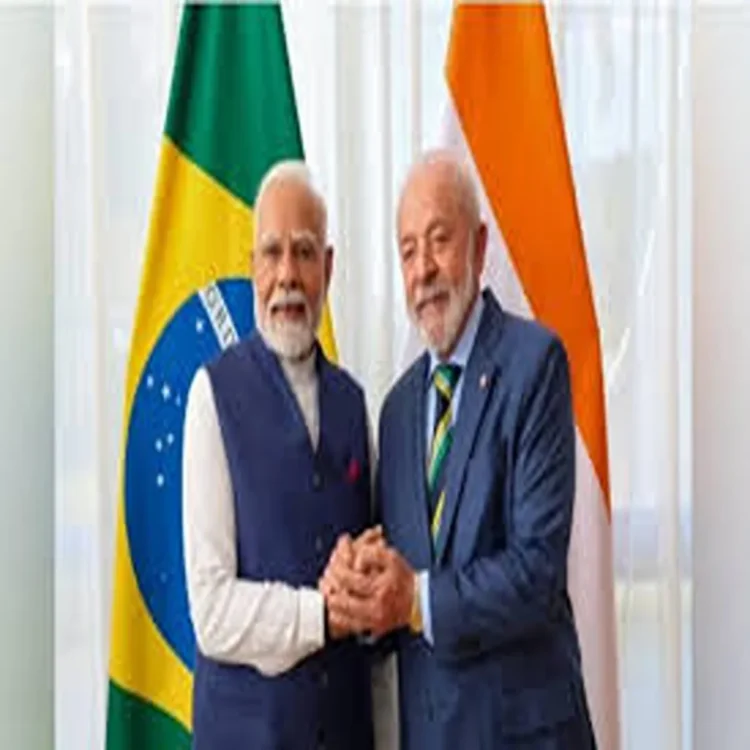
India-Brazil Relations – Brazilian President Luiz Inacio Lula da Silva’s visit to India for the AI Impact Summit, followed by a formal state visit, reflects a clear effort by both nations to broaden ties beyond multilateral forums and strengthen direct economic collaboration.
Visit Seen as a Strategic Milestone
Speaking on the development, Dr. Anit Mukherjee, Senior Fellow at ORF America, described the visit as highly consequential for the trajectory of India-Brazil relations. He noted that Prime Minister Narendra Modi had earlier travelled to Rio de Janeiro for the BRICS summit and later undertook a state visit, setting the stage for continued high-level exchanges.
According to Mukherjee, the scale of Lula’s delegation underscores the seriousness of the engagement. The Brazilian President is accompanied by 14 cabinet ministers and nearly 150 business leaders, representing a broad spectrum of industries. Such a large delegation, he said, highlights that the partnership is expanding beyond coordination within groupings like BRICS and the G20 toward more tangible cooperation in trade, investment, manufacturing, and services.
From Multilateral Coordination to Economic Expansion
Historically, ties between the two countries were cordial but limited in scope. Mukherjee pointed out that the relationship began to gain momentum in the early 2000s when Lula first assumed office. At the time, Brazil sought closer alignment with other major developing democracies, leading to the formation of IBSA, which brought together India, Brazil, and South Africa. This later evolved into deeper cooperation within BRICS.
These platforms, built through regular leadership-level exchanges, created a foundation of trust that now supports broader ambitions. Today, both countries see each other as important economic partners within the Global South, with shared interests in development, technology, and global governance reform.
Complementary Strengths in Key Sectors
Brazil’s economic profile includes strong capabilities in agriculture and aviation. The country is widely regarded as a global agricultural leader and is home to Embraer, one of the world’s leading civilian aircraft manufacturers.
India, meanwhile, has expanded its footprint in Brazil’s manufacturing landscape. Companies such as Bajaj and Mahindra have established production facilities in the country, manufacturing motorcycles and tractors for the local and regional markets. Indian technology firms, including TCS and Infosys, have also built a presence in Brazil’s services sector, contributing to growing digital and IT cooperation.
The expanding trade basket between the two nations now spans agriculture, pharmaceuticals, energy, automobiles, and information technology. Both governments are working to diversify supply chains while deepening South-South trade links in an evolving global economic environment.
Digital Public Infrastructure as a Shared Priority
Another emerging area of collaboration is digital public infrastructure. India’s Unified Payments Interface has transformed digital transactions domestically, becoming one of the largest instant payment systems in the world. Brazil has developed a comparable platform known as PIX, which has rapidly scaled across its financial system.
Together, these systems process billions of transactions daily, demonstrating the potential for knowledge-sharing and technological cooperation. Policymakers see scope for collaboration in fintech innovation and digital governance frameworks, areas that align with broader development goals.
Cultural and People-to-People Engagement
Beyond economic ties, cultural exchanges continue to grow. The Indian community in Brazil remains relatively small, with around 4,000 non-resident Indians, but the number has been gradually increasing. Cultural practices such as yoga and Ayurveda have also gained popularity in Brazil, contributing to stronger social and educational connections between the two societies.
Shared Voice in Global Governance
India and Brazil are influential members of both BRICS and the G20. They have often aligned positions on development finance, trade reform, and the need for greater representation of emerging economies in international institutions. Their cooperation reflects a shared commitment to strengthening the voice of developing nations in global decision-making forums.
As Lula’s visit unfolds, officials on both sides are expected to focus on translating political goodwill into measurable economic outcomes. The discussions signal an intention to anchor the partnership in long-term strategic and commercial interests, reinforcing the growing importance of India-Brazil relations in the broader Global South landscape.