
H-1B visa: A Huge Help To Indians? US Senators Take Action to Revoke Trump’s Rule Affecting Indian H-1B Spouses
H-1B visa: A number of powerful US senators have proposed legislation in the Senate to reverse a Trump administration rule that prohibits certain noncitizens from having their work permits automatically renewed. This policy change could have a significant impact on Indian nationals, especially spouses of H-1B visa holders, who make up a sizable portion of the affected workforce.
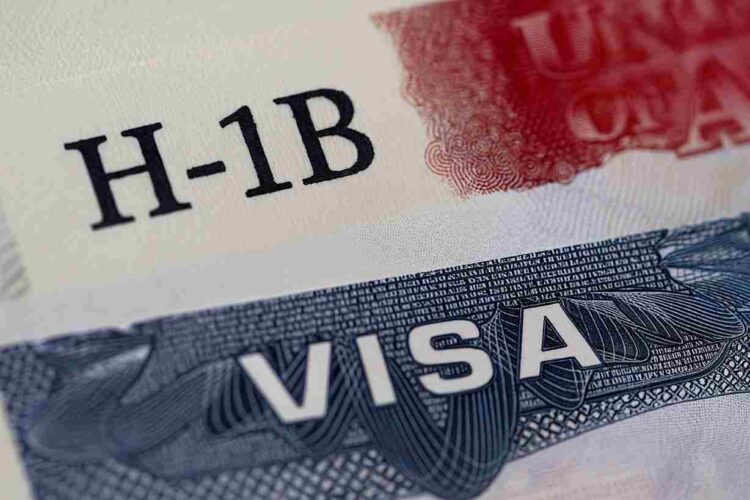
Along with Senator Jacky Rosen of Nevada and nine other senators, California Democrat Senator Alex Padilla, the ranking member of the Senate Judiciary Immigration Subcommittee, introduced a resolution under the Congressional Review Act (CRA) to overturn the US Citizenship and Immigration Services (USCIS) rule.
Crackdown on Trump spouse visas
Announced on October 30, the interim final regulation does away with automatic renewals of work authorization papers for eighteen non-citizen groups. These include wives of H-1B nonimmigrants, which includes a large number of Indian citizens who are lawfully residing in the United States, refugees, and those who have been awarded asylum or temporary protected status.
Non-citizens having legitimate legal status are permitted to continue working with a work permit. Long USCIS processing delays, according to senators supporting the resolution, may compel people who timely file renewal applications to quit their jobs while their cases are pending—sometimes for months—for no fault of their own.
The senators claim that if the regulation were put into effect, it would affect 87% of all outstanding job authorization document renewals. They caution that thousands of employees who have previously undergone screening and approval may lose their jobs as a result of their renewal applications being held up in processing lines.
Prior to the Trump administration’s modification, non-citizens who submitted their petitions for work permit renewals within the allotted time frames were automatically granted extensions, allowing them to keep working while USCIS reviewed their applications. The goal of the CRA resolution is to bring that policy back.
Trump’s action is upsetting the US economy.
“Donald Trump and Stephen Miller’s campaign to marginalize noncitizens working here legally is disrupting our entire national economy and devastating employers who rely on their contributions,” stated Padilla.
“Those who have previously undergone screening would be forced to stop working if the Administration’s self-defeating regulation prohibiting automatic work permit renewals is implemented, putting undue burden on both companies and immigrants. Simply put, those who have previously undergone screening and been given permission to work need to be allowed to continue working.
Among those most impacted by changes in employment-based immigration laws in the US are Indian professionals and their families. Household earnings generally rely on continuous work permission, and spouses of H-1B visa holders commonly work in industries including technology, healthcare, finance, education, and research. Lawmakers warn that the regulation might cause these families to experience unexpected financial instability.
According to Rosen, the shift would have an immediate impact on the economy. “Immigrants who work and contribute to our economy are central to Nevada’s prosperity, and they’re the backbone of the US economy,” she said. “This unfair rule change by the Trump Administration will cause chaos,” the statement reads, causing thousands of legally authorized immigrants to quit their jobs or face termination from their employers. I am calling on my colleagues to join me in rejecting this regulation because it would negatively impact our economy and thousands of families.
“Senators Michael Bennet of Colorado, Chris Coons of Delaware, Catherine Cortez Masto of Nevada, Dick Durbin of Illinois, Angus King of Maine, Adam Schiff of California, Jeanne Shaheen of New Hampshire, Chris Van Hollen of Maryland, and Peter Welch of Vermont are co-sponsors of the resolution.
Congress has a short window of time under the Congressional Review Act to pass a joint resolution of disapproval and revoke recently approved government rules. The resolution would invalidate the USCIS rule and prohibit the agency from publishing a regulation that is substantially identical if it were passed by both houses and signed into law.